
Buying guide · 5 min
Buying qalam-zani engraved metalwork
Editorial team · updated 2026-10-20
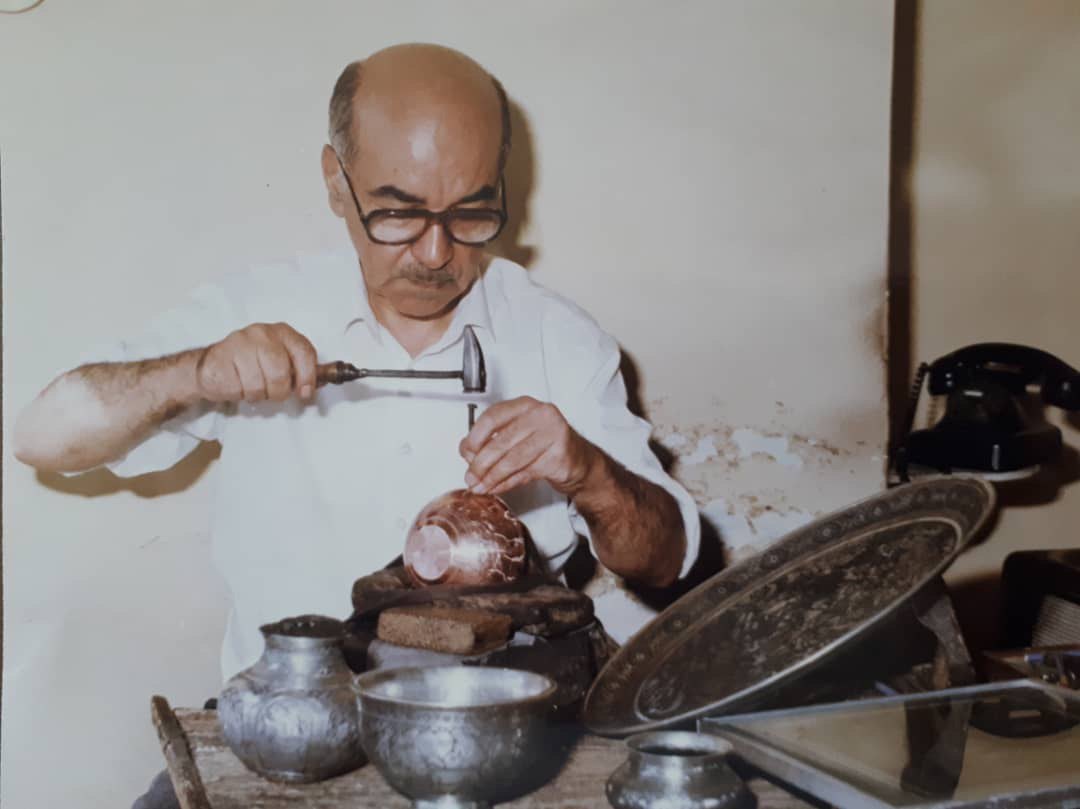
2015-01-01 · Mbmasoudi · CC BY-SA 4.0 · Photo source ↗
- Type
- Buying guide
- Reading
- 5 min
- Chapters
- 5
- Photos
- 2
Scope and evidence
This reading separates visible construction, documented materials and origin claims. The photographs retain their own source context; they do not authenticate a purchase or demonstrate every stage described below. Historical examples and contemporary maker statements require different kinds of evidence.
- Distinguish: Engraving, chasing and formed decoration
- Grade: No universal depth-based quality bands
- Function: Tinning alone does not establish food safety
- Distinguish
- Engraving, chasing and formed decoration
- Grade
- No universal depth-based quality bands
- Function
- Tinning alone does not establish food safety
Ask how the surface was worked
Qalam-zani is used for decorated metalwork made with chisels and related tools, but the operation should be described precisely. Engraving removes material; chasing displaces or models it, often with a prepared support. A design may also combine punching, forming, inlay or a dark surface compound.
Start with the base metal, object form and the maker’s description of decoration. Fine shallow work can be deliberate, and deep crowded ornament is not automatically better. Avoid universal souvenir, medium and fine grades based solely on depth and density.
Read line, background and shape together
Compare how lines follow the curved vessel, how borders meet and how background textures support the design. Photograph different areas under consistent light without running a finger over the surface. Rubbing can leave residues or catch unstable decoration.
A visible repeated pattern is not enough to distinguish hand work from pressed or etched decoration. Ask for a workshop account or documented making views. A maker’s mark is useful evidence to retain but does not independently verify the base metal, date or origin.
Separate decoration from functional suitability
A tinned-looking interior does not independently establish that a vessel is food-safe. The material, lining, solder, repairs, coatings and intended use all matter. Ask the seller for explicit functional and food-contact information rather than treating tinning as a certificate.
For antique or uncertain repaired objects, choose display rather than serving. A decorative lacquer may be part of the finish and should not be stripped just because someone plans to polish the object. Ask what the coating is and how the maker expects it to be cared for.
- Record base metal and decoration method
- Ask for the maker and place of work
- Keep functional claims in writing
- Request repair and coating disclosures
Care follows the surface, not the metal name
Silver cloths, metal dips and copper polish can affect engraved compounds, gilding, inlay, coatings and earlier repairs. A routine treatment for undecorated modern metal is not automatically safe for qalam-zani. Avoid abrasive rubbing and household chemicals on unassessed surfaces.
Support the main body while moving the object and inspect loose handles or feet before use. Active corrosion, flaking coatings or lifting inlay need conservation advice. New contemporary work should arrive with care instructions for its complete finish rather than a generic command to keep it shiny.
Related photographs and screened examples
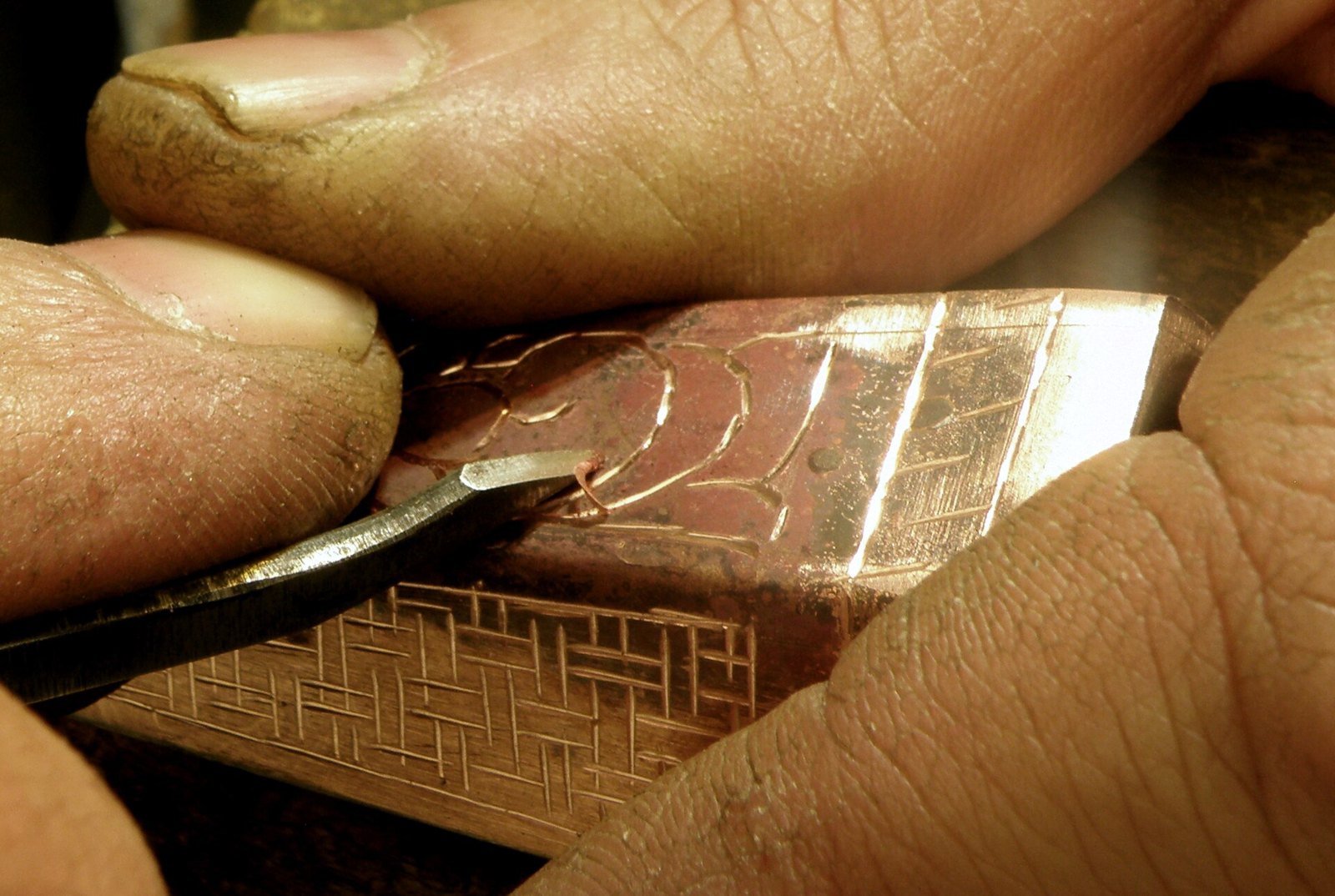
Representative photographs only. Marketplace examples rely on seller descriptions; CraftPersia has not independently authenticated their maker, origin, or rights status. Follow each source link for the listing context.
| Look at | Record | Do not infer |
|---|---|---|
| Cut or modelled line | Method as documented | Quality from depth |
| Signature or stamp | Exact mark and source explanation | Independent authentication |
| Interior lining | Material and intended-use evidence | Food safety from tinning |
| Dark or coated areas | Finish and treatment history | Safe for silver cloth or dip |
References and further reading
- [1] The Met — Engraved lamp stand ↗An Iranian historical example of cast and engraved brass with black compound; not a universal process specification.
- [2] National Park Service — Curatorial care of metal objects ↗Museum handling and storage guidance; composite surfaces need individual assessment.
These sources provide context, not authentication or provenance for an individual object. Editorial interpretations remain under review.