
Beginner guide · 5 min
Persian velvet weaving (makhmal): a beginner's guide
Editorial team · updated 2026-10-20
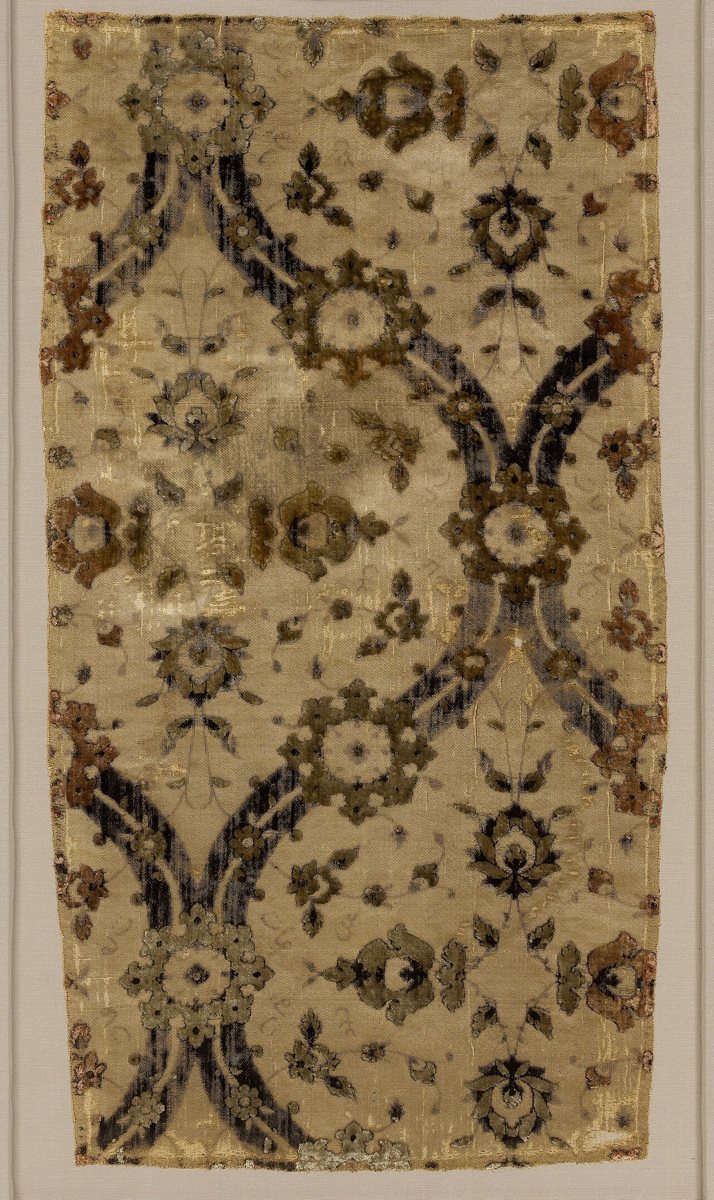
Accessed 15 October 2026.; attribution and origin follow the Commons record and are not independently verified. · Ghiyath · CC0 (per Wikimedia Commons; rights review pending) · Photo source ↗
- Type
- Beginner guide
- Reading
- 5 min
- Chapters
- 5
- Photos
- 1
Scope and evidence
This reading separates visible construction, documented materials and origin claims. The photographs retain their own source context; they do not authenticate a purchase or demonstrate every stage described below. Historical examples and contemporary maker statements require different kinds of evidence.
- Structure: Pile yarns above a woven ground
- Reading: Light direction changes the appearance
- Evidence: Width and irregularity do not prove a handloom
- Structure
- Pile yarns above a woven ground
- Reading
- Light direction changes the appearance
- Evidence
- Width and irregularity do not prove a handloom
Read the ground and pile separately
Velvet is not simply a soft fabric. Its raised pile is supported by a ground weave, and a figured example can combine contrasting areas of texture and colour. When reading a catalogue, distinguish the fibres identified in the ground from those in the pile. A silk description should not be extended to every yarn without evidence.
Observe a naturally exposed edge or worn area without pulling the fibres apart. Some velvets combine cut pile and uncut loops; others achieve their pattern differently. A historic museum velvet is a documented example of one construction, not a diagram of every Iranian loom or a guarantee of present-day practice.
A sequence of making, not a home experiment
A weaver prepares the ground and pile systems, controls where pile appears, interlaces the supporting ground, and finishes the raised surface. Pattern control and pile formation are related but separate tasks. The exact loom arrangement, rod use and cutting sequence need a technical record or a maker’s explanation.
The photograph here shows a finished textile. It cannot establish how many weavers operated a loom, how long a repeat took or which tools made it. Ask a contemporary maker for labelled work-in-progress views rather than treating a close view of the finished pile as proof of the process.
Compare under changing light
Pile direction can make the same cloth appear lighter or darker as the viewing angle changes. Compare the same area from different positions before calling a dark patch staining or a pale patch fading. Document colour using consistent, diffuse light, while acknowledging that screens and cameras alter it.
Do not brush, rub or stroke historic velvet to demonstrate its sheen. Movement of the viewer or light provides useful information without compressing the pile. Record crushed areas, exposed ground and breaks independently; these are condition observations rather than a simple quality score.
- Move the light, not the fibres
- Record pile loss and crushing separately
- Ask for the ground and pile fibre description
- Keep the catalogue attribution with the image
Display and storage decisions
Velvet can be damaged by compression as well as light. Avoid stacking heavy objects on it or folding it sharply. Flat support or an assessed padded roll may be appropriate, depending on size, condition and decoration; there is no universal instruction to roll every velvet pile-out.
For a fragile historical textile, a conservator should determine the mount and packing arrangement. For new cloth, ask for care instructions tied to its actual fibres, dyes and finish. Narrow width, small irregularities and a soft handle cannot independently establish hand weaving, Iranian origin or age.
| Look at | Record | Do not infer |
|---|---|---|
| Ground visible at an edge | Weave and yarns visible without manipulation | All fibres are silk |
| Change of viewing angle | Direction-dependent sheen | A dark area is dirt |
| Pile surface | Crushing, loss, loose yarns | Age or handloom manufacture |
| Maker information | Loom, fibres, place, date | Pattern alone proves origin |
References and further reading
- [1] V&A — Velvet collection record ↗Object-specific textile evidence; do not transfer its attribution to other cloth.
- [2] Canadian Conservation Institute — Caring for textiles and costumes ↗Preventive care; not permission to clean or treat an individual textile.
These sources provide context, not authentication or provenance for an individual object. Editorial interpretations remain under review.