
Beginner guide · 5 min
Tazhib: the art of Persian manuscript illumination
Editorial team · updated 2026-10-20
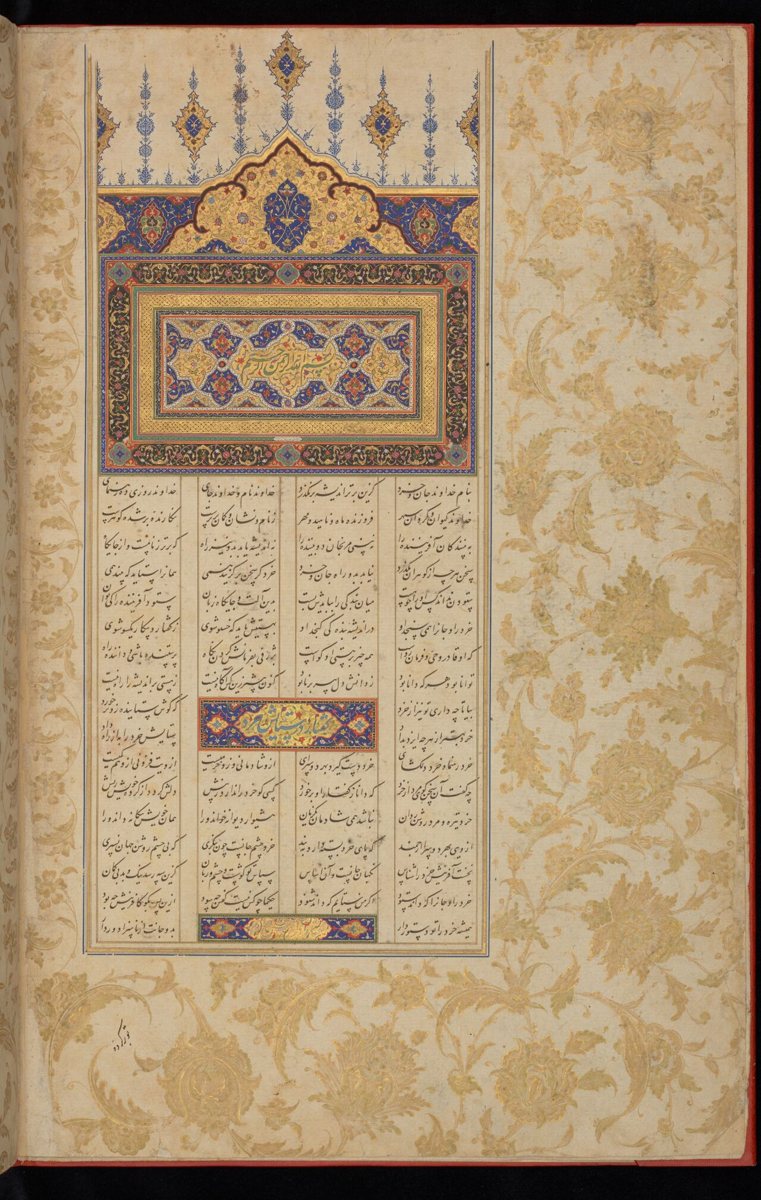
Accessed 15 October 2026.; attribution and origin follow the Commons record and are not independently verified. · Zayn al-`Abidin al-Tabrizi · Public domain (per Wikimedia Commons; rights review pending) · Photo source ↗
- Type
- Beginner guide
- Reading
- 5 min
- Chapters
- 5
- Photos
- 3
Scope and evidence
This reading separates visible construction, documented materials and origin claims. The photographs retain their own source context; they do not authenticate a purchase or demonstrate every stage described below. Historical examples and contemporary maker statements require different kinds of evidence.
- Read: Layout, ornament and relationship to text
- Materials: Gold appearance does not identify pigment
- Handling: Never touch painted or gilded areas
- Read
- Layout, ornament and relationship to text
- Materials
- Gold appearance does not identify pigment
- Handling
- Never touch painted or gilded areas
Read illumination as page architecture
Tazhib organises ornament around or alongside text. An opening, headpiece, medallion or border has a role in directing attention, not just filling empty space. Start by asking where the decoration sits within a manuscript or album and whether the page survives in its original setting.
A detached illuminated page may have been trimmed, remounted or combined with later borders. Distinguish a source’s identification of a manuscript from a decorative title supplied by a seller. The mapped frontispiece is a specific historical example, not a pattern book for all Persian illumination.
From layout to painted detail
A general workflow involves planning the layout, establishing repeated units, drawing ornament and applying colour and metallic decoration. The sequence and tools vary. Precision may rely on guides and transferred patterns as well as freehand work; repeated geometry is not evidence of mechanical printing.
Do not describe every blue as lapis, every green as malachite or every gold surface as shell gold. Historic and contemporary illuminators use varied pigments and metallic materials. Ask for the source of an identification and whether it concerns this exact page, rather than borrowing a materials list from another manuscript.
Original, reproduction and later additions
A photograph may show brushwork, printed dots or a changed border, but these clues are not a complete authentication method. Some reproductions imitate texture, while some hand-painted passages are extremely smooth. Request the artist’s account for new work and a condition/provenance record for historical material.
Real gold does not make a modern page antique, and an old sheet does not date every decoration on it. Paper, calligraphy, painting and mounting can belong to different campaigns. Under the archive’s sourcing rule, prints and replicas are not imported as genuine handmade marketplace works.
- Record text and ornament separately
- Ask which metallic material was used
- Distinguish original page from later mounting
- Keep the manuscript and folio identifier
Light, support and conservation boundaries
Paint and gilding can be vulnerable even when the paper looks firm. Use a support during movement and avoid touching decorated surfaces. Do not tilt or flex a fragile sheet simply to demonstrate reflection, and never test pigment adhesion with a cloth or finger.
Framing should keep glazing away from the surface and use an assessed mount. No single light exposure is safe indefinitely for every pigment. Keep displayed light limited and refer lifting paint, flaking gold, tears or old adhesive to a paper conservator instead of attempting flattening or repair.
Related photographs and screened examples

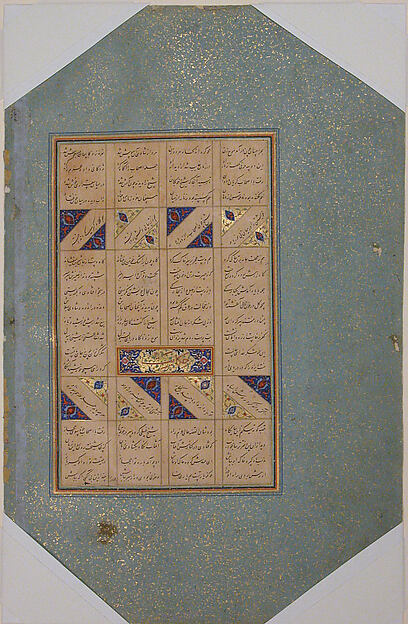
Representative photographs only. Marketplace examples rely on seller descriptions; CraftPersia has not independently authenticated their maker, origin, or rights status. Follow each source link for the listing context.
| Look at | Record | Do not infer |
|---|---|---|
| Page layout | Headpiece, medallion, border and text relationship | Original manuscript format |
| Metallic area | Material as documented | Shell gold from shine |
| Repeated geometry | Construction and artist’s explanation | Print from regularity |
| Mount and edges | Trimming, additions and condition | Single date for all parts |
References and further reading
- [1] The Met — Arts of the book in the Islamic world, 1600–1800 ↗Historical book production; not attribution of the illustrated object.
These sources provide context, not authentication or provenance for an individual object. Editorial interpretations remain under review.