
Beginner guide · 5 min
Persian stone carving: Mashhad soapstone and beyond
Editorial team · updated 2026-10-21
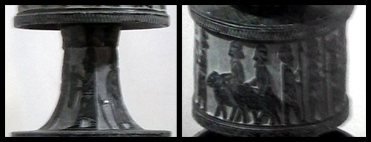
Accessed 15 October 2026.; attribution and origin follow the Commons record and are not independently verified. · Parthsbod K.A. Hakhamaneshian · CC BY-SA 4.0 (per Wikimedia Commons; rights review pending) · Photo source ↗
- Type
- Beginner guide
- Reading
- 5 min
- Chapters
- 5
- Photos
- 1
Scope and evidence
This reading separates visible construction, documented materials and origin claims. The photographs retain their own source context; they do not authenticate a purchase or demonstrate every stage described below. Historical examples and contemporary maker statements require different kinds of evidence.
- Distinguish: Material, shaping method and intended use
- Safety: No cooking use without a maker’s use instructions
- Evidence: Appearance is not a mineral identification
- Distinguish
- Material, shaping method and intended use
- Safety
- No cooking use without a maker’s use instructions
- Evidence
- Appearance is not a mineral identification
Read the stone before the decoration
A stone vessel has at least three separate stories: the geological material, the method of shaping and the place where the object was made. A seller’s “Mashhad soapstone” description combines all three, but each needs its own support. Steatite-rich stone can be carved readily; marble and other decorative stones differ in grain and working properties. A polished surface alone does not identify any of them.
Record the seller’s material name exactly, including local terms. Photograph visible grain, the underside and any existing chips without creating a new break. Colour, weight and a cool feel are observations, not reliable ways to distinguish stone from every filled resin or composite. A mineral specialist can resolve a consequential material question.
Turning, carving and finishing are different operations
Circular grooves can be consistent with rotary shaping, while relief ornament may have been cut after the vessel body was formed. A piece can combine lathe work, hand finishing and carved decoration. “Handmade” should therefore be unpacked into the operations the maker actually performed rather than treated as a binary label.
Examine transitions at handles, rims and relief edges using light from the side. Uniform repeats are not proof of a machine, and irregularities are not proof of hand carving. Ask for the workshop’s account or process photographs tied to the actual object. Architectural fragments require a different history from newly made bowls: do not infer legal removal from an attractive carved surface.
Cooking vessels need use-specific evidence
A decorative stone bowl is not automatically cookware. Obtain the material specification, any coating or adhesive information, intended heat source and written preparation instructions from the maker. Generic oil-seasoning advice is not a substitute: porosity, surface treatments and construction differ.
Cracks, loose handles and repaired seams are reasons to stop using a vessel for heat or food until assessed. Do not test it by heating, tapping hard or pouring boiling water into it. For documented cooking vessels, follow the maker’s thermal limits; for antiques and uncertain examples, keep use decorative and seek conservation advice.
A useful condition and provenance record
Describe scratches, chips, repaired joins and deposits separately. Do not polish them away before an inspection: they may reveal construction or earlier treatment. Support heavy vessels from below rather than lifting by a carved handle or rim.
For a purchase, request the workshop name, place of manufacture, material, date and whether rotary tools were used. For anything described as historic, require a documented ownership and export history rather than a story about where it was found. A regional association is a starting point for research, not an attribution.
- Whole view and underside
- Rim, handle joins and existing damage
- Material and coating specification
- Maker, date and legal ownership documents
| Claim | Useful evidence | Not enough on its own |
|---|---|---|
| Soapstone | Mineral identification or maker specification | Soft feel or colour |
| Hand-carved | Named operations and process record | Uneven grooves |
| Safe cookware | Use and thermal instructions for this vessel | A traditional vessel shape |
| Historic Iranian object | Catalogue and ownership documentation | A carved Persian inscription |
References and further reading
- [1] H. E. Wulff, The Traditional Crafts of Persia (1966).Historical craft context, not certification of contemporary cookware.
- [2] Canadian Conservation Institute, Caring for ceramic and glass objects. ↗General support and handling principles; stone-specific treatment needs specialist advice.
These sources provide context, not authentication or provenance for an individual object. Editorial interpretations remain under review.