
Buying guide · 10 min
Persian rug vs Turkish rug: key differences
Editorial team · updated 2026-10-03
accessed 2026-09-30 · Nazmiyal · CC BY-SA 3.0 (Wikimedia Commons; JPG re-encoded) · Photo source ↗
- Type
- Buying guide
- Reading
- 10 min
- Chapters
- 8
- Photos
- 6
Persian and Turkish rugs differ in typical knots, designs and wool, but overlap a lot; origin is best confirmed with the seller's documentation.
Common differences
- Knot: Persian rugs often use the asymmetrical knot; Turkish rugs the symmetrical one (but both occur in Iran)
- Design: Persian city rugs favour curvilinear florals; Anatolian rugs bold geometric designs
- Origin: made in Iran vs made in Turkey
Why it matters
Different traditions, not better or worse. Buy the rug you love, but expect honest labelling.
Knot and structure
Both traditions use symmetrical and asymmetrical knots, depending on region, so knot type alone does not tell you origin. Design vocabulary, materials and weaving details together are more useful.
Practical comparison
- Persian city rugs: often curvilinear, medallion-based designs
- Turkish rugs: frequently geometric with bold colour
- Both include fine and coarse examples
- Ask for country of manufacture in writing
A note on this guide
This guide is general information from the CraftPersia editorial team and has not been reviewed by a specialist. Prices, workshop locations and practices change; check current details before travelling or buying.
- Knot often associated with Iran
- Asymmetrical (Persian/senneh) — though both knots are used in Iran
- Knot often associated with Anatolia
- Symmetrical (Turkish/ghiordes)
The knot is a clue, not a rule
Rug literature calls the asymmetrical knot 'Persian' and the symmetrical knot 'Turkish', but Turkic, Kurdish and Azerbaijani weavers in Iran widely use the symmetrical knot — Heriz and Bijar are examples. Knot type helps narrow attribution only alongside design, materials and structure.
Design tendencies
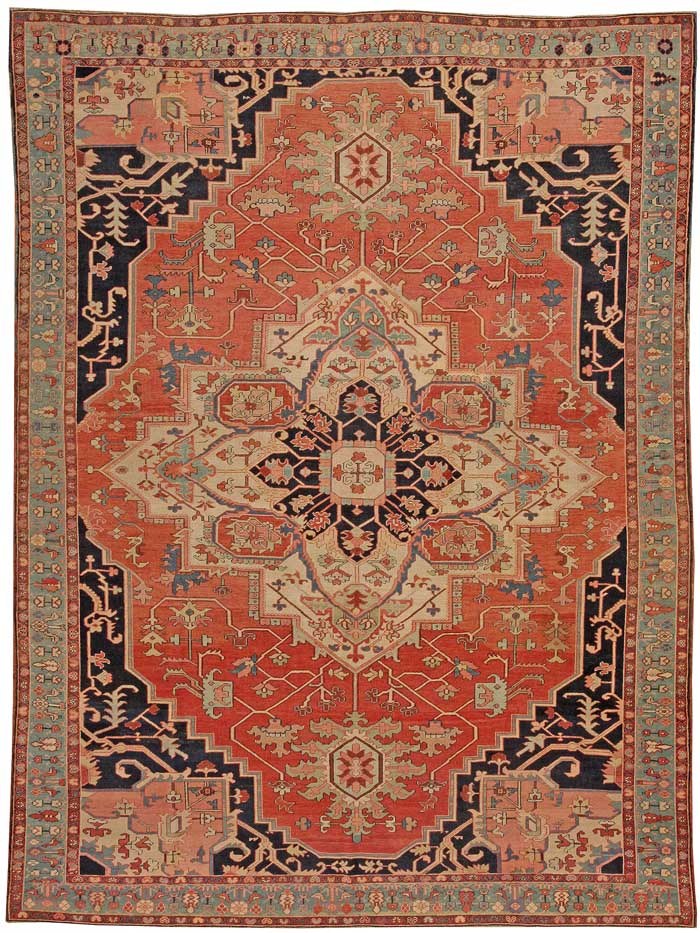
Persian city rugs often use curvilinear floral drawing, central medallions and dense knotting. Anatolian rugs more often show bold geometric layouts, prayer-niche designs and larger-scale motifs. Village and tribal rugs from both regions overlap heavily.
- Curvilinear florals: common in Kashan, Isfahan, Tabriz
- Geometric boldness: common in Anatolian village rugs and Iranian tribal rugs alike
- Colour palettes vary more by region than by country
Practical buying advice
Ask for the town or region of origin, not just country. A rug sold as 'Persian' should have a specific attribution such as Tabriz, Kerman or Qashqai that a seller can explain.
Related photographs and screened examples
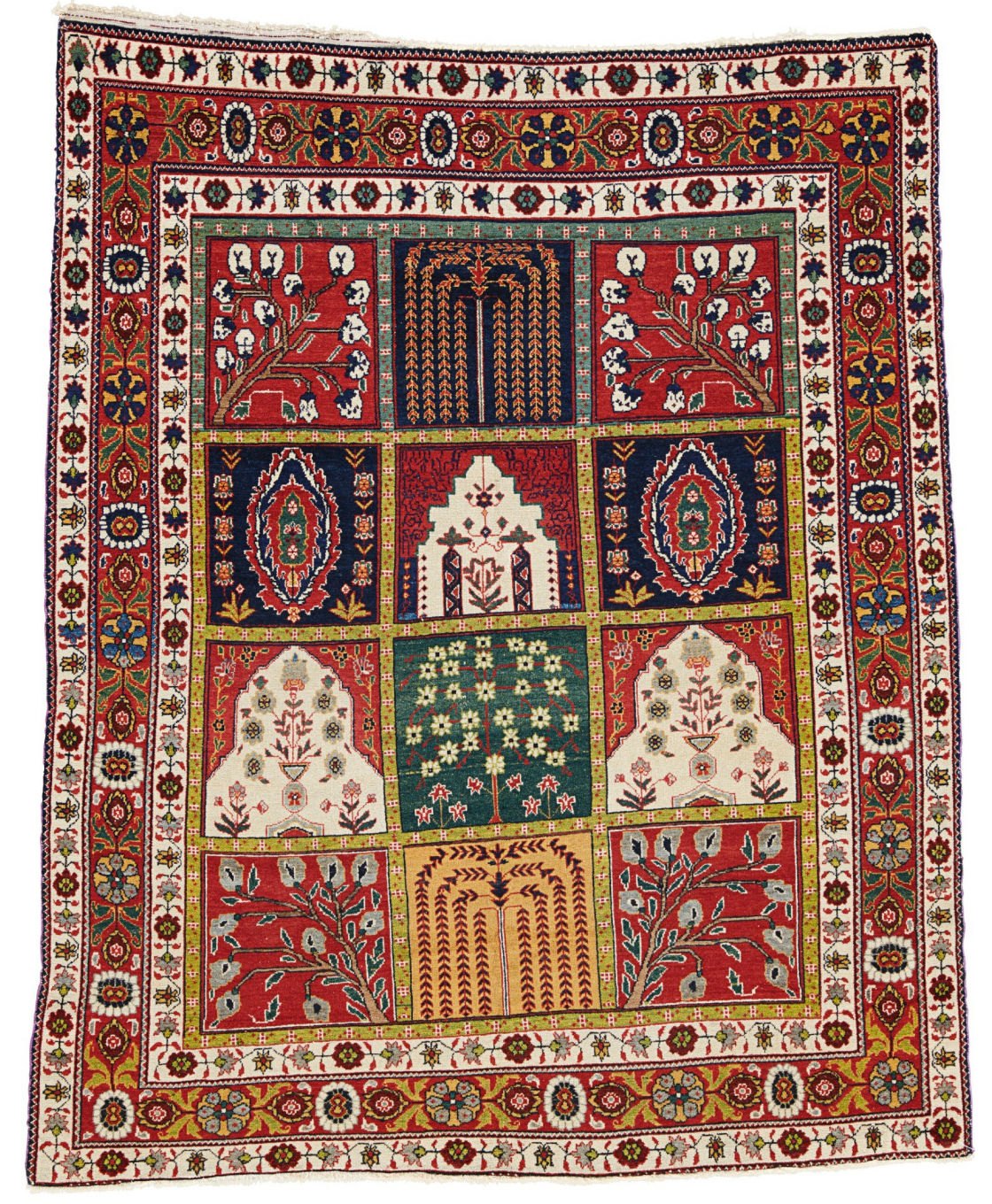

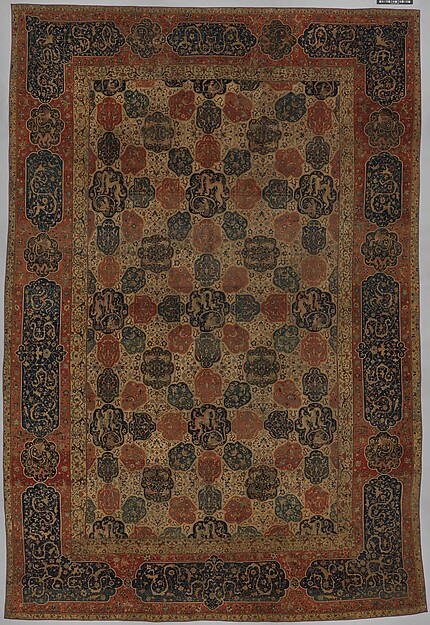
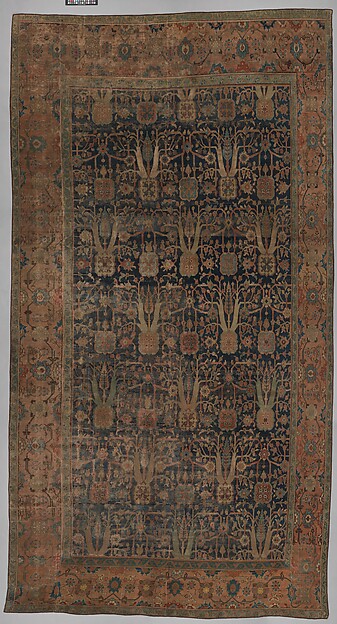
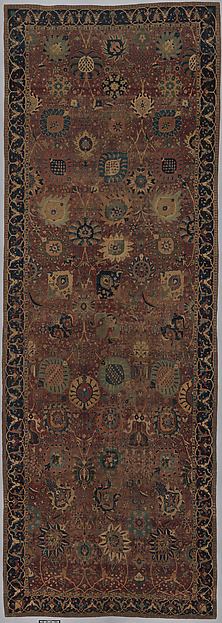
Representative photographs only. Marketplace examples rely on seller descriptions; CraftPersia has not independently authenticated their maker, origin, or rights status. Follow each source link for the listing context.
| Feature | Iranian rugs | Anatolian rugs |
|---|---|---|
| Knot | Asymmetrical and symmetrical | Mostly symmetrical |
| Drawing | Often curvilinear in city work | Often geometric |
| Foundation | Cotton common in city rugs | Wool common in village rugs |
| Typical names | Tabriz, Kashan, Heriz, Qashqai | Oushak, Konya, Kazak-related types |
References and further reading
These sources provide context, not authentication or provenance for an individual object. Editorial interpretations remain under review.