
Buying guide · 10 min
Persian rug sizes explained: zaronim, dozar, ghali and runners
Editorial team · updated 2026-10-03
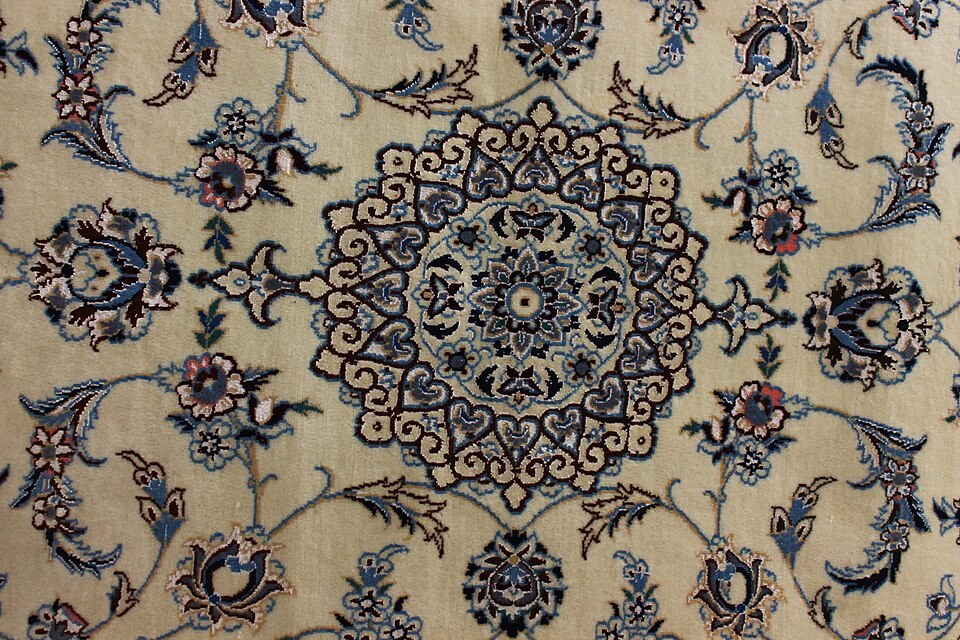
accessed 2026-09-30 · NAEINSUN · CC BY-SA 3.0 (Wikimedia Commons; JPG re-encoded) · Photo source ↗
- Type
- Buying guide
- Reading
- 10 min
- Chapters
- 9
- Photos
- 6
Traditional Persian rug size names describe formats; actual woven-body dimensions vary and must be checked.
Traditional names
- Pushti: very small, about 60×90 cm
- Zaronim: about 100×150 cm
- Dozar: about 130×200 cm
- Ghali: room-size, 200×300 cm and larger
- Kenareh: long runners, often 80–100 cm wide
Choosing a size
Leave a margin of floor visible around the rug in most rooms, and allow chair legs to stay on the rug under dining tables.
Common size names
Persian sizes often have traditional names. Approximate dimensions vary by region.
- Zaronim: about 150 × 100 cm
- Dozar: about 200 × 130 cm
- Kenareh: long narrow runner
- Qali: room-size, often 300 × 200 cm or larger
Choosing a size
For a living room, many people leave 30–50 cm of floor visible around the rug, or let front furniture legs rest on it. Measure the room and mark the rug outline with tape before buying.
A note on this guide
This guide is general information from the CraftPersia editorial team and has not been reviewed by a specialist. Prices, workshop locations and practices change; check current details before travelling or buying.
- Purchase measurement
- Length and width of woven body; fringe recorded separately
- Trade vocabulary
- Format descriptions, not guaranteed standard sizes
- Room fit
- Check actual furniture movement and clearances
Measure the actual woven body
Lay a sound rug flat without stretching it. Record length and width in centimetres, excluding fringe, then record fringe separately if it affects the available space. For an irregular shape, measure more than one position and retain the smallest and largest widths.
Never force a fragile rug flat or straighten old folds by pressure. Obtain supported measurements from a specialist if handling risks losses. A seller’s rounded dimensions may hide the difference between an acceptable fit and an obstructed doorway.
- Record units explicitly
- Separate fringe from body
- Note irregular ends and sides
- Ask for current measurements, not a stock size
Use traditional names as format clues
Pushti, zaronim, dozar, pardeh, kellegi, ghali and kenareh belong to a changing trade vocabulary rather than a universally enforced modern size standard. Spellings, historic measuring units and commercial usage vary.
A name may suggest a small mat, scatter rug, long format or room-size carpet, but it does not replace dimensions. Compare the actual body measurements instead of treating a historical zar as exactly one metre.
Test a footprint before buying
Mark the proposed outline with removable tape on a suitable floor or use a paper room plan. Open doors, pull dining chairs back normally and check the route people actually walk. A fixed border allowance cannot suit every room.
Include underlay thickness, furniture feet and fringe in the practical fit. A corridor runner should not obstruct doors or create curled trip edges. Do not select a fragile historic textile for a traffic pattern simply because its measurements fit.
Photographs do not provide a scale
A photographed carpet can look large or small depending on framing and perspective. Request a dimension record rather than calculating size from visible furniture, a hand or the camera crop. The credited rug photographs here do not demonstrate the traditional size names.
Before paying, confirm the specific item, permitted measurement tolerance, returns, delivery access and rolled package dimensions. For overseas purchases, confirm current origin-related import rules as well as the physical fit.
Related photographs and screened examples
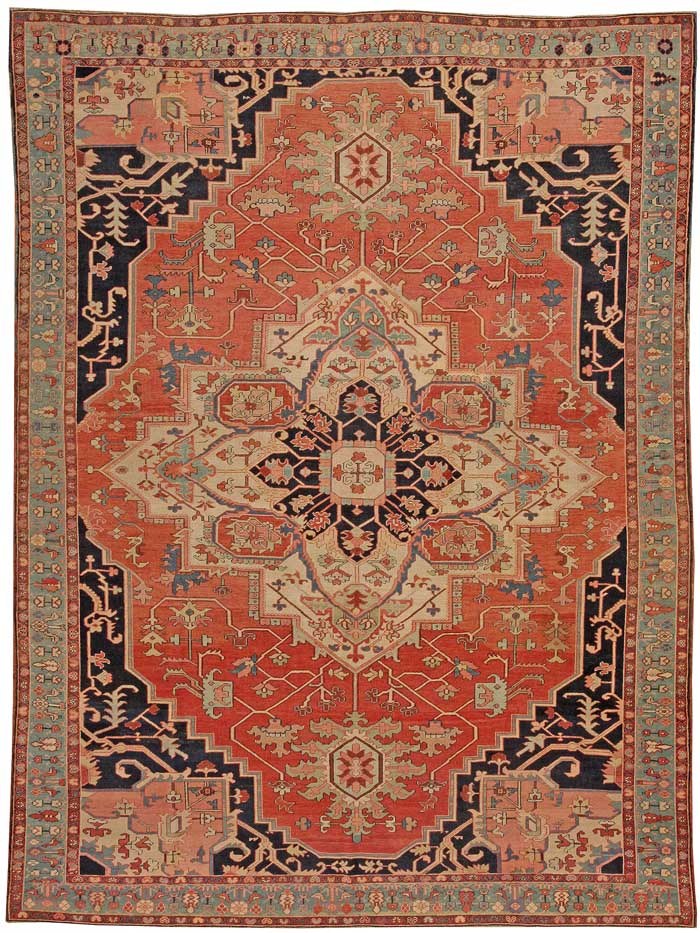
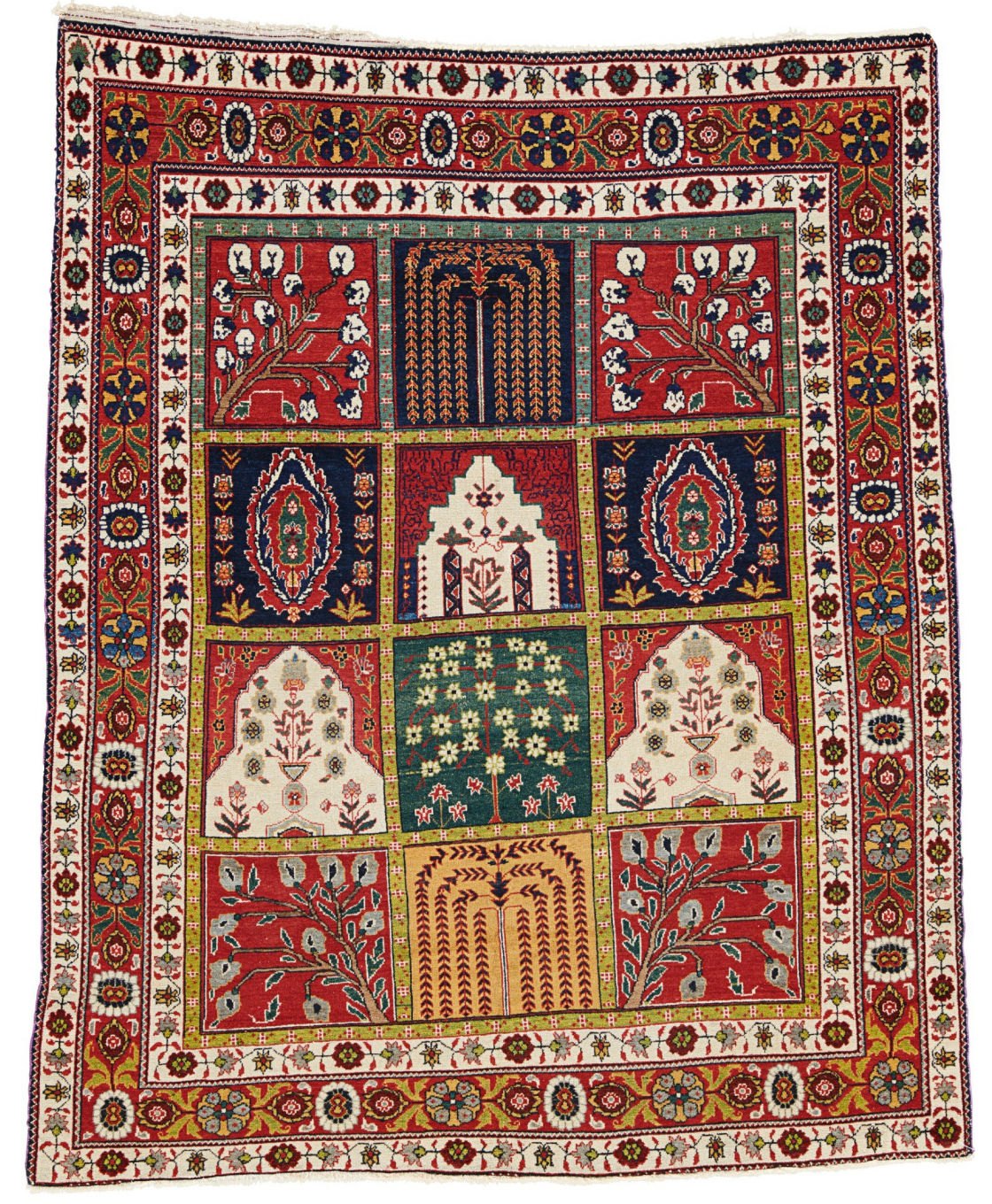

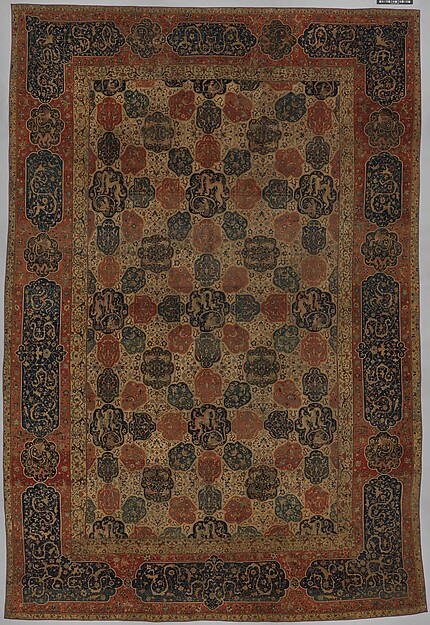
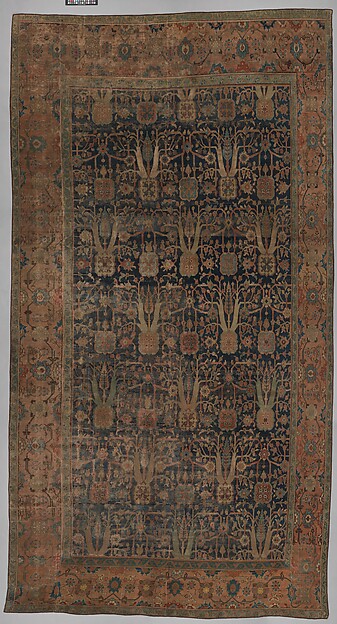
Representative photographs only. Marketplace examples rely on seller descriptions; CraftPersia has not independently authenticated their maker, origin, or rights status. Follow each source link for the listing context.
| Record or observation | What to do | What it cannot establish |
|---|---|---|
| Woven body | Record actual length × width and variation | A standard size from a trade name |
| Fringe and underlay | Add their footprint and thickness | Door clearance from a front photograph |
| Dining or seating area | Test chair and furniture movement | One universal border allowance |
| Delivery | Check rolled package and access | Room fit from shipping dimensions |
References and further reading
- [1] Encyclopaedia Iranica — Carpets: overview and bibliography ↗Historical and technical context; not a valuation or authentication of the photographed objects.
- [2] The George Washington University Museum and The Textile Museum ↗Collection and textile-study resources; a photograph cannot substitute for structural examination.
These sources provide context, not authentication or provenance for an individual object. Editorial interpretations remain under review.