
Beginner guide · 10 min
Persian rug patterns: a visual guide to medallions, herati, boteh
Editorial team · updated 2026-09-29
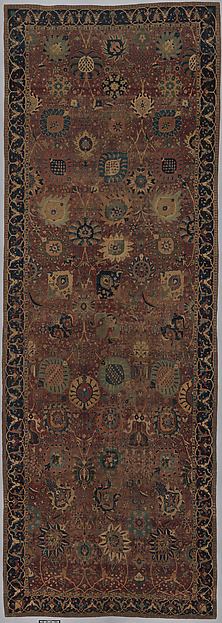
late 16th–early 17th century · accession 43.121.2 · The Metropolitan Museum of Art · CC0 (Met Open Access) · Photo source ↗
- Type
- Beginner guide
- Reading
- 10 min
- Chapters
- 8
- Photos
- 6
Most Persian rug patterns fall into a few layouts — medallion, all-over, prayer, garden and pictorial — filled with recurring motifs.
The main layouts
- Medallion: a central medallion with corner pieces (Kashan, Tabriz, Kerman)
- All-over: a repeating motif across the field (herati, mina khani)
- Prayer: an arch at one end
- Garden (khesti): the field divided into panels
- Pictorial: hunting scenes, portraits or stories
Common motifs
- Herati: a flower in a diamond flanked by leaves
- Boteh: a teardrop or paisley shape
- Shah Abbasi: large palmette flowers
- Eslimi: spiralling arabesques
- Gol-o-morgh: flowers and birds
- Mina khani: a lattice of daisy-like flowers
Village and tribal geometry
Village and nomadic weavers render motifs in angular, geometric shapes because they weave from memory without cartoons.
Reading patterns with care
Pattern alone rarely identifies origin — popular designs travel between centres and abroad. Use patterns alongside structure and materials. See our motif pages for details on each.
Layouts
- Medallion (toranj): a central focus with corners
- All-over: repeating motifs such as herati or boteh
- Garden (khesti): compartments
- Prayer (mihrab): an arch at one end
- Pictorial: scenes, figures or portraits
- Main layouts
- Medallion, all-over, prayer, garden/panel, pictorial
- Common motifs
- Herati, boteh, shah abbasi palmette, mina khani
Layouts
Start with the overall plan. A medallion layout has a central form with corner pieces; an all-over (allover) layout repeats a motif across the field; panel or khesti layouts divide the field into compartments; prayer designs use a niche. Pictorial rugs show scenes, poets or hunting subjects.
Motifs to recognise
The Herati is a rosette enclosed by a diamond with curling leaves, common across many regions. The boteh is the teardrop motif known in the West as paisley. Shah Abbasi palmettes are large, layered flowers from Safavid court design. Mina khani is a lattice of daisy-like flowers, often in Varamin and Kurdish rugs.
- Herati — rosette, diamond, 'fish' leaves
- Boteh — teardrop, cypress or flame form
- Shah Abbasi — layered palmette
- Mina khani — flower lattice
Borders
Most Persian rugs have a main border flanked by guard stripes. Turtle (lak-pusht) borders appear on Herati rugs; reciprocal 'running dog' borders on village pieces. A border that runs cleanly around corners often signals planned, cartoon-led weaving.
Related photographs and screened examples

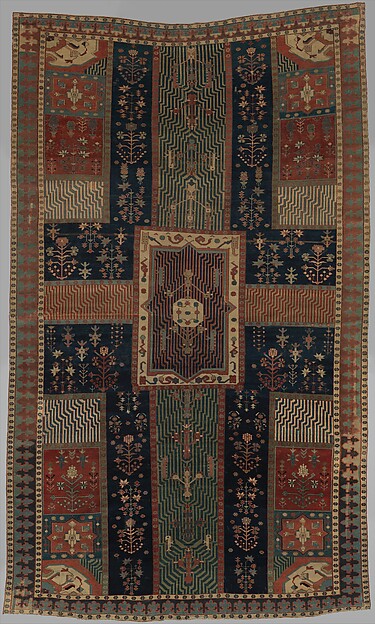

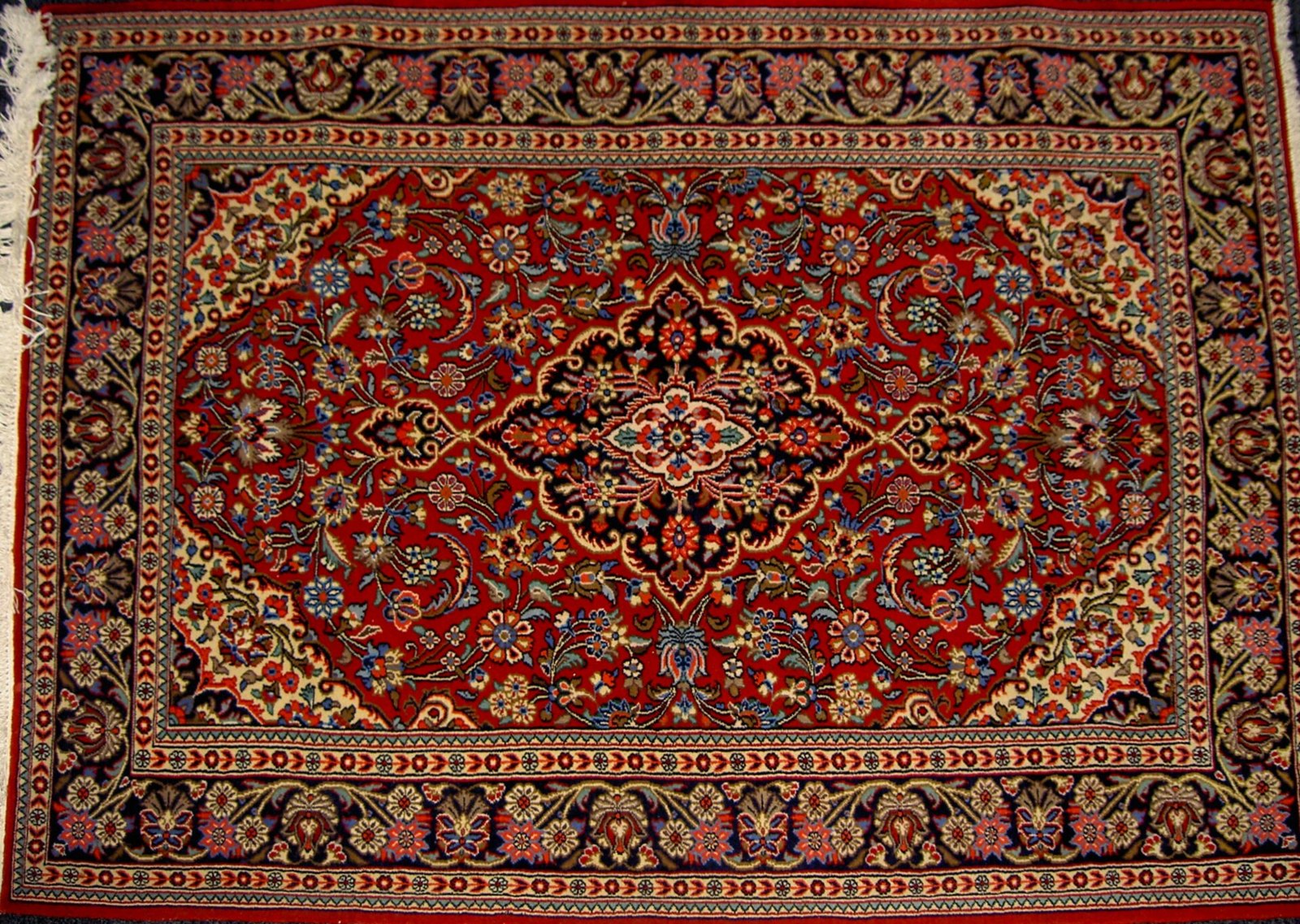
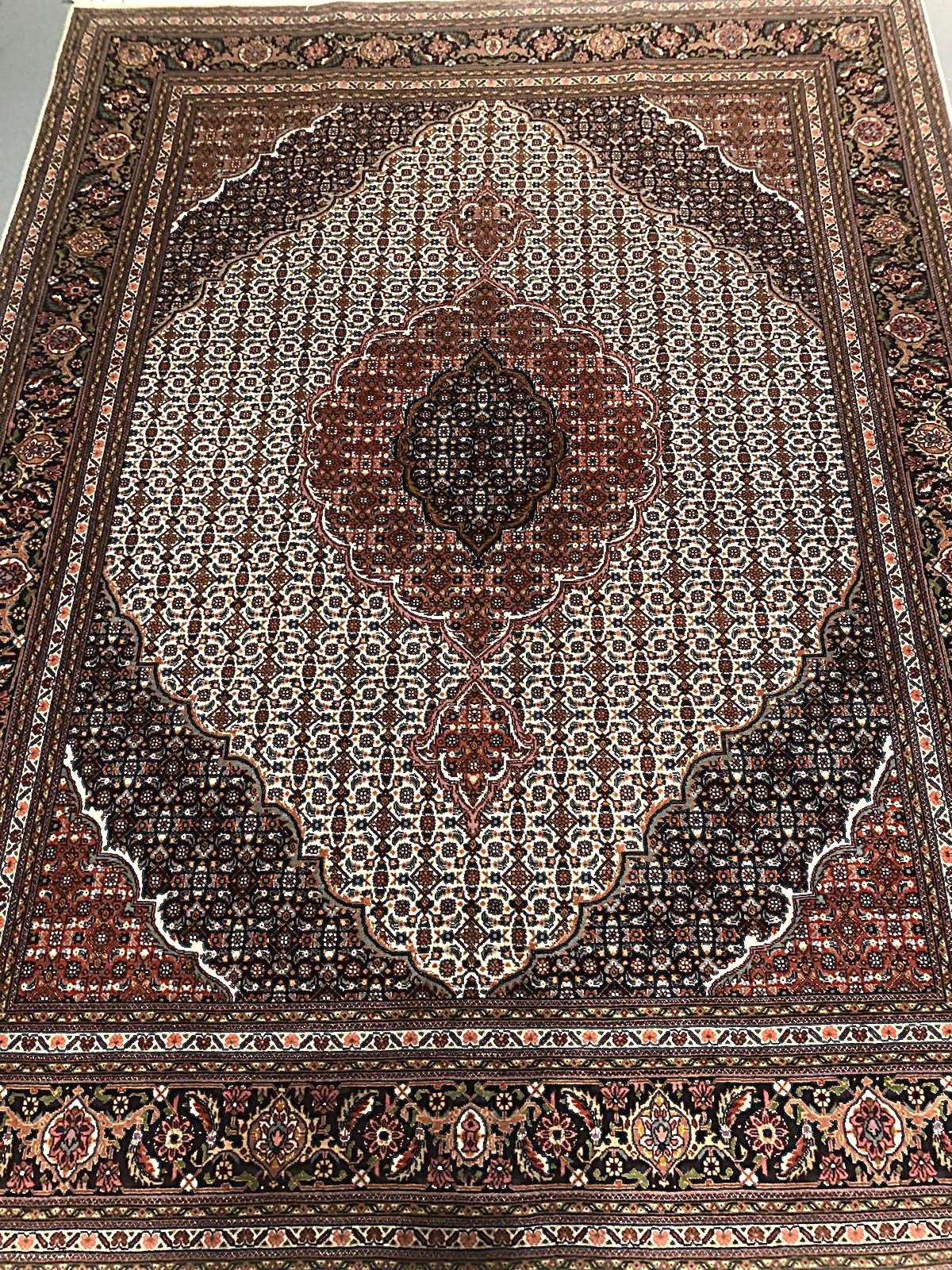
Representative photographs only. Marketplace examples rely on seller descriptions; CraftPersia has not independently authenticated their maker, origin, or rights status. Follow each source link for the listing context.
| Pattern | Often seen in |
|---|---|
| Herati | Bijar, Tabriz, Khorasan, Farahan |
| Boteh | Seraband, Kerman, Qashqai |
| Mina khani | Varamin, Kurdish rugs |
| Garden / khesti | Bakhtiari |
| Pictorial | Kerman, Tabriz, Kashan |
References and further reading
These sources provide context, not authentication or provenance for an individual object. Editorial interpretations remain under review.