
Preservation · 10 min
Persian rug fringes: what they are and how to care for them
Editorial team · updated 2026-10-03
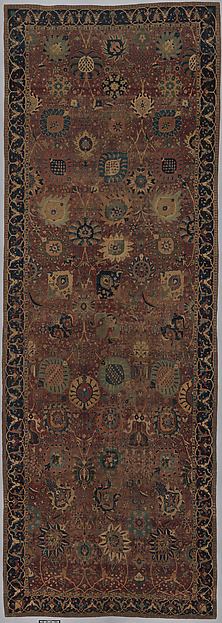
late 16th–early 17th century · accession 43.121.2 · The Metropolitan Museum of Art · CC0 (Met Open Access) · Photo source ↗
- Type
- Preservation
- Reading
- 10 min
- Chapters
- 8
- Photos
- 6
On a hand-knotted rug the fringe is the end of the warp threads — part of the structure — so it should be protected, not cut off.
Why it matters
Fringes are the warp ends. Machine rugs often have sewn-on fringes; hand-knotted rugs don't.
Care
- Never vacuum fringes directly
- Comb gently with fingers
- Wash only with professional cleaning
- Secure worn ends with overcasting before knots loosen
What the fringe is
On hand-knotted rugs the fringe is the end of the warp threads that run through the whole rug, not a sewn-on trim. A sewn-on fringe suggests a machine-made or tufted rug.
Care
- Vacuum fringes gently across, not along, or avoid them
- Do not cut fringes; ask a restorer about secure end finishes
- Washing should be done professionally to avoid dye bleed
A note on this guide
This guide is general information from the CraftPersia editorial team and has not been reviewed by a specialist. Prices, workshop locations and practices change; check current details before travelling or buying.
- What fringe is
- The ends of the warp threads, part of the rug's foundation
- Common fibres
- Cotton, wool, occasionally silk
Why the fringe matters
On a hand-knotted Persian rug the fringe is not sewn on; it is the exposed end of the warps that run through the whole rug. Losing fringe is cosmetic at first, but once the end finish (the kilim band or overcast) wears through, knots begin to unravel. Machine-made rugs often have a sewn-on fringe — a quick check of origin.
Cleaning without damage
Never vacuum the fringe with a rotating brush; it catches and tears warps. Vacuum toward, not across, the ends with suction only, or flip the fringe under. Brownish fringe on cotton is often wool dye or soil wicking; aggressive bleaching weakens cotton and should be left to a specialist cleaner.
- Comb gently with fingers, not a stiff comb
- Rotate the rug yearly to share wear
- Protect ends from chair legs and doorways
When to repair
Ask a restorer to secure ends as soon as knots are exposed. Securing with a new overcast or blanket stitch is modest and reversible; re-fringing by sewing new warps into the rug is more interventive and should be disclosed in any later sale.
Related photographs and screened examples

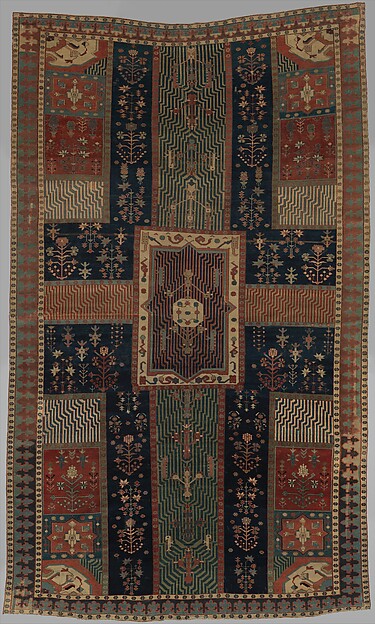

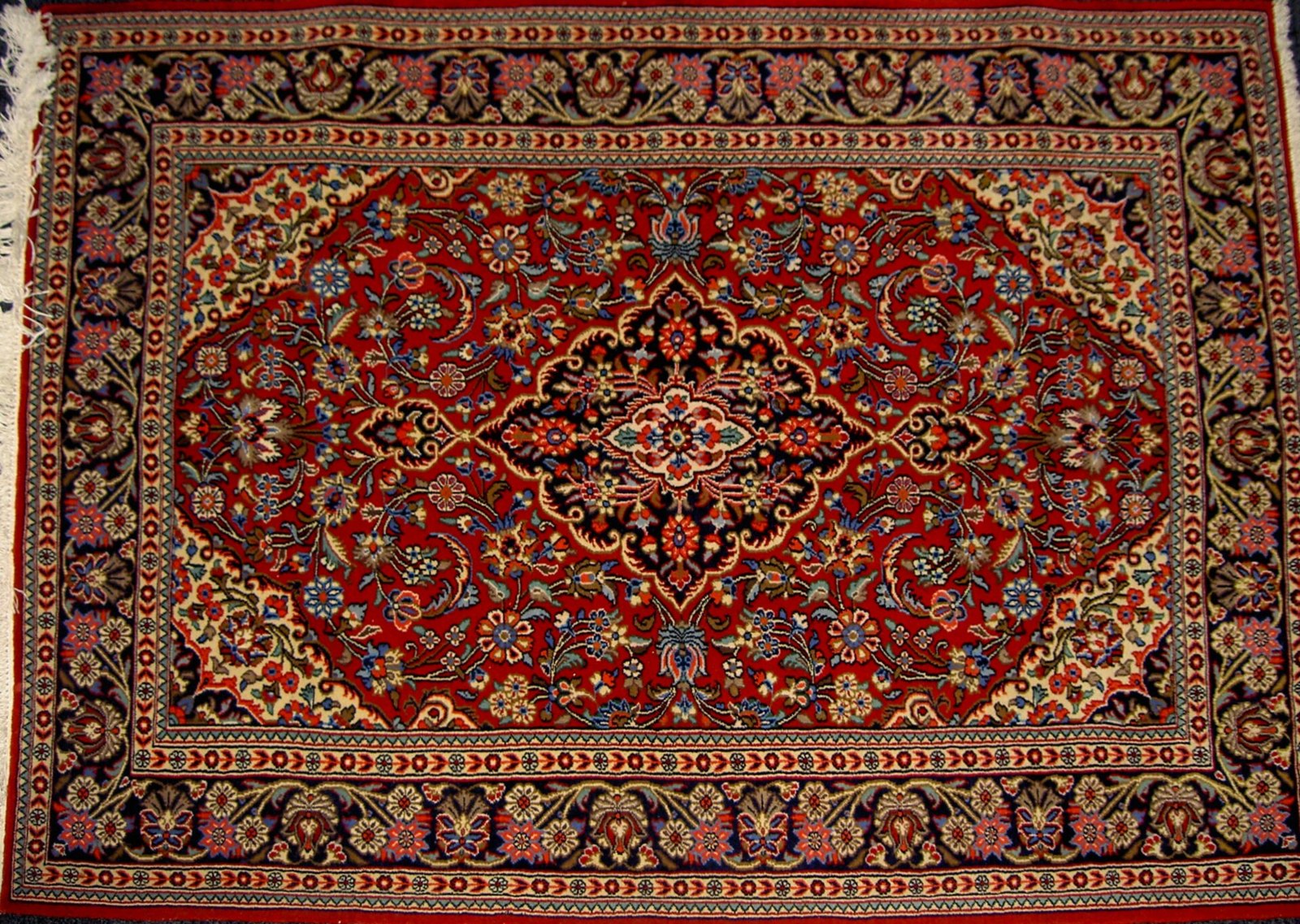
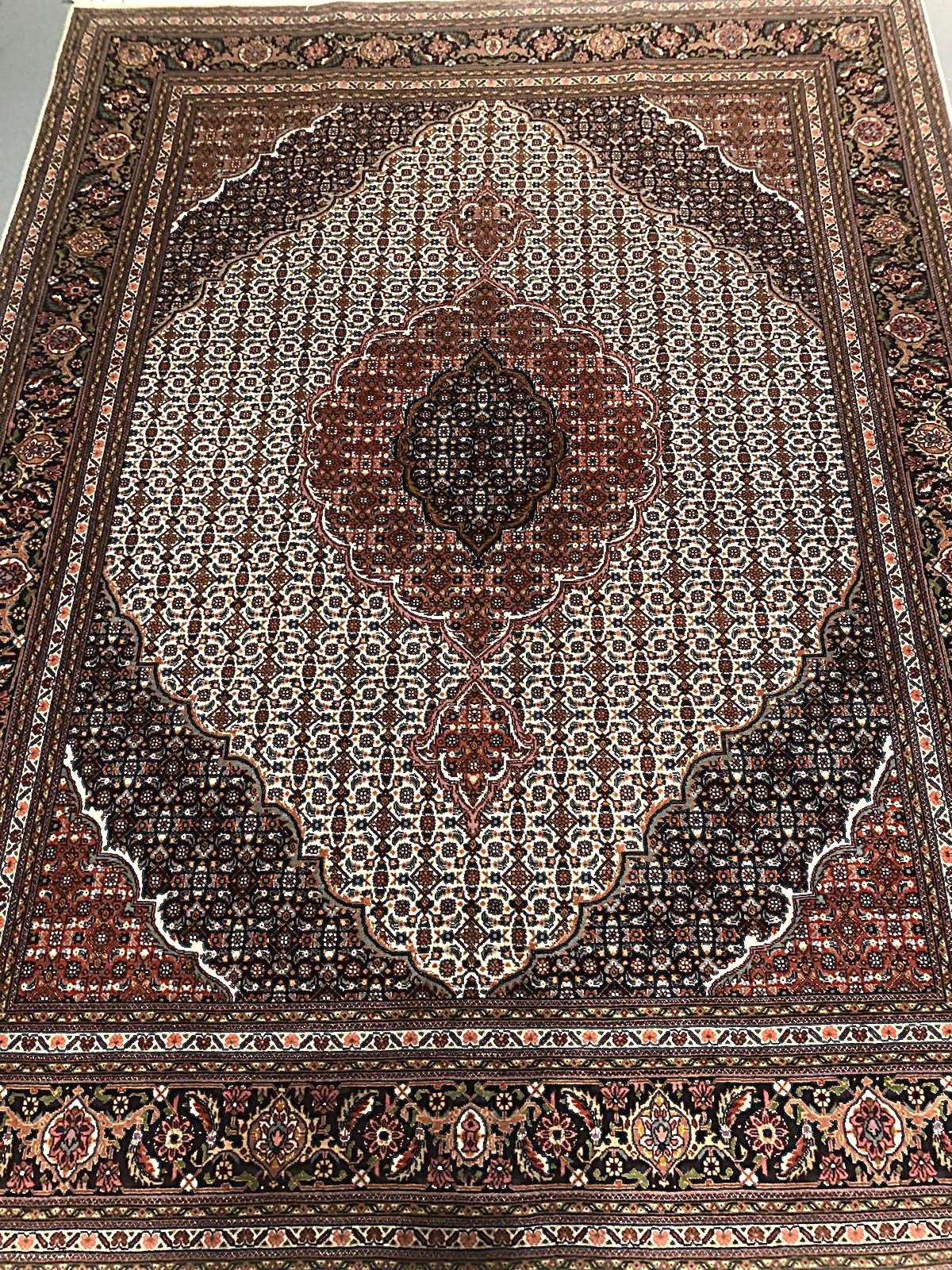
Representative photographs only. Marketplace examples rely on seller descriptions; CraftPersia has not independently authenticated their maker, origin, or rights status. Follow each source link for the listing context.
| Problem | Likely cause | Response |
|---|---|---|
| Fringe tangled | Vacuum, foot traffic | Finger-comb, change vacuum method |
| Fringe missing, end band intact | Wear | Monitor; secure band |
| Knots coming loose | End band worn through | Professional end securing |
| Yellowed fringe | Soil, dye migration | Specialist cleaning |
References and further reading
These sources provide context, not authentication or provenance for an individual object. Editorial interpretations remain under review.