
Beginner guide · 13 min
Glassblowing in Iran
Editorial team · updated 2026-09-29
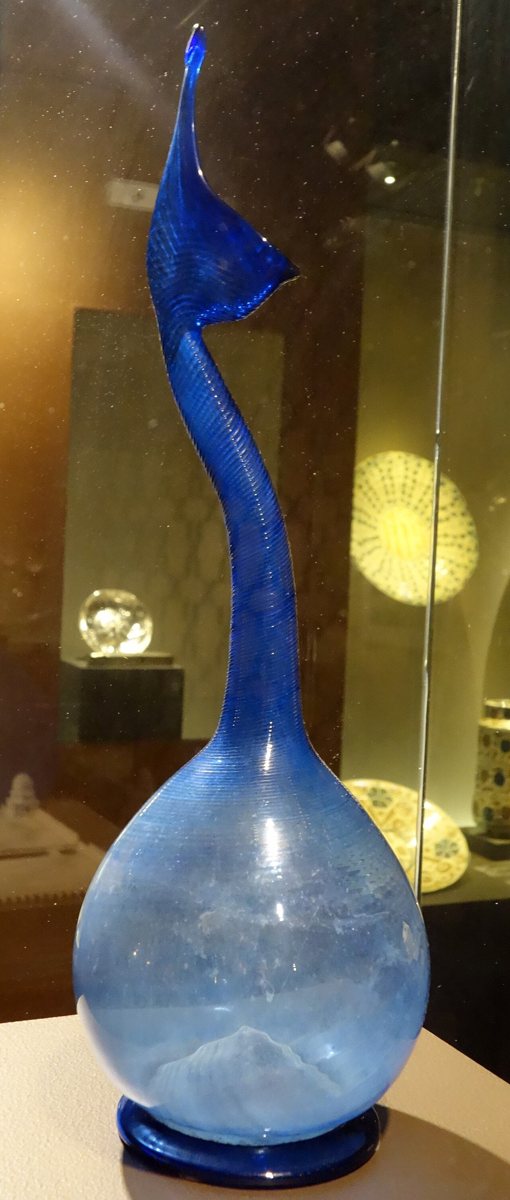
Accessed 15 October 2026.; attribution and origin follow the Commons record and are not independently verified. · Sandstein · CC BY-SA 4.0 (per Wikimedia Commons; rights review pending) · Photo source ↗
- Type
- Beginner guide
- Reading
- 13 min
- Chapters
- 11
- Photos
- 1
Hand-blown glass traditions, including Shiraz and Tehran workshops.
Process
Molten glass is gathered on a blowpipe, inflated and shaped by hand.
Look
Bubbles, uneven wall thickness and a pontil mark on the base.
Status
Workshops are few, and the craft is often described as endangered.
Workshops and colours
Glassblowing survives in a small number of workshops, with Shiraz and Tehran most often mentioned. Typical colours are cobalt blue, turquoise, green and amber. Some workshops melt recycled glass.
Recognising hand-blown glass
- Small bubbles (seeds) in the glass
- A rough or polished pontil mark under the base
- Slight asymmetry and uneven wall thickness
- No mould seams
Care and travel
Hand-blown glass can crack from sudden temperature changes, so warm it gradually before pouring in hot drinks. Wrap each piece separately when travelling.
Furnace and tools
Small workshops run a furnace for the melt and a glory hole for reheating. The blower gathers glass on a blowpipe, inflates it, and shapes it with jacks, paddles and wet newspaper. Handles and feet are applied hot, and finished pieces cool slowly in an annealing oven to prevent cracking.
A note on this guide
This is a general introduction written by the CraftPersia editorial team. It has not yet been reviewed by a specialist. Practice varies between workshops; confirm details with makers or museums, and treat any dates as approximate.
Crafts covered in this guide
Glassmaking (شیشهگری) — Iranian glass includes Sasanian cut glass, early Islamic mould-blown and cut vessels, and later blown bottles and rosewater sprinklers, with a small studio glassblowing tradition today.
Materials, techniques and centres
Associated centres include Tabriz, Shiraz and Kashan; a place name on its own does not establish where an individual object was made.
Collecting and next steps
When applying this guide to a specific object, work from what can be observed: structure, materials, tool marks, repairs and documentation. Ask the seller or maker for written statements about who made the piece, where, from what materials, and what has been repaired or replaced.
The steps here are educational; identification, conservation and valuation of an individual object require appropriate independent expertise.
References and further reading
- [1] H. E. Wulff, The Traditional Crafts of Persia, MIT Press, 1966.General historical craft reference, not evidence for a particular object.
These sources provide context, not authentication or provenance for an individual object. Editorial interpretations remain under review.