
Collector guide · 11 min
Persian garden carpets: paradise on the floor
Editorial team · updated 2026-10-03
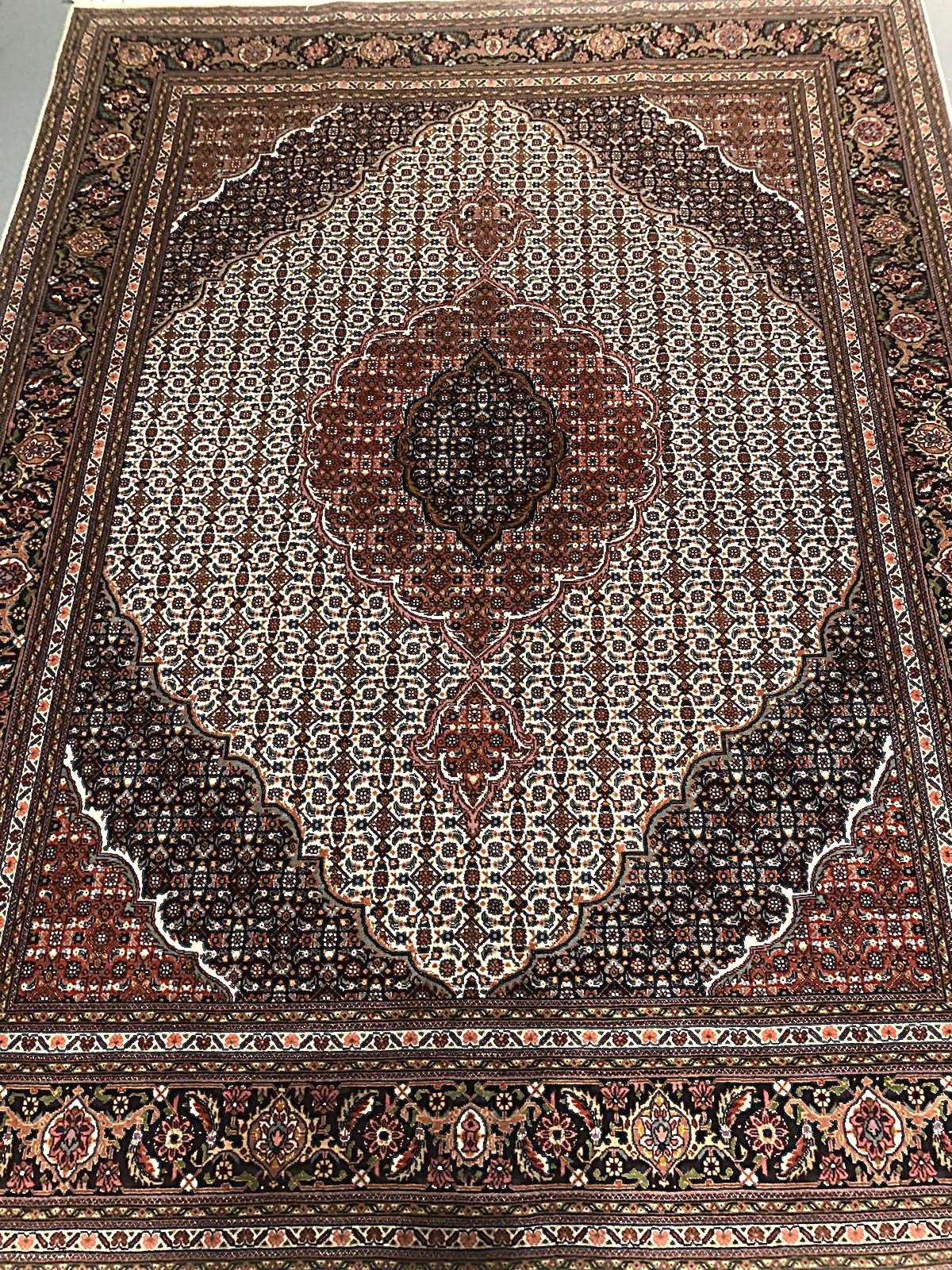
Listing image, 2025 · Arabesque Rugs (photographer not stated) · Permission status not reviewed · Photo source ↗
- Type
- Collector guide
- Reading
- 11 min
- Chapters
- 9
- Photos
- 6
Garden carpets map the Persian chahar-bagh — four-part garden with water channels — in a grid of plants, fish and trees.
The chahar-bagh
Persian gardens are divided by water channels into four parts; carpets translate this plan into a woven field.
Types
- Grid compartments with trees and flowers
- Channels with fish and ducks
- Bakhtiari panel (khesti) designs inspired by gardens
Layout
Garden carpets divide the field into rectangular compartments separated by water channels, reflecting the chahar bagh (four-part garden). Compartments may contain trees, flowers, fish or birds.
Historical examples
Famous early garden carpets are in museum collections; contemporary weavers continue the design, especially in Bakhtiari rugs, whose compartment layouts are related.
Reading the design
- Water channels: blue bands, sometimes with fish
- Crossing point: often a pool or pavilion
- Compartments: trees, shrubs or flowering plants
- Borders: may represent the garden wall
A note on this guide
This guide is general information from the CraftPersia editorial team and has not been reviewed by a specialist. Prices, workshop locations and practices change; check current details before travelling or buying.
- Design
- Chahar bagh — garden divided by water channels into quarters
- Key regions
- Kerman, Kurdistan (Bakhtiari panel designs related)
- Famous example
- Wagner Garden Carpet, Burrell Collection, Glasgow
A garden you can unroll
Garden carpets translate the Persian four-fold garden — chahar bagh — into a plan view: water channels with fish, flowerbeds, cypresses and fruit trees, sometimes pavilions. They connect to poetry and Qur'anic imagery of paradise, and to real gardens such as those preserved at Fin in Kashan.
Surviving examples
The Wagner Garden Carpet (17th century, Kerman area), now in the Burrell Collection, is the classic early example. Later Kurdish and Bakhtiari compartment carpets develop the grid into panels each holding a tree or flower, a design still woven today.
- Look for a grid of channels, often in blue
- Fish and ducks in channels on finer pieces
- Cypress and blossoming trees as paired symbols
Buying a garden design
Contemporary 'khesti' (tile/panel) garden designs from Bakhtiari areas are common and honest village products. Older formal garden carpets are museum rarities; any piece described as such needs strong documentation.
Related photographs and screened examples
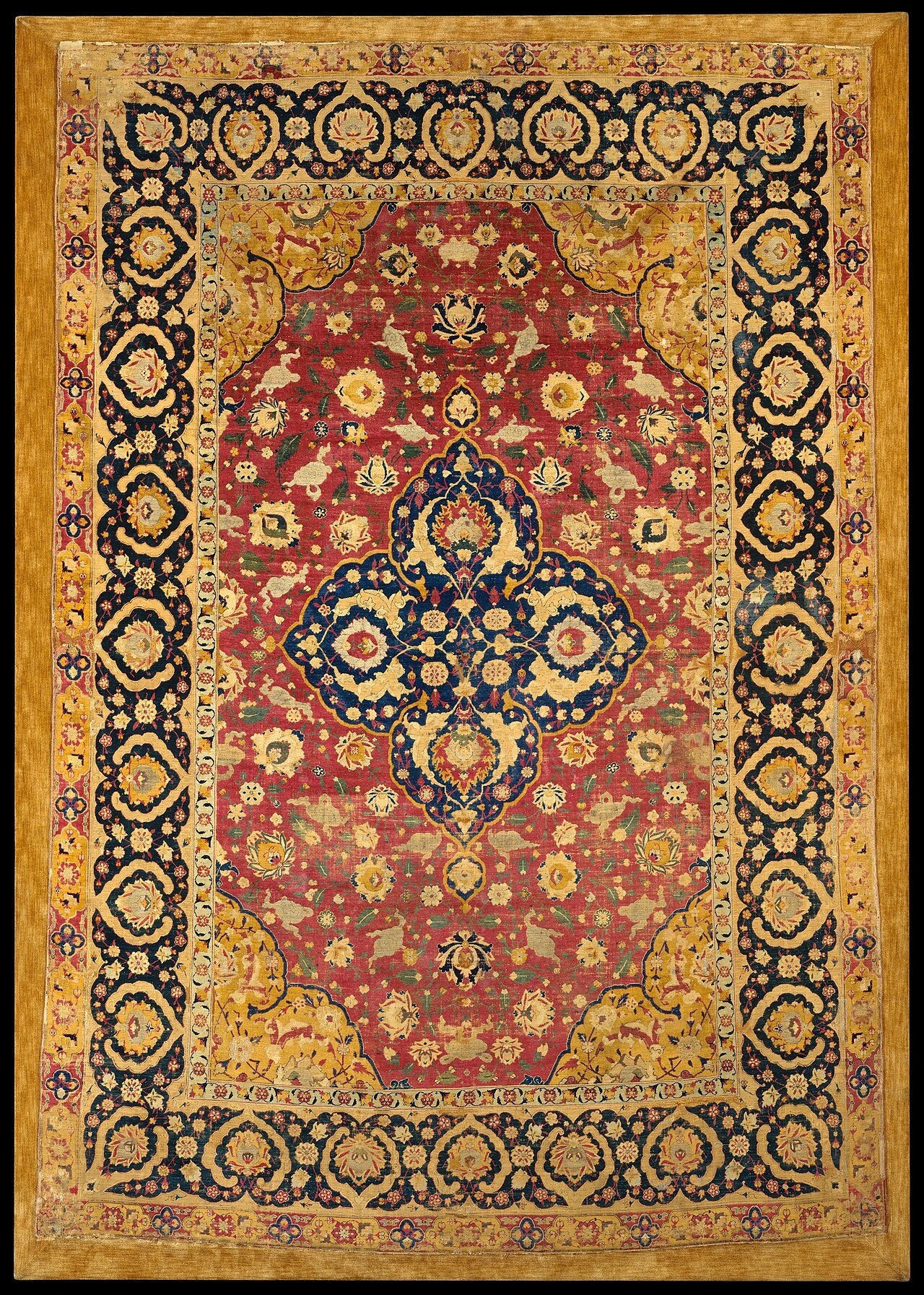
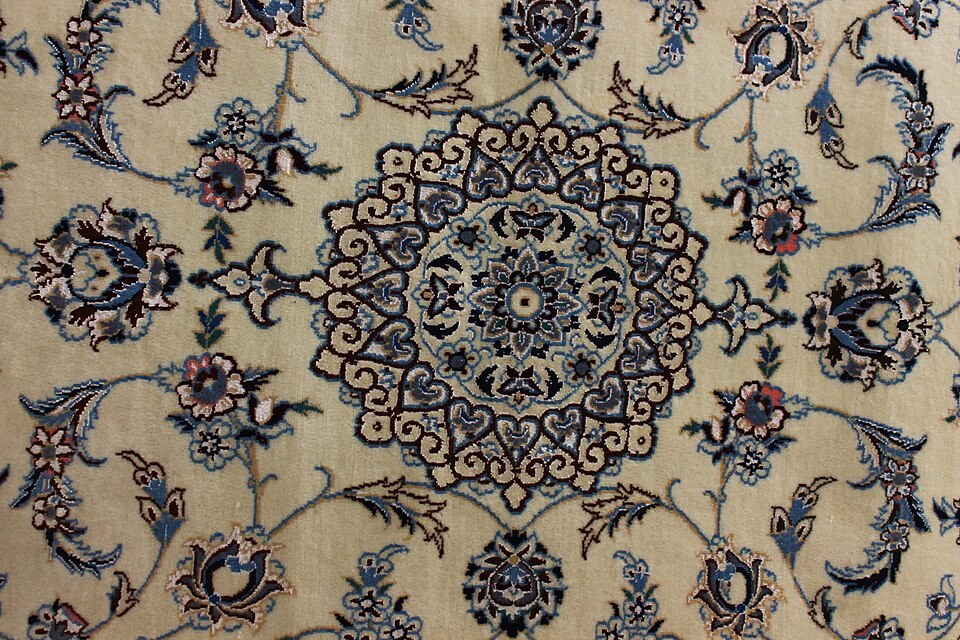
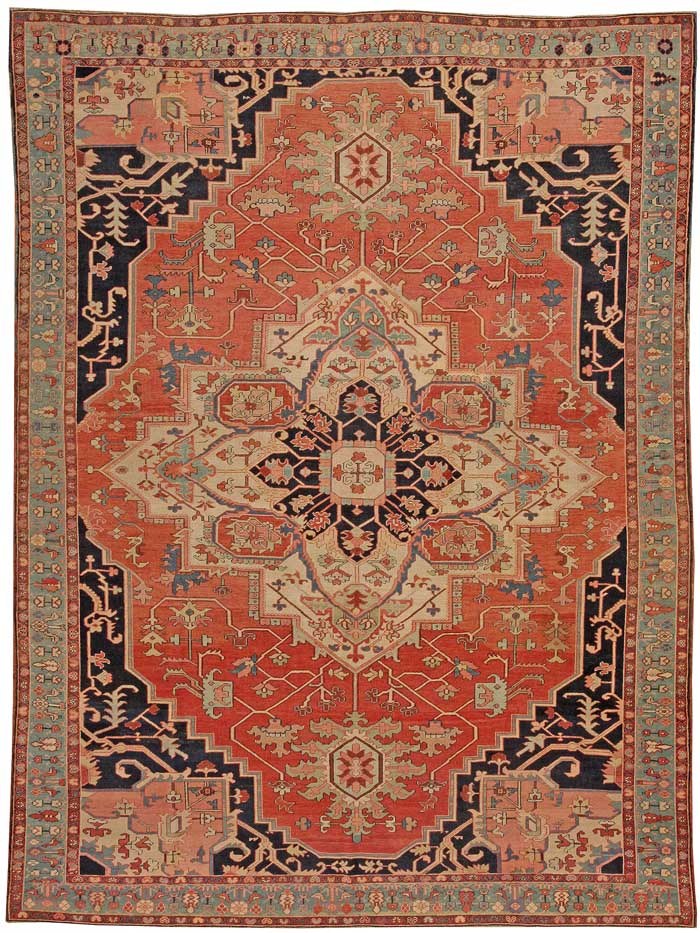
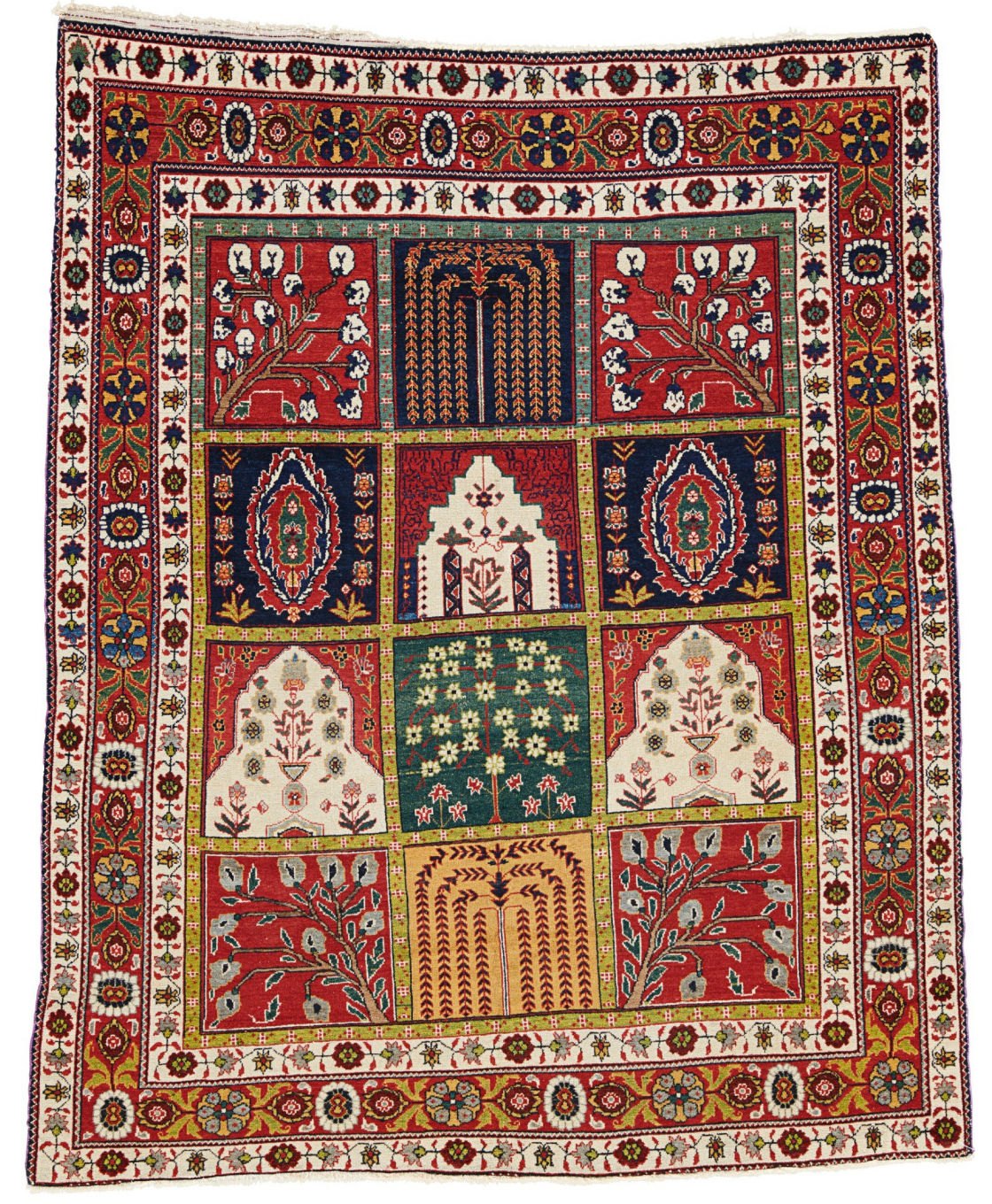

Representative photographs only. Marketplace examples rely on seller descriptions; CraftPersia has not independently authenticated their maker, origin, or rights status. Follow each source link for the listing context.
Timeline
- Safavid 17th c.
Formal garden carpets woven, notably in Kerman
- 18th–19th c.
Kurdish and north-west variants
- 19th–20th c.
Bakhtiari panel (khesti) designs popularised
References and further reading
These sources provide context, not authentication or provenance for an individual object. Editorial interpretations remain under review.