
Beginner guide · 11 min
Boteh: the Persian origins of paisley
Editorial team · updated 2026-10-03
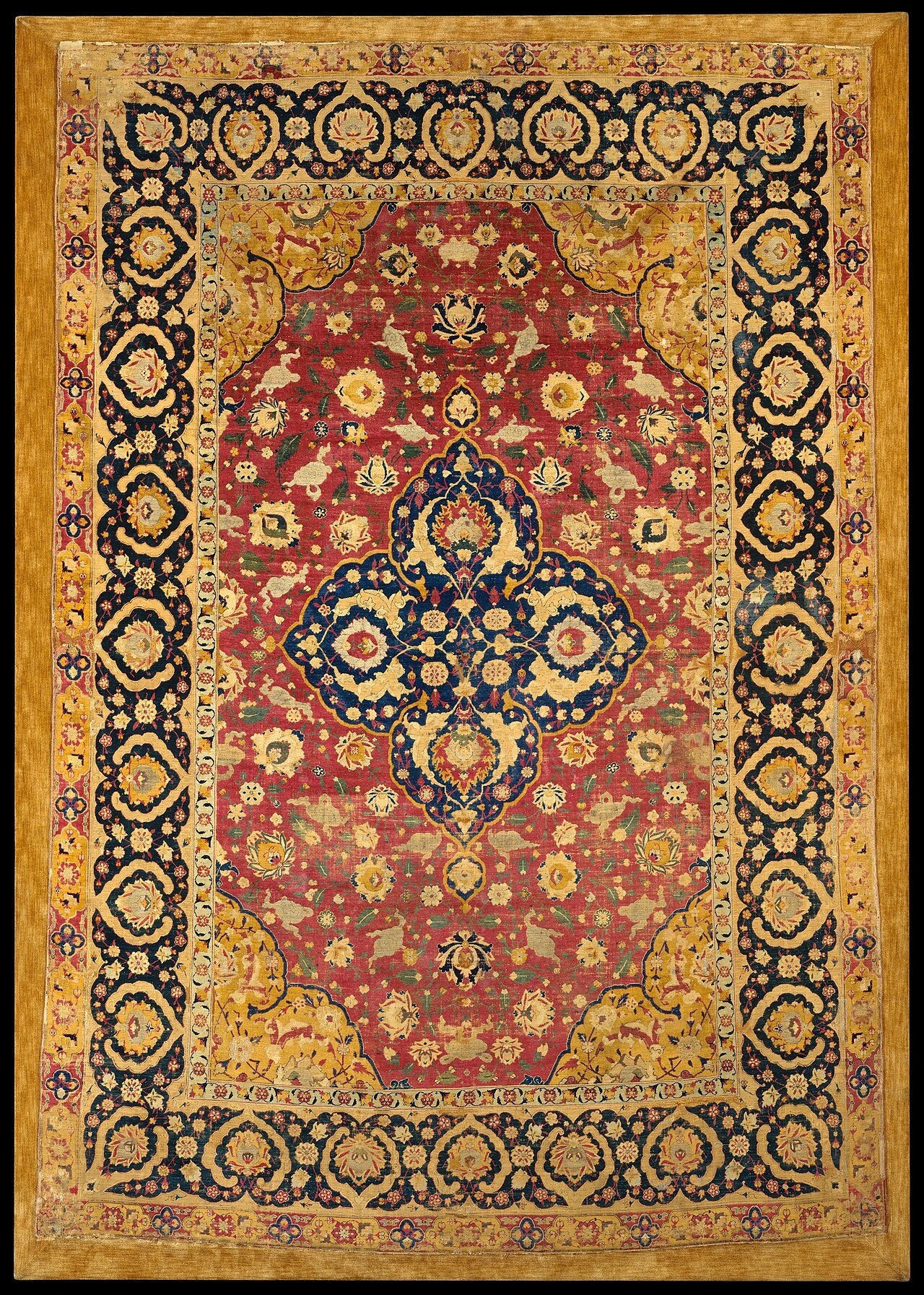
accessed 2026-09-30 · The Metropolitan Museum of Art · CC0 (Met Open Access / Wikimedia Commons) · Photo source ↗
- Type
- Beginner guide
- Reading
- 11 min
- Chapters
- 9
- Photos
- 6
The teardrop boteh motif, known in the West as paisley, is common in termeh, rugs and pateh; its exact origin and meaning are debated.
Where it appears
- Termeh brocade
- Rugs from Fars, Kerman and Hamadan regions
- Pateh embroidery
- Qalamkar prints
Interpretations
Readings include cypress, flame, almond or a stylised plant. None is proven; treat claims of a single meaning with caution.
Name
'Paisley' comes from the Scottish town that mass-produced shawls imitating Kashmiri and Persian ones.
Where boteh appears
Boteh, the teardrop motif known in English as paisley, appears in termeh, pateh embroidery, carpets and qalamkar. Its origin and meaning are debated; interpretations include a flame, cypress, or bud.
Recognising variations
- Large single boteh in termeh fields
- Small repeated boteh in carpets
- Mother-and-child boteh with a small form inside a larger one
A note on this guide
This guide is general information from the CraftPersia editorial team and has not been reviewed by a specialist. Prices, workshop locations and practices change; check current details before travelling or buying.
Crafts covered in this guide
Termeh (ترمه) — A patterned Iranian brocade woven with supplementary wefts, historically in silk and wool, associated above all with Yazd and Kerman.
Persian carpet (فرش ایرانی) — A hand-knotted pile textile woven across Iran in city workshops, village looms and pastoral camps, distinguished by regional structure, palette and design vocabulary.
Pateh embroidery (Kerman) (پته) — A hand-embroidered wool textile from Kerman in which coloured silk or wool threads are worked in dense chain and satin stitching over a woollen ground, typically in a limited palette against a natural or dyed field.
Materials, techniques and centres
Termeh, Persian carpet and Pateh embroidery (Kerman) are recorded in the archive with silk, wool, natural dyes and cotton as principal materials, and supplementary weft brocade, knotted pile weaving and surface embroidery as techniques. Associated centres include Kerman, Yazd, Tabriz, Isfahan, Kashan and Qom; a place name on its own does not establish where an individual object was made.
Collecting and next steps
When applying this guide to a specific object, work from what can be observed: structure, materials, tool marks, repairs and documentation. Ask the seller or maker for written statements about who made the piece, where, from what materials, and what has been repaired or replaced.
The steps here are educational; identification, conservation and valuation of an individual object require appropriate independent expertise.
Related photographs and screened examples
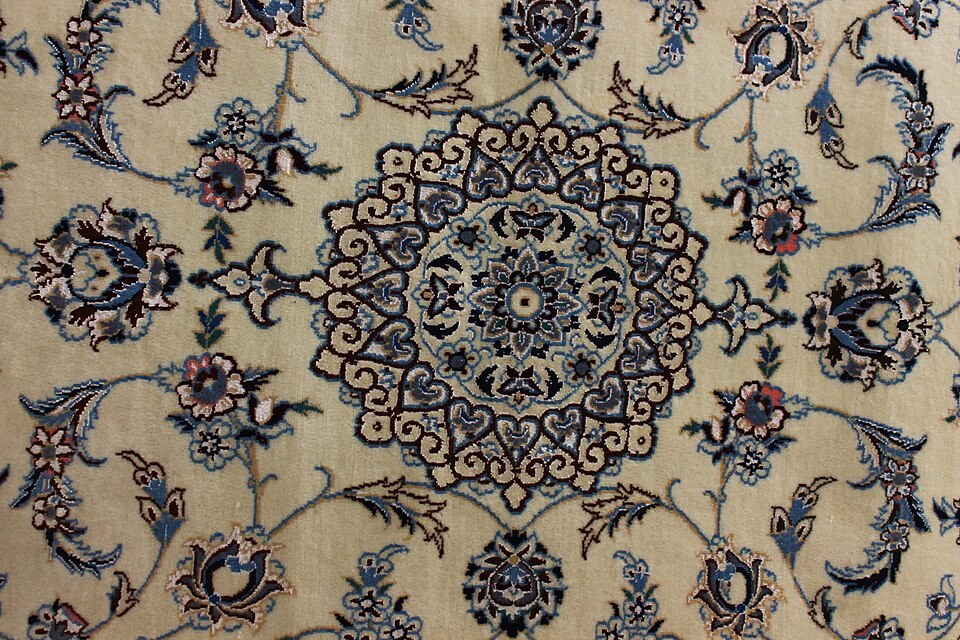
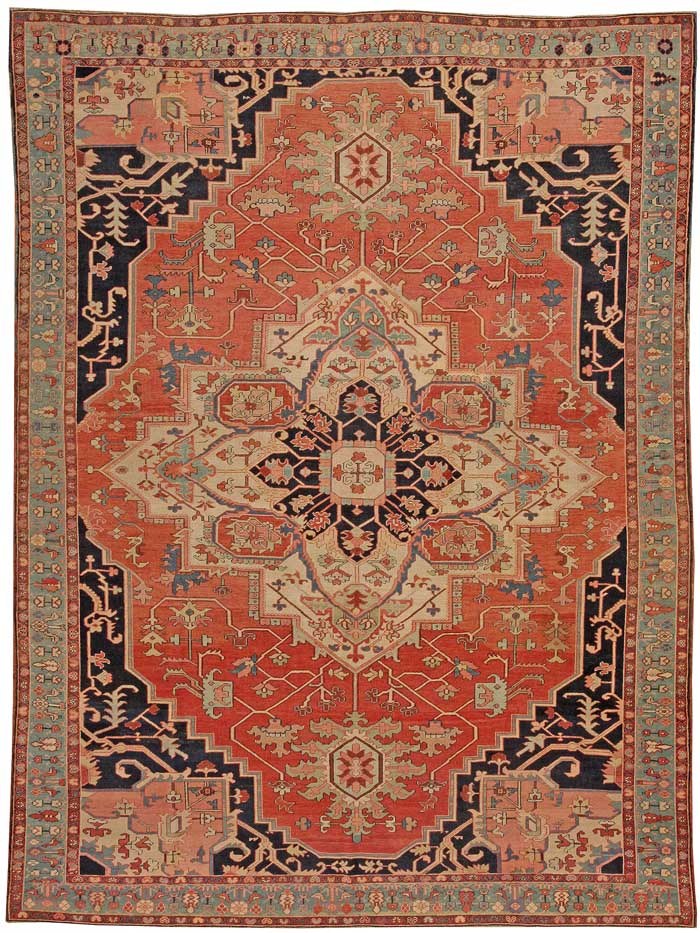
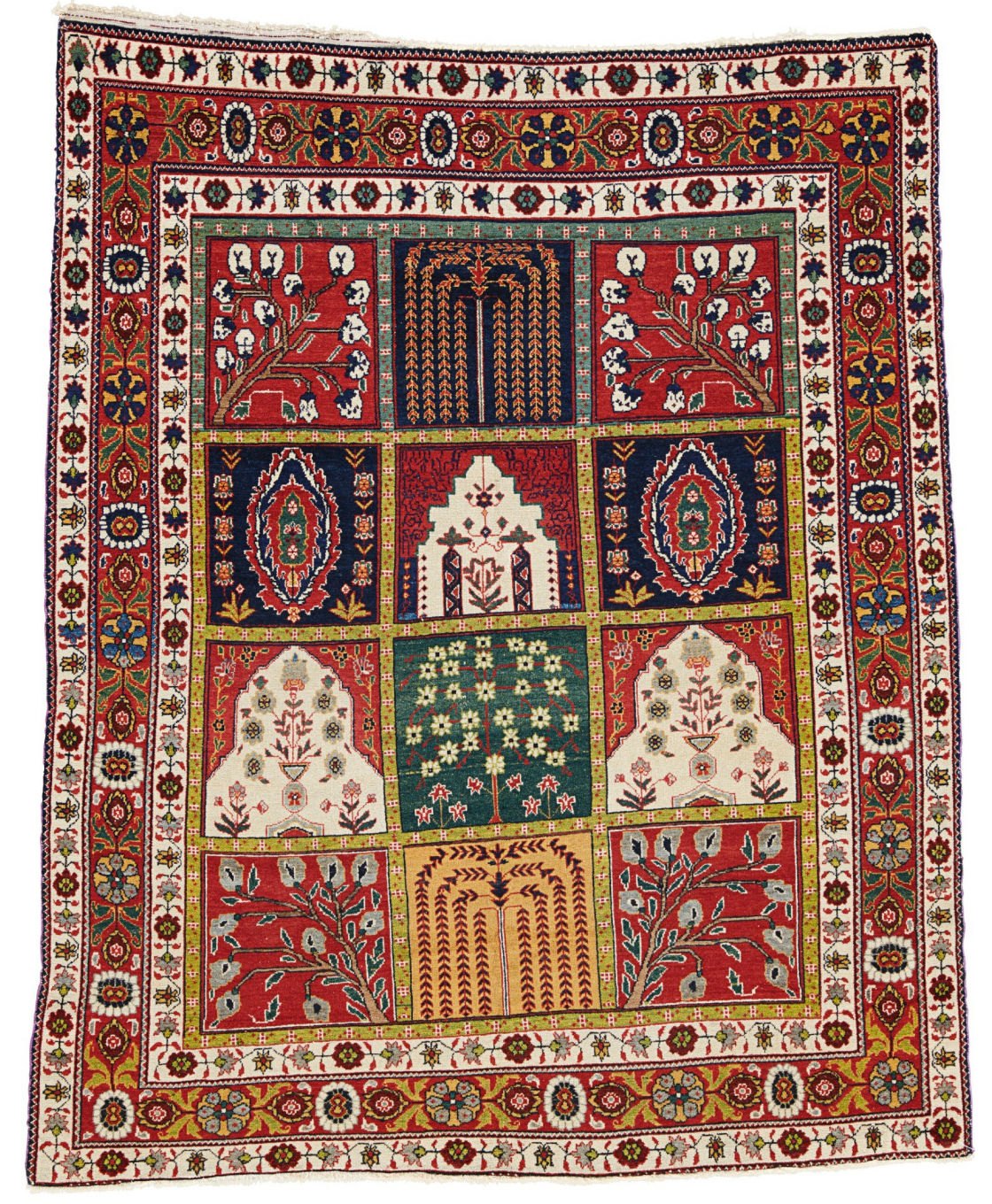

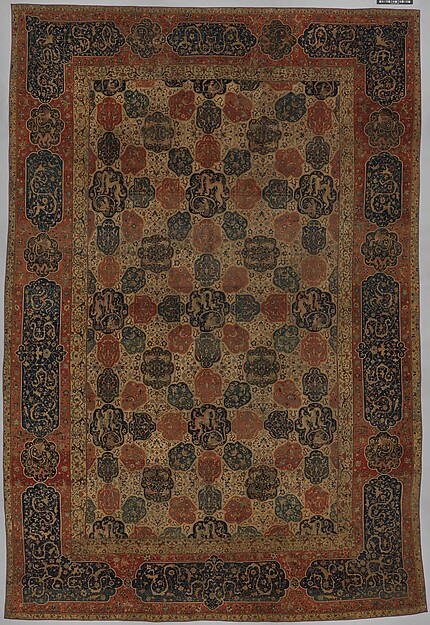
Representative photographs only. Marketplace examples rely on seller descriptions; CraftPersia has not independently authenticated their maker, origin, or rights status. Follow each source link for the listing context.
| Craft | Associated centres | Key materials |
|---|---|---|
| Termeh | Kerman, Yazd | Silk, Wool, Natural dyes |
| Persian carpet | Tabriz, Isfahan, Kashan | Wool, Silk, Cotton |
| Pateh embroidery (Kerman) | Kerman | Wool, Cotton |
References and further reading
- [1] H. E. Wulff, The Traditional Crafts of Persia, MIT Press, 1966.General historical craft reference, not evidence for a particular object.
These sources provide context, not authentication or provenance for an individual object. Editorial interpretations remain under review.