
Beginner guide · 10 min
Persian calligraphy scripts explained: nastaliq, shekasteh, naskh
Editorial team · updated 2026-09-29
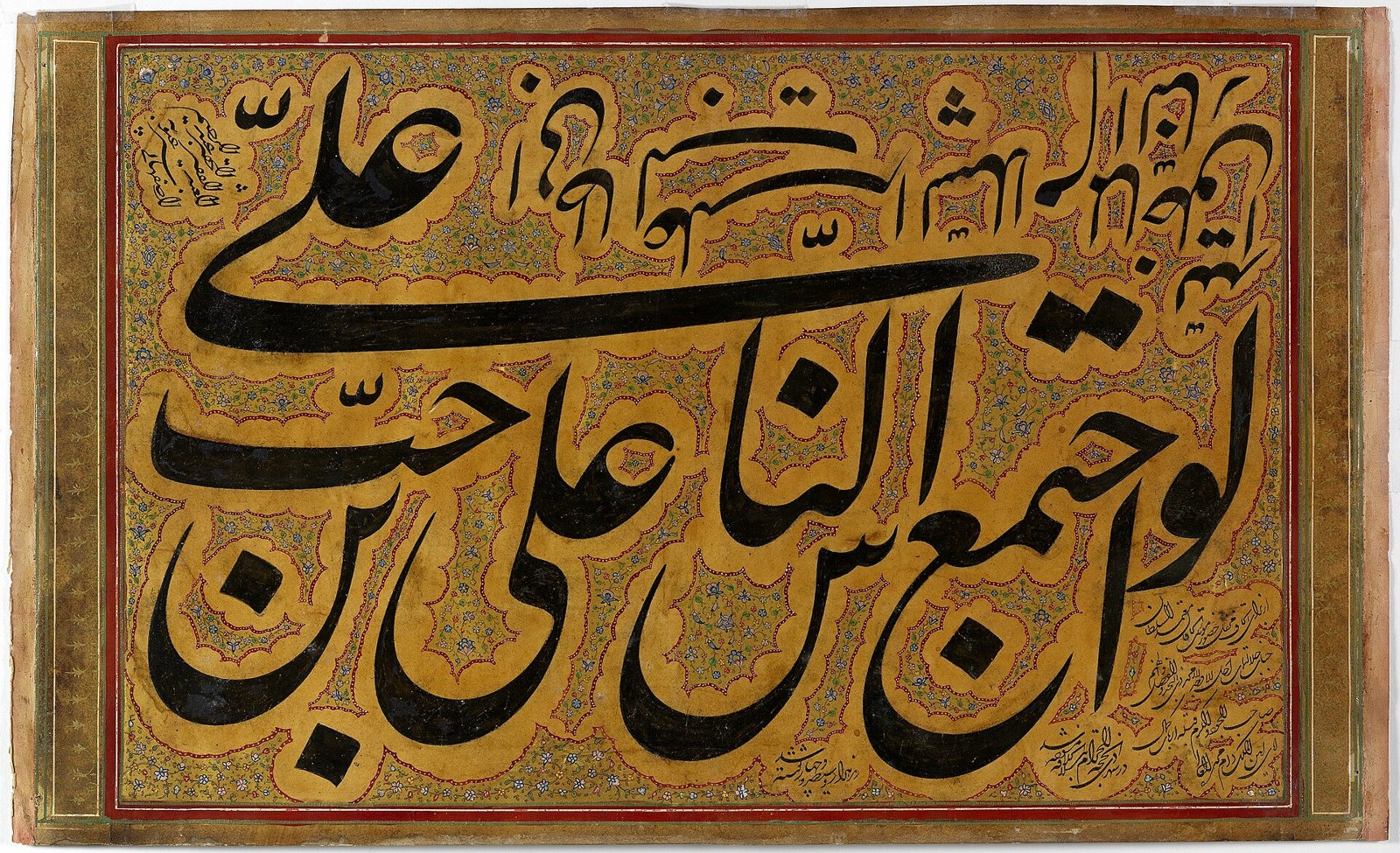
1304 AH · Abdorrahim Afsar Esfahani · Public domain · Photo source ↗
- Type
- Beginner guide
- Reading
- 10 min
- Chapters
- 8
- Photos
- 1
Persian calligraphy is the art of beautiful writing in the Persian script; its signature style is nastaliq.
What is Persian calligraphy?
Persian calligraphy (khoshnevisi) is the art of writing Persian in the Arabic-derived script with a reed pen (qalam). It developed several distinctive styles, and nastaliq — the 'bride of scripts' — became Iran's national calligraphic style.
The main scripts
- Nastaliq: flowing, balanced and sloping; developed in the 14th–15th centuries for Persian poetry
- Shekasteh nastaliq: a faster, 'broken' form with linked letters, used for letters and documents
- Naskh: clear and upright, used for Quran copies and books
- Thuluth: large, monumental script seen on mosque tilework
- Kufic: early angular script; square kufic turns words into geometry in brick and tile
- Ta'liq: an early hanging script used for documents
- Siyah-mashq: practice sheets that became an art form
Tools
Calligraphers use a cut reed pen, soot-based ink, and polished paper (ahar-mohreh). The pen is cut to exact proportions, and letters are measured in rhombic dots.
Famous masters
Mir Emad Hassani (Safavid period) is regarded as the great master of nastaliq. Mirza Gholamreza Esfahani is celebrated for siyah-mashq.
Collecting tips
Check whether a piece is an original or a print. Genuine work shows ink texture and slight pen variations. Ask for the calligrapher's name and the text being written.
Crafts covered in this guide
Nasta'liq calligraphy (نستعلیق) — A hanging cursive script developed in Iran for Persian poetry, distinguished by its sloping baseline, sharply contrasted thick and thin strokes, and sweeping final letters.
Materials, techniques and centres
Nasta'liq calligraphy is recorded in the archive with paper as principal materials, and tazhib illumination as the technique. Associated centres include Shiraz, Isfahan and Tabriz; a place name on its own does not establish where an individual object was made.
Collecting and next steps
When applying this guide to a specific object, work from what can be observed: structure, materials, tool marks, repairs and documentation. Ask the seller or maker for written statements about who made the piece, where, from what materials, and what has been repaired or replaced.
The steps here are educational; identification, conservation and valuation of an individual object require appropriate independent expertise.
References and further reading
- [1] H. E. Wulff, The Traditional Crafts of Persia, MIT Press, 1966.General historical craft reference, not evidence for a particular object.
These sources provide context, not authentication or provenance for an individual object. Editorial interpretations remain under review.