
Beginner guide · 5 min
Bone and horn carving in Iran
Editorial team · updated 2026-10-21
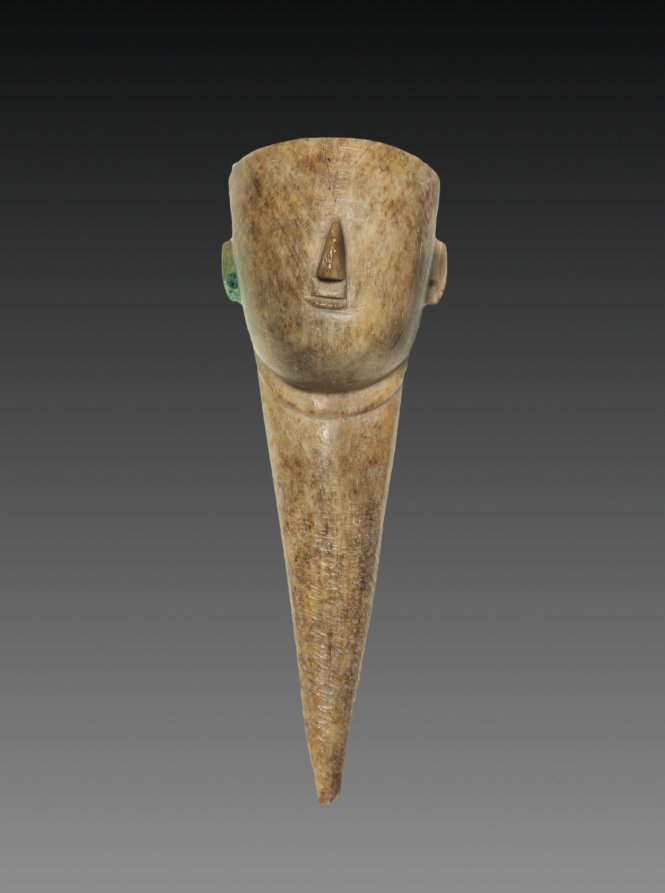
700s–900s · consulted 2026-10-28; visually inspected; origin as catalogued: Iran, early Islamic period · Cleveland Museum of Art · CC0 (museum open access) · Photo source ↗
- Type
- Beginner guide
- Reading
- 5 min
- Chapters
- 7
- Photos
- 1
Scope and evidence
This reading separates visible construction, documented materials and origin claims. The photographs retain their own source context; they do not authenticate a purchase or demonstrate every stage described below. Historical examples and contemporary maker statements require different kinds of evidence.
- Materials: Camel and cattle bone, horn — traditional ivory substitutes
- Uses: Khatam inlay, jewellery, handles, small carved objects
- Photo gap: No screened photograph is in the archive yet
- Materials
- Camel and cattle bone, horn — traditional ivory substitutes
- Uses
- Khatam inlay, jewellery, handles, small carved objects
- Photo gap
- No screened photograph is in the archive yet
Materials and why they matter
Iranian carvers work camel bone, cattle bone and horn. Bone is boiled, degreased and sometimes bleached before being sawn, filed, engraved and drilled; horn can be softened with heat and pressed flat or shaped over forms. Camel bone in particular is prized as the traditional, ethical substitute for elephant ivory in khatam micro-mosaic and inlay work, where thin white strips form the light lines of the geometric patterns.
The material question is not academic. Trade in elephant ivory is heavily restricted internationally, and any listing offering 'ivory' — especially old ivory — raises legal and ethical problems that should end the purchase, not start a negotiation. Bone and horn from domesticated animals are the legitimate materials, and a serious seller can say which animal and which source.
Telling bone, horn and plastic apart
Under a magnifier, bone shows a fine network of dark pores and growth lines — the channels that carried blood vessels in life. Horn is built in layers and goes slightly translucent at thin edges, with a subtle streaked grain. Both feel cool and dense in the hand and warm slowly.
Plastic imitations are perfectly uniform, often carry mould seams, feel light and warm quickly to the touch. The hot-needle 'test' sometimes suggested online damages the object and is unsafe on finished pieces — do not use it. Where identification matters for price, ask a specialist rather than experimenting on the piece.
- Bone: dark pores and growth lines under magnification
- Horn: layered, translucent at thin edges
- Both: cool, dense, slow to warm
- Plastic: uniform, mould seams, light and warm
- Never hot-needle a finished piece
Buying, legality and care
Ask three questions before buying: what is the material, which animal did it come from, and was the carving done by hand. Hand-carved work shows small variations in line depth and tool marks in the recesses; cast resin copies are blurred and identical. For anything crossing a border, check the wildlife-product rules of both countries in advance — the burden is on the buyer.
Bone and horn are organic materials: they dislike heat, dryness and sudden changes. Keep carvings away from radiators and direct sun, dust with a soft brush, and avoid oils and household cleaners. A piece that dries out can crack along the grain, and cracks in thin inlay are effectively permanent.
- What material, which animal, hand or machine carved?
- Avoid anything offered as ivory entirely
- Check import rules before buying across borders
- Keep cool, stable, away from heat and sun
Material evidence and legal evidence are different
Visible pores or layering can support a preliminary description but cannot resolve every bone, ivory, horn, composite or treated material. Some pieces combine materials. Ask for a written specification naming the animal source and obtain specialist identification if uncertainty affects legality or price.
Domestic-animal origin is not a blanket ethical or import clearance. Welfare, sourcing, treatment and national rules still matter. Do not accept “ivory substitute” as the complete material description, and avoid purchases represented as ivory under this archive’s buying policy.
Record carving and condition non-destructively
Use overall views and existing edge details to distinguish relief, engraved lines, drilled openings and applied inlay. Tool marks can indicate working operations but do not independently prove a maker, country or date. Never hot-needle, burn, bleach or scrape a finished object to identify it.
Look for cracks, lifting inlay and discolouration without prying at joins. Bone, horn and their coatings can respond differently to moisture and cleaners. A stable supported display and gentle dry handling are safer than home treatment; active deterioration requires specialist advice.
A useful and honest image contribution
Contribute a real documented Iranian carving or clearly identified detail of an inlaid object. An image of khatam can show the arrangement of light inlay but cannot prove the animal species of an unidentified strip. Caption that distinction explicitly rather than borrowing the surrounding object’s provenance for every material.
Provide the maker or catalogue source, material as recorded, photographer, date and permission. A photograph alone is not a wildlife-trade document, a material test or an authenticity certificate. Images of replicas and ambiguous-origin listings do not close this guide’s gap.
- Whole view and existing detail
- Recorded animal material and uncertainty
- Maker or catalogue source
- Photo permission separate from trade paperwork
| Material | Under magnification | Feel and weight |
|---|---|---|
| Bone | Dark pores, growth lines | Cool, dense, matte |
| Horn | Layered, streaked, edge-translucent | Cool, dense, slight sheen |
| Cast resin / plastic | Uniform, mould seams, bubbles | Warm, light |
| Question | Evidence to request | Photo limit |
|---|---|---|
| Material | Specialist or maker specification | Not every substitute is distinguishable |
| Animal source | Written source identification | Pores alone do not identify species |
| Legal import | Current destination and export rules | A photograph is not a permit |
| Iranian manufacture | Maker or catalogue record | Motifs are not origin proof |
References and further reading
- [1] H. E. Wulff, The Traditional Crafts of Persia, MIT Press, 1966.General historical craft reference, not evidence for a particular carving.
- [2] CITES, Convention on International Trade in Endangered Species. ↗Legal framework for animal-product trade; check current national rules before buying.
These sources provide context, not authentication or provenance for an individual object. Editorial interpretations remain under review.