
Beginner guide · 12 min
Pateh: the embroidery of Kerman
Editorial team · updated 2026-09-29
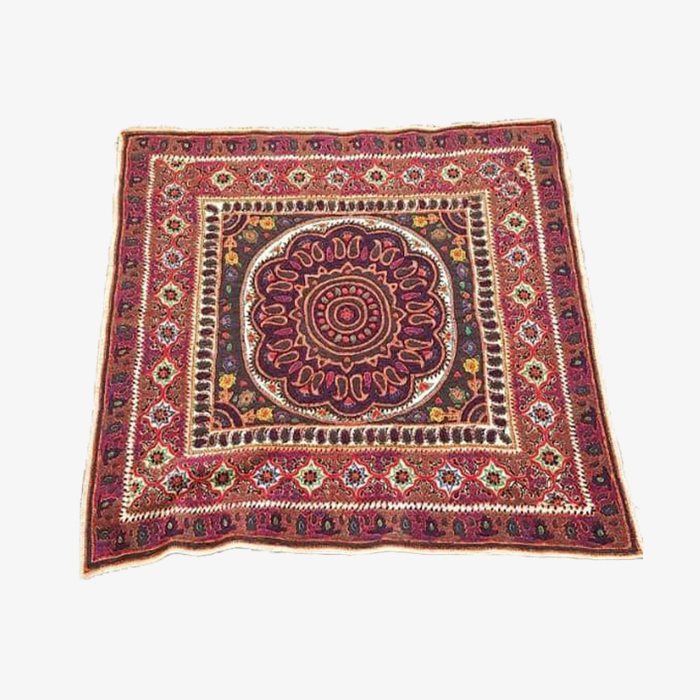
Example photograph, date unverified · Shop / studio (photographer not stated) · Permission status not reviewed · Photo source ↗
- Type
- Beginner guide
- Reading
- 12 min
- Chapters
- 10
- Photos
- 1
Dense wool-thread embroidery on woollen cloth, often with boteh patterns.
Technique
Pateh is worked in small stitches that cover the ground completely. Traditionally on a woollen base cloth called ‘shal’.
Designs
Boteh, cypress and flower designs in many colours.
Buying
Check the back: hand-stitching shows small variations; machine embroidery is very regular.
Stitches and cloth
Pateh is worked in a dense, fine stitch on a woollen ground. Motifs include boteh and cypress, in many colours. Stitches should cover the ground evenly.
History and revival
Pateh developed in Kerman, whose shawl industry was once famous. Embroiderers, traditionally women, worked on ariz woollen cloth. The craft declined but was revived from the later twentieth century, with workshops and cooperatives producing wall hangings, cushions and table runners.
Checking pateh
- Stitches cover the ground densely
- Many colours with smooth gradations
- Woollen ground cloth, not synthetic felt
- A neat reverse, with knots and thread changes visible
A note on this guide
This is a general introduction written by the CraftPersia editorial team. It has not yet been reviewed by a specialist. Practice varies between workshops; confirm details with makers or museums, and treat any dates as approximate.
- Centre
- Kerman
- Ground
- Woollen twill cloth (traditionally 'ark')
- Thread
- Coloured wool
Technique
Pateh is worked so densely that the ground almost disappears. Embroiderers use fine wool thread in small, tightly packed stitches, building boteh, cypress and floral motifs, traditionally on a madder-red or dark ground.
Uses
Historically pateh was used for bath and bridal textiles, covers and prayer cloths. Today tablecloths, cushions and framed panels are common.
- Dense coverage of the ground
- Boteh and cypress motifs
- Wool on wool
Buying
Check stitch density and the reverse: hand pateh shows thread paths and small knots. Machine embroidery is perfectly regular and often uses synthetic thread.
| Check | Hand pateh | Machine |
|---|---|---|
| Thread | Wool | Often polyester |
| Reverse | Irregular thread paths | Uniform bobbin thread |
| Stitch | Slight variation | Identical |
References and further reading
These sources provide context, not authentication or provenance for an individual object. Editorial interpretations remain under review.