
Collector guide · 9 min
Natural and synthetic dyes in Iranian textiles
Editorial team · updated 2026-09-29
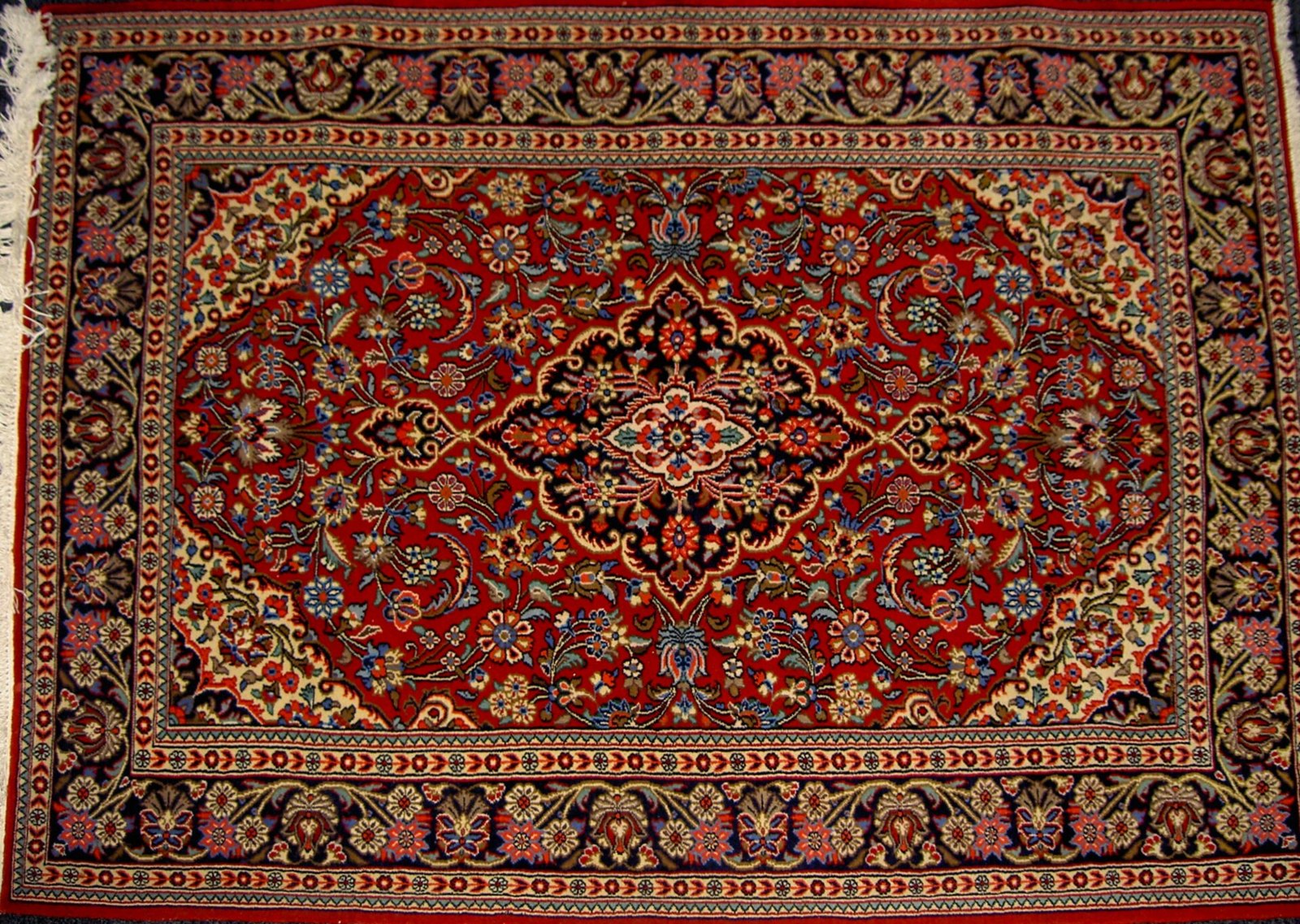
Date unverified · Author unconfirmed; Commons attributes Fabienkhan · CC BY-SA 3.0 · Photo source ↗
- Type
- Collector guide
- Reading
- 9 min
- Chapters
- 8
- Photos
- 6
Madder, indigo, weld and walnut versus synthetic dyes: what changes, and why the difference is hard to see.
Natural dyes
Traditional dyes include madder (reds), indigo (blues), weld and pomegranate rind (yellows) and walnut husk (browns).
Synthetic dyes
Synthetic dyes arrived in the late 19th century. Early ones sometimes faded or ran; manufactured dye families vary in stability depending on recipe, fibre, exposure and treatment.
Telling them apart
Colour alone is a poor guide. Lab testing is the reliable method. Abrash and soft fading can point to small batches but not to a dye type.
How to tell
Abrash and tip-to-root colour changes do not identify a dye family. Natural and manufactured dyes can both show variation. Chemical claims need object-specific evidence; do not wet or rub the textile to test them.
- Evidence
- Appearance cannot identify a dye family
- Ageing
- Depends on fibre, mordant, recipe, exposure and treatment
- Safe approach
- Do not rub, wet or chemically test a collectible textile
Dye source is only one part of the recipe
Natural and synthetic describe the source of colouring substances, not two reliable quality grades. Madder, indigo and insect reds require different preparation, while manufactured dyes belong to many chemical families with different behaviours. A workshop can use several sources in a single textile, and later repair yarn may differ from the original. A broad claim such as “all vegetable dyes” needs evidence for the actual yarns, not simply a traditional-looking palette.
Fibre preparation, water, mordants, concentration and rinsing affect the finished colour. Light exposure and past washing then change it further. A natural dye can fade or run; a well-chosen manufactured dye can remain stable. Neither softness of colour nor a bright red is a dependable chemical identification. Describe what you see before interpreting how it was made.
Reading historical dye claims carefully
The introduction of manufactured dyes did not replace older recipes at one moment throughout Iran. Different weaving centres, suppliers and households adopted materials at different times. Historical accounts therefore need their place and period attached; a single date cannot classify every carpet made after it. A rug may also contain older yarn supplies or later reweaving.
A dealer’s date and dye description are separate claims. Ask whether each derives from a maker’s account, a documented recipe, comparative scholarship or analysis of the object. A contemporary dyer’s process record can explain a new commission but cannot establish the chemistry of an unrelated antique. Museum catalogue descriptions sometimes say only wool and cotton: that is not permission to add an undocumented natural-dye attribution.
Colour variation, fading and repairs
Abrash is a visible change of tone within areas intended as one colour. It can result from differences between yarn batches, dyeing or other production variables; deliberate variation is also possible. Bands alone do not identify botanical ingredients. Look for how a change relates to knot rows, design boundaries and repaired areas, recording the observation without treating it as proof.
A lighter surface and darker protected yarn may indicate exposure, but dirt, pile direction and photography can also change perceived colour. Photographs of front and reverse are useful records, not substitute laboratory tests. View comparable areas under consistent illumination and never lift knots or open seams to expose hidden yarn.
A non-destructive buyer’s decision path
Do not rub a damp cloth over an offered rug or try bleach, solvents, heat or a burn test. Wetting can mobilise colour and rubbing can disturb fragile fibres; an apparently clean cloth still does not identify a dye. If stability matters before washing, consult an experienced textile conservator or rug specialist who can assess the particular object.
Chemical identification may require a sample and an appropriate analytical method. Sampling needs the owner’s permission and a defined question, such as whether a repair yarn differs from the main field. Ask what the test can and cannot determine; identifying one dye does not independently establish a weaving centre, maker, age or value.
- Request the basis of each dye claim in writing
- Record colour shifts and repairs separately
- Keep displayed textiles out of direct sunlight
- Seek object-specific advice before any wet treatment
Related photographs and screened examples
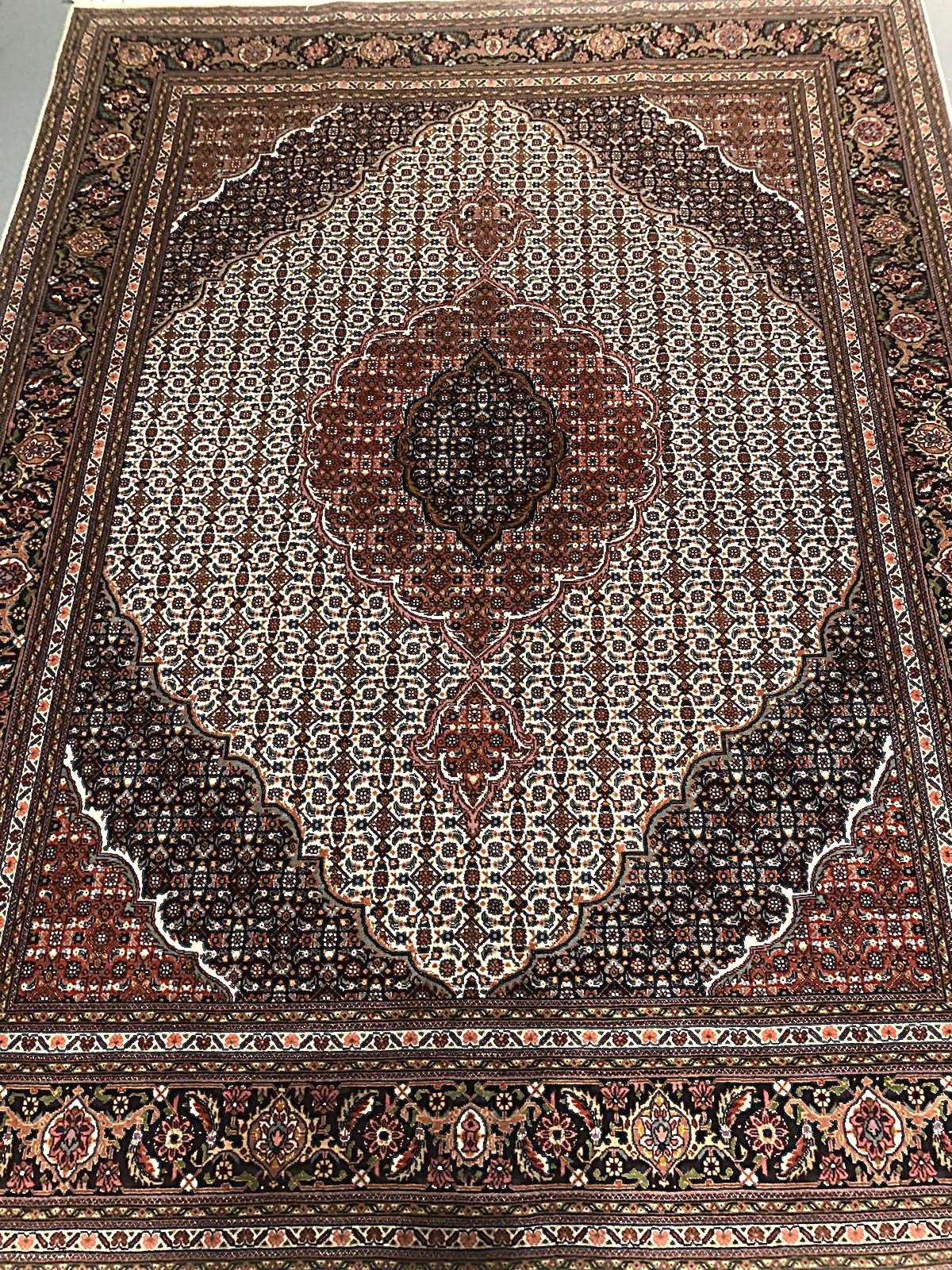
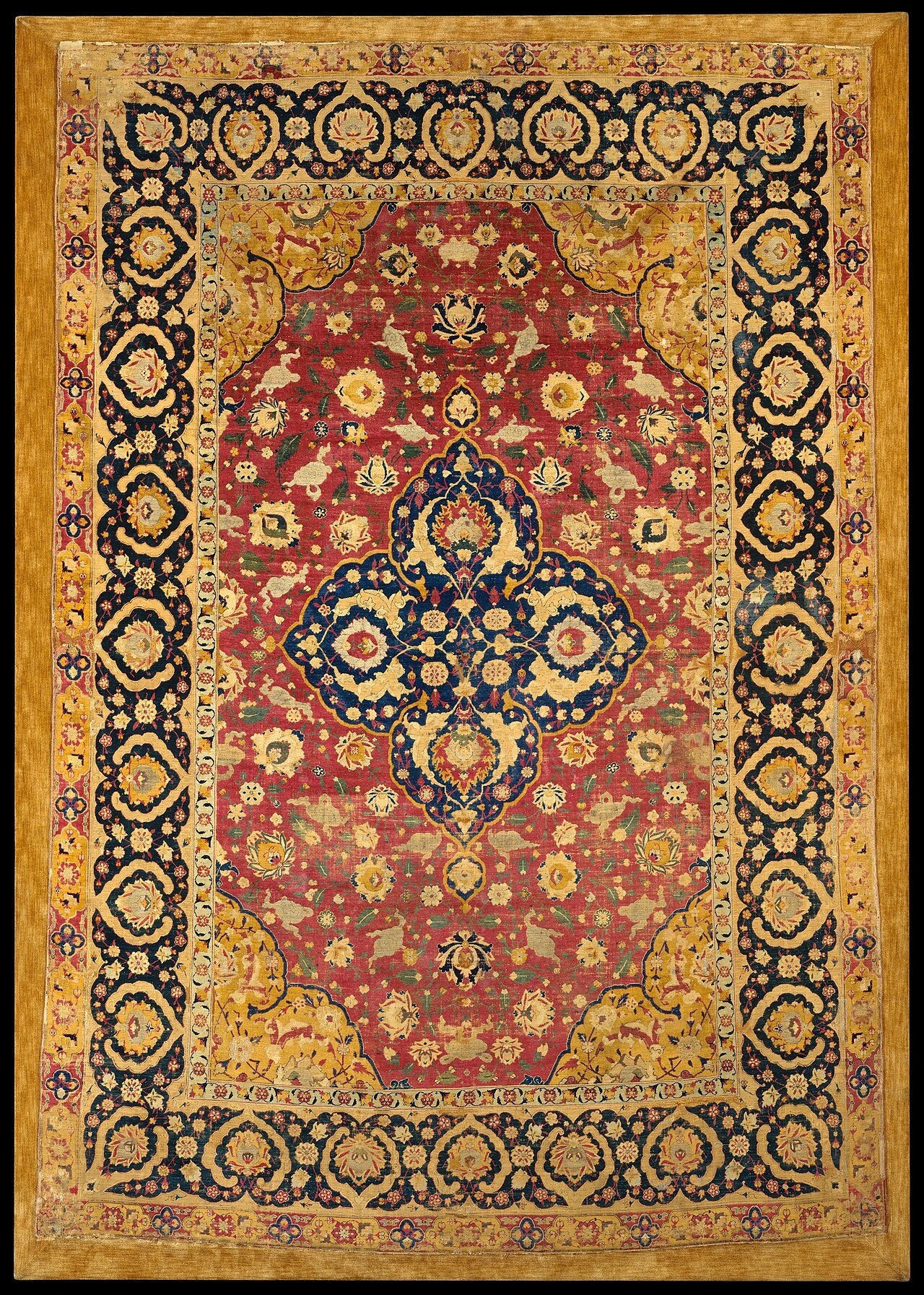
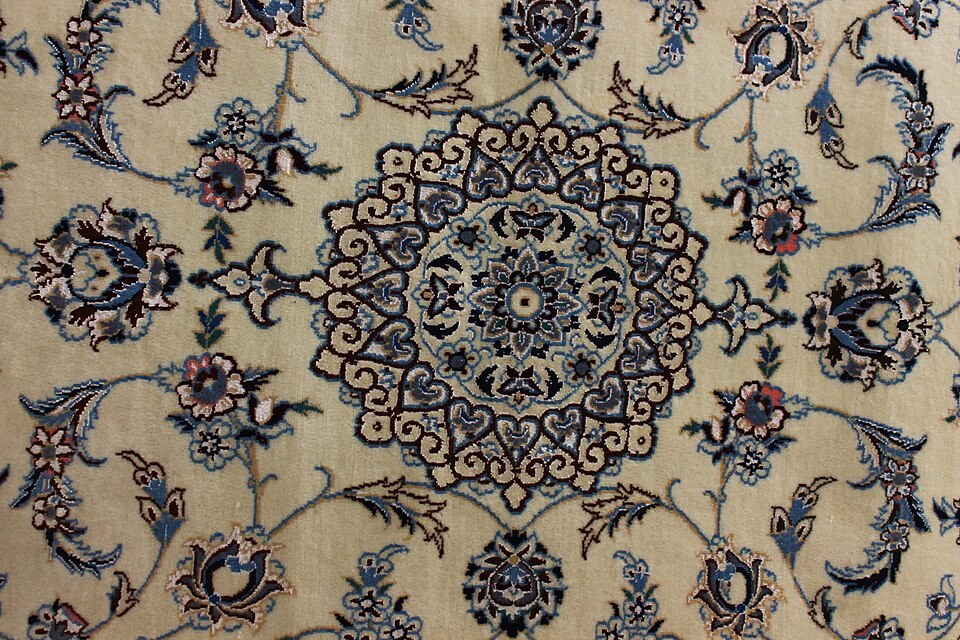
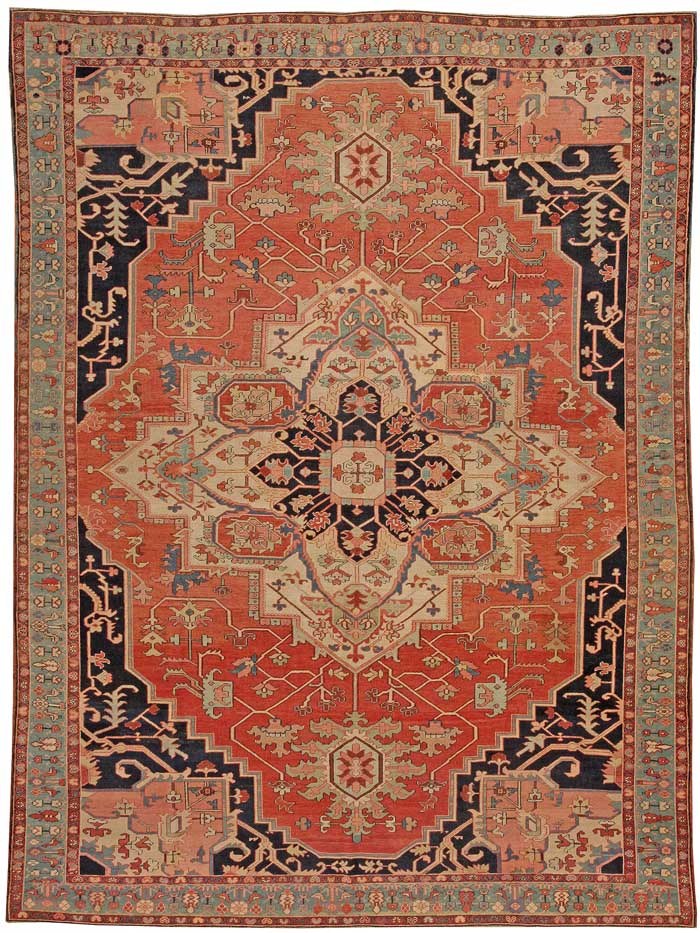
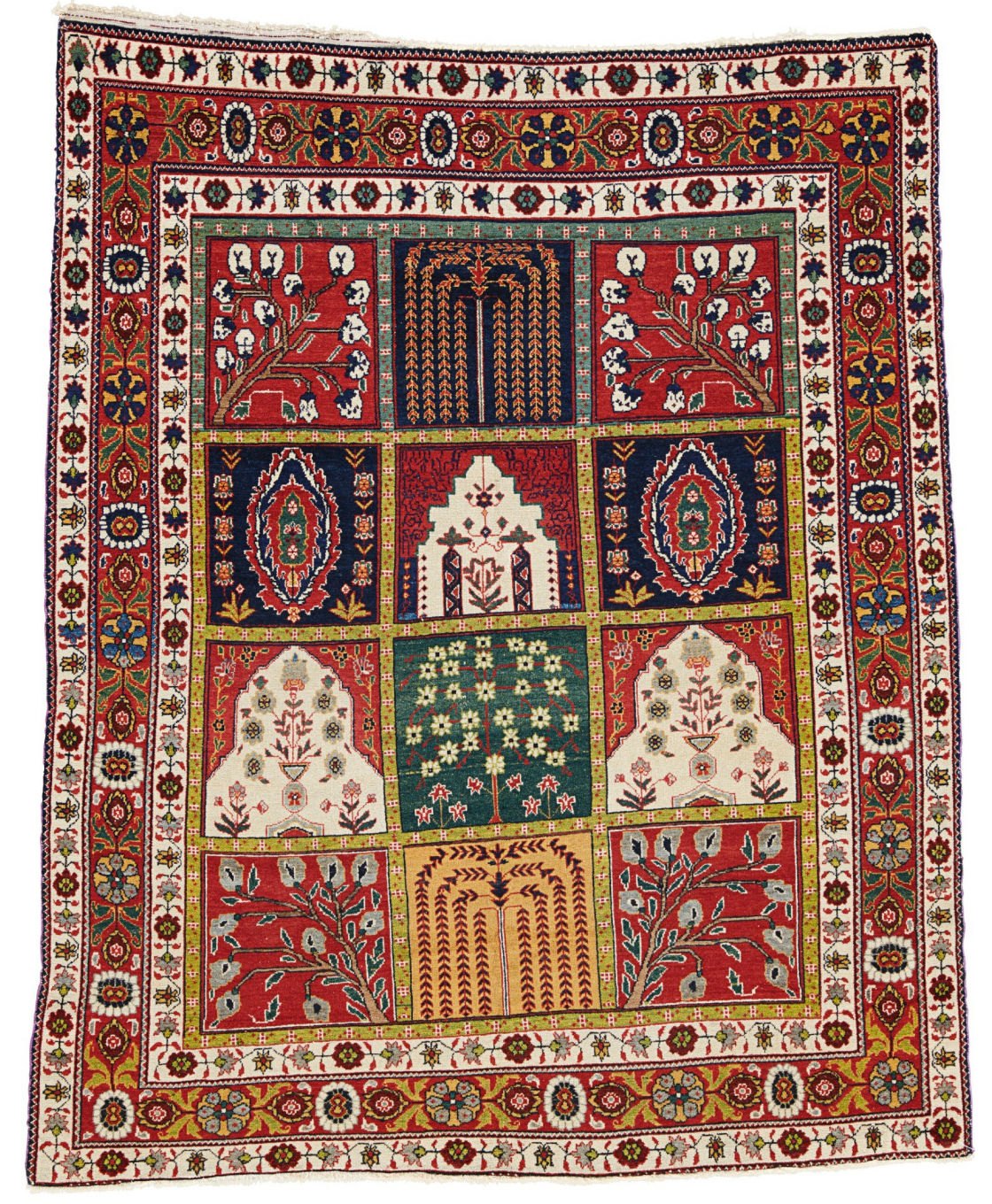
Representative photographs only. Marketplace examples rely on seller descriptions; CraftPersia has not independently authenticated their maker, origin, or rights status. Follow each source link for the listing context.
| Evidence | Useful for | Does not establish |
|---|---|---|
| Maker recipe | Documenting stated practice for that commission | Chemistry of an older unrelated rug |
| Visible abrash | Recording tonal variation | Natural dyes, age or Iranian origin |
| Laboratory result | Identifying substances in the tested sample | Every yarn or geographic provenance |
| Protected versus exposed colour | Assessing possible alteration | A complete treatment history |
References and further reading
- [1] Encyclopaedia Iranica — Carpets II: raw materials and dyes ↗Historical context; not chemical identification of the illustrated textiles.
- [2] Canadian Conservation Institute — Caring for textiles and costumes ↗Preventive conservation guidance; treatment requires an individual assessment.
These sources provide context, not authentication or provenance for an individual object. Editorial interpretations remain under review.