
Beginner guide · 12 min
Nastaliq for beginners
Editorial team · updated 2026-09-29
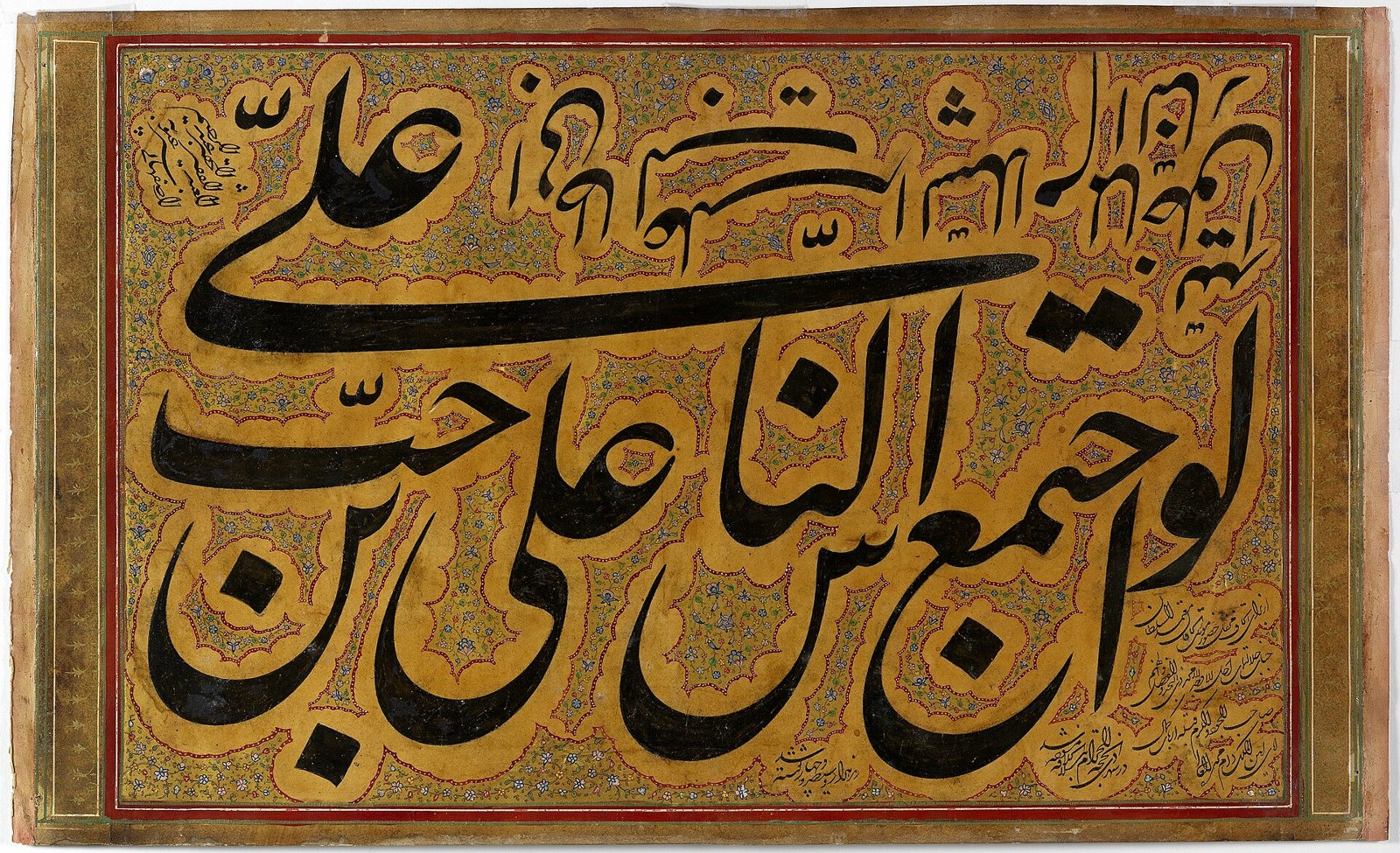
1304 AH · Abdorrahim Afsar Esfahani · Public domain · Photo source ↗
- Type
- Beginner guide
- Reading
- 12 min
- Chapters
- 10
- Photos
- 1
The flowing Persian script: tools, practice and how to look at a calligraphy page.
Tools
A reed pen (qalam), carbon ink and prepared paper. The pen is cut at an angle that shapes every stroke.
Practice
Students copy exercise sheets (siah-mashq and single letters) for years.
Looking
Notice balance, spacing and rhythm across the line rather than individual letters.
First steps
- Learn to cut a reed pen
- Practise the basic strokes and letter shapes
- Copy the exercises (siyah-mashq) of a teacher
- Learn the proportions, measured in rhombic dots
Finding a teacher
The Iranian Calligraphers Association and many cultural centres offer classes, and online lessons exist. Learning from a teacher matters, because nastaliq depends on rhythm and proportion that are hard to learn from books.
Practice routine
- Short daily sessions are better than long weekly ones
- Repeat single letters, then joins, then words
- Measure proportions with dots made by the pen nib
- Ask a teacher to correct your work (eslah)
A note on this guide
This is a general introduction written by the CraftPersia editorial team. It has not yet been reviewed by a specialist. Practice varies between workshops; confirm details with makers or museums, and treat any dates as approximate.
- Script family
- Persian 'hanging' script, developed 14th–15th c.
- Tools
- Reed pen (qalam), carbon ink (morakkab), burnished paper
- Classic master
- Mir Emad Hasani (d. 1615)
What makes nastaliq distinctive
Nastaliq is written along a gently sloping baseline, with letters that seem to hang from right to left. Long horizontal strokes contrast with tight, rounded bowls. It became the main script for Persian poetry and is still the national calligraphic style of Iran.
Tools
Beginners need a reed or bamboo pen cut with an angled nib, non-bleeding ink and smooth paper. Traditional practice uses silk fibres (liqeh) in the inkwell to control ink load.
- Cut the nib at an angle, slit in the centre
- Hold the pen at a steady angle
- Use guide-dots: letter heights are measured in rhomboid nib dots
How to practise
Teachers start with single letters and the dot system that measures their proportions, then letter joins, then words, then short couplets. Copying from master models (sarmashq) is the classic method. Expect months before a smooth horizontal stroke is reliable.
| Script | Look | Typical use |
|---|---|---|
| Naskh | Upright, even | Qur'ans, books |
| Nastaliq | Sloping, hanging | Poetry, inscriptions |
| Shekasteh | Fast, broken, linked | Letters, documents |
Timeline
- c. 1400
Mir Ali Tabrizi credited with codifying nastaliq
- 16th–17th c.
Mir Emad perfects the classic style
- 19th c.
Shekasteh-nastaliq flourishes
- Today
Taught nationally; Iranian Calligraphers Association
References and further reading
These sources provide context, not authentication or provenance for an individual object. Editorial interpretations remain under review.