
Buying guide · 5 min
Namad felt rugs: buying and caring for Iranian felt
Editorial team · updated 2026-10-20
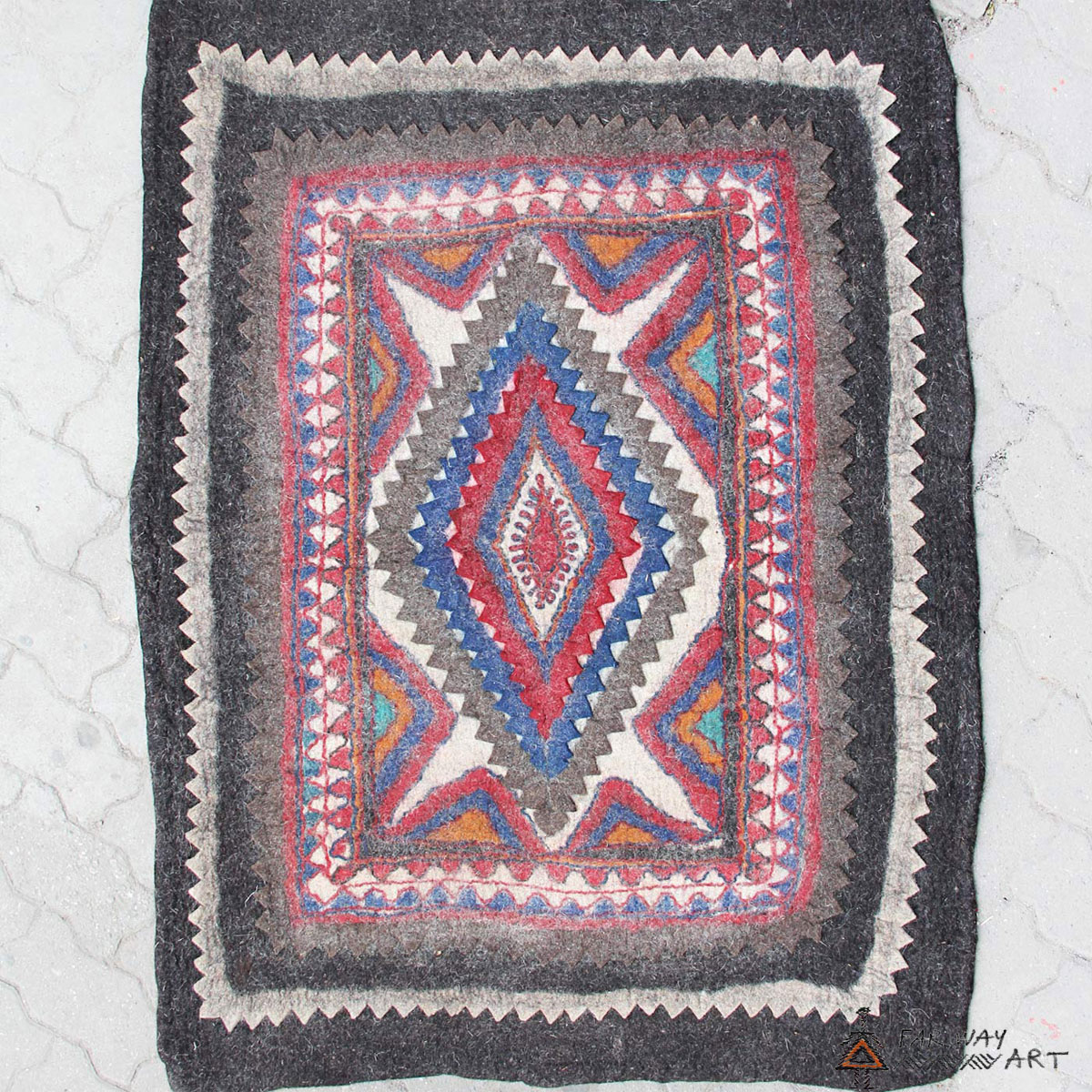
accessed 2026-09-30 · Sr3207 / Farwayart · CC BY-SA 4.0 (Wikimedia Commons) · Photo source ↗
- Type
- Buying guide
- Reading
- 5 min
- Chapters
- 5
- Photos
- 1
Scope and evidence
This reading separates visible construction, documented materials and origin claims. The photographs retain their own source context; they do not authenticate a purchase or demonstrate every stage described below. Historical examples and contemporary maker statements require different kinds of evidence.
- Structure: Entangled animal fibres, not woven yarns
- Design: Integral felting and applied ornament differ
- Care: No universal spot-washing instruction
- Structure
- Entangled animal fibres, not woven yarns
- Design
- Integral felting and applied ornament differ
- Care
- No universal spot-washing instruction
Start with felt’s structure
Felt is formed by entangling animal fibres into a coherent material rather than interlacing warp and weft yarns. In traditional wet-felting practices, preparation, moisture and repeated working help bind the fibres. The exact sequence and materials should be described by the maker, not inferred from a finished rug photograph.
The wider history of felt extends beyond Iran. A wool felt object is not automatically Iranian, nomadic or made by a particular community. Keep the archive photograph’s source description separate from broader historical discussion and current origin claims.
Read design and construction without pulling
Coloured wool can be incorporated into the felt, while stitching, applied pieces or other decoration may be added to some objects. Describe the method visible or documented for the particular piece. Do not claim every design is integral or that every loose-looking edge is a sign of an imitation.
Observe thickness, support and surface wear without pinching or peeling fibres. Even thickness may suit one intended use while a sculptural form or edge deliberately varies. Smell and softness are not reliable fibre-identification or handmade tests.
Match the piece to floor or display use
Ask whether the object is a floor covering, seat pad, wall piece or decorative panel, and whether a lining or backing has been added. For floor use, discuss movement, edge curling and an appropriate non-slip arrangement that does not damage the felt. Hanging introduces different stress and support requirements.
Origin documentation should identify the maker and place of manufacture rather than rely on a generic regional style. Ask about contemporary hand work and any industrial felt components. The archive’s image is representative and not a warranty of the current seller’s goods.
- Ask for fibre and making description
- Separate integral and applied decoration
- Record intended use and backing
- Inspect edges and insect debris gently
Prevent losses before attempting cleaning
Felt can distort and release fibres, and dyes or applied elements may react to moisture. Do not prescribe cold-water spot cleaning for every object. A stable contemporary piece needs maker-specific advice; historical, dyed or fragile felt may require professional assessment before any cleaning.
Vacuuming is also conditional: suction can pull loose fibres or decoration. Where a conservator considers it appropriate, support and screening can reduce risk. Stop if material moves. Inspect for insects without adding mothballs or applying household pesticides to the textile.
| Look at | Record | Do not infer |
|---|---|---|
| Surface fibres | Documented fibre and felt method | Wool or handwork from smell |
| Design boundary | Integrated or applied as known | All motifs are integral |
| Thickness and edge | Wear, curl and intended form | Universal quality grade |
| Cleaning request | Materials, dyes and stability assessment | Water is always safe |
References and further reading
- [1] Encyclopaedia Iranica — Felt ↗Historical and structural context; felt is not exclusively Iranian.
- [2] Canadian Conservation Institute — Caring for textiles and costumes ↗Preventive care; not permission to clean or treat an individual textile.
These sources provide context, not authentication or provenance for an individual object. Editorial interpretations remain under review.