
Beginner guide · 13 min
Moarragh: wood marquetry
Editorial team · updated 2026-09-29
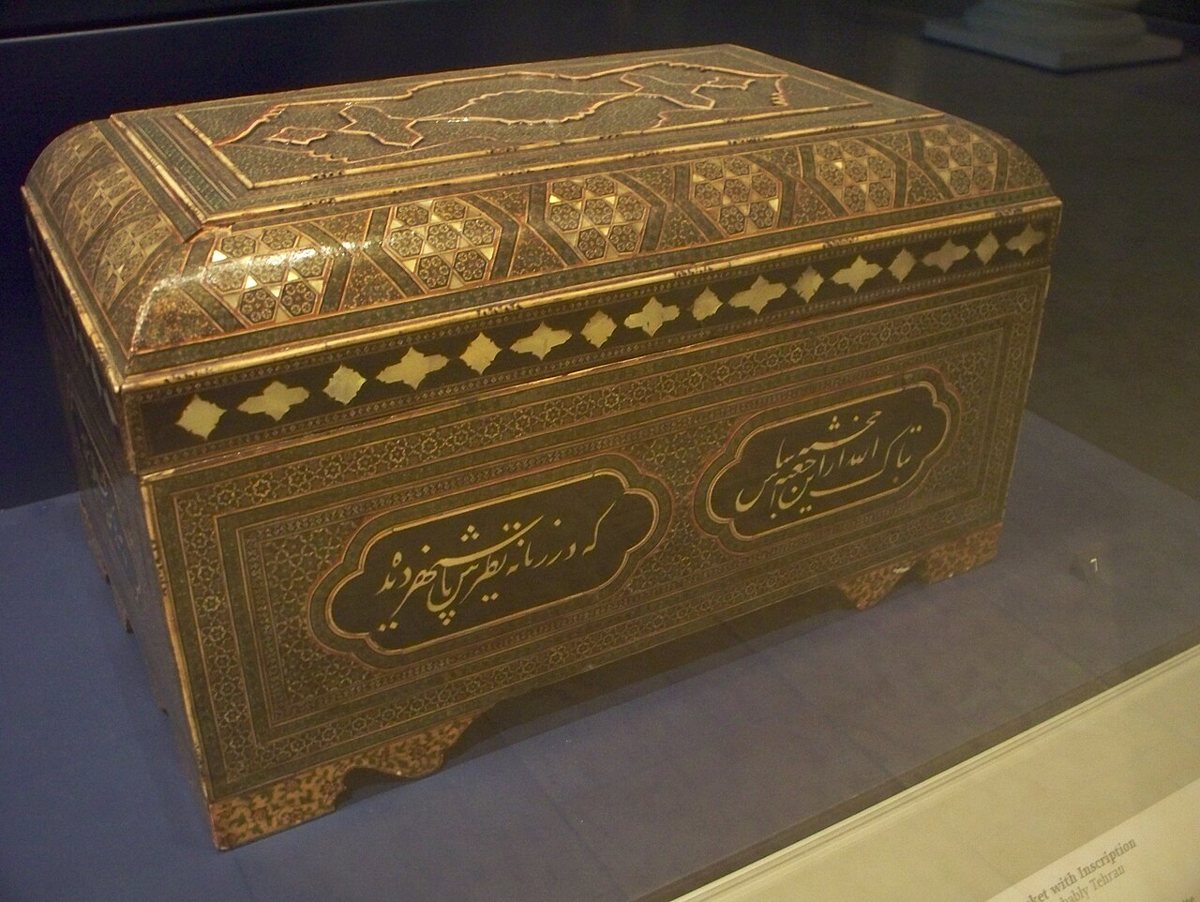
Accessed 15 October 2026.; attribution and origin follow the Commons record and are not independently verified. · Wikipedia Loves Art participant "Opal_Art_Seekers_4" · CC BY 2.5 (per Wikimedia Commons; rights review pending) · Photo source ↗
- Type
- Beginner guide
- Reading
- 13 min
- Chapters
- 11
- Photos
- 2
Pictorial inlay using cut pieces of different woods.
Difference from khatam
Moarragh uses shaped wood pieces to make pictures; khatam uses geometric rods.
Woods
Natural wood colours create the design rather than paint.
Care
Avoid humidity changes and direct heat.
What moarraq is
Moarraq-kari is wood marquetry. Thin veneers of different-coloured woods are cut and fitted into pictures or patterns, then glued onto a panel. It differs from khatam, which builds patterns from tiny geometric rods.
How to look at a piece
- Joints between veneers should be tight, with no filler
- Natural wood colours vary; dyed veneers can fade
- Printed or decal imitations show no edges between pieces
Care
Keep pieces out of direct sun and avoid very dry heating, which can make veneers lift. Dust with a soft, dry cloth.
Tools and process
The craftsman draws the design, then cuts veneers with a fine fretsaw, sometimes stacking several colours to cut them together. Pieces are glued into a paper backing, pressed onto the panel and sanded. Shading can be added by scorching veneers in hot sand.
A note on this guide
This is a general introduction written by the CraftPersia editorial team. It has not yet been reviewed by a specialist. Practice varies between workshops; confirm details with makers or museums, and treat any dates as approximate.
Crafts covered in this guide
Wood carving (Monabbat) (منبتکاری) — A relief wood-carving technique in which solid panels, furniture and architectural elements are carved directly with chisels to produce raised or recessed floral, arabesque and geometric ornament, distinct from inlay techniques that build a surface from separate pieces.
Materials, techniques and centres
Wood carving (Monabbat) is recorded in the archive with walnut wood as principal materials, and wood relief carving as the technique. Associated centres include Isfahan, Shiraz and Kerman; a place name on its own does not establish where an individual object was made.
Collecting and next steps
When applying this guide to a specific object, work from what can be observed: structure, materials, tool marks, repairs and documentation. Ask the seller or maker for written statements about who made the piece, where, from what materials, and what has been repaired or replaced.
The steps here are educational; identification, conservation and valuation of an individual object require appropriate independent expertise.
Related photographs and screened examples
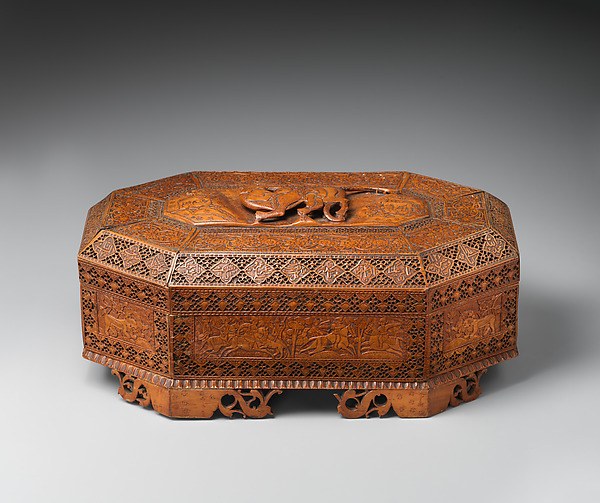
Representative photographs only. Marketplace examples rely on seller descriptions; CraftPersia has not independently authenticated their maker, origin, or rights status. Follow each source link for the listing context.
References and further reading
- [1] H. E. Wulff, The Traditional Crafts of Persia, MIT Press, 1966.General historical craft reference, not evidence for a particular object.
These sources provide context, not authentication or provenance for an individual object. Editorial interpretations remain under review.