
Collector guide · 10 min
Persian prayer rugs: the mihrab design
Editorial team · updated 2026-10-03

probably first half 16th century · accession 46.128 · The Metropolitan Museum of Art · CC0 (Met Open Access) · Photo source ↗
- Type
- Collector guide
- Reading
- 10 min
- Chapters
- 8
- Photos
- 6
Prayer rugs feature an arch (mihrab) at one end; Persian examples range from tribal kilims to fine silk city pieces.
Design
An arched niche, sometimes with a hanging lamp, flowers or columns, points toward Mecca when in use.
Collecting
Look for balanced proportions and wear consistent with use. Many 'prayer rugs' are decorative modern pieces in the design.
Design features
Prayer rugs often show an arch (mihrab) at one end, sometimes with a hanging lamp or columns. They are usually small, sized for a single person.
Respectful use
Many owners prefer to hang prayer rugs or use them only for prayer rather than as floor rugs in busy areas. Ask the seller how the rug was intended to be used.
A note on this guide
This guide is general information from the CraftPersia editorial team and has not been reviewed by a specialist. Prices, workshop locations and practices change; check current details before travelling or buying.
- Design
- Arch (mihrab) shape at one end of the field
- Forms
- Pile prayer rugs, gelim prayer rugs, multi-niche saf
The prayer-niche design
A mihrab design shows an arch at one end, echoing the niche in a mosque wall that indicates the direction of Mecca. Lamps, trees of life and columns may fill the field. Multi-niche rugs (saf) were made for rows of worshippers.
Use and meaning
Prayer rugs are often used daily and treated with respect. Many examples in the market are decorative, made for sale rather than worship, which is acceptable if described honestly.
- Single arch — personal prayer rug
- Multiple arches — saf
- Arch direction indicates top
Buying
Ask for region; Kashan, Tabriz and Qom produce fine prayer designs, while gelim prayer rugs come from many village traditions. Check for even wear at the end opposite the arch, typical of use.
Related photographs and screened examples
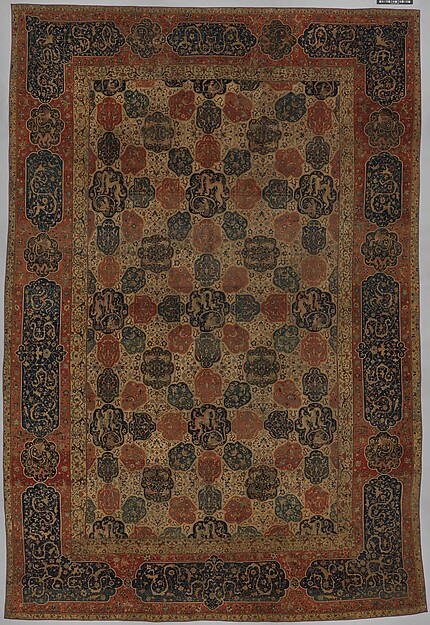
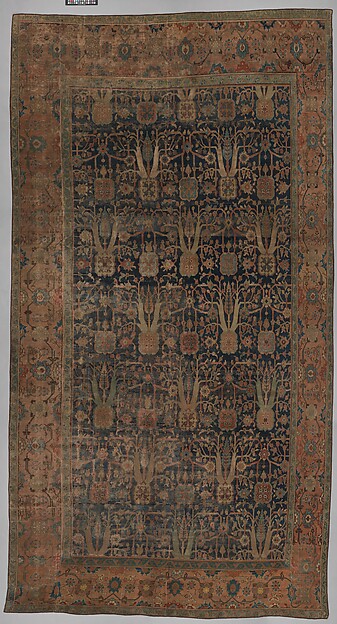
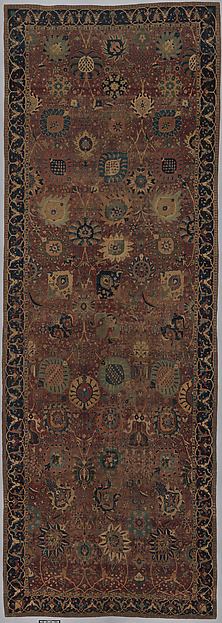

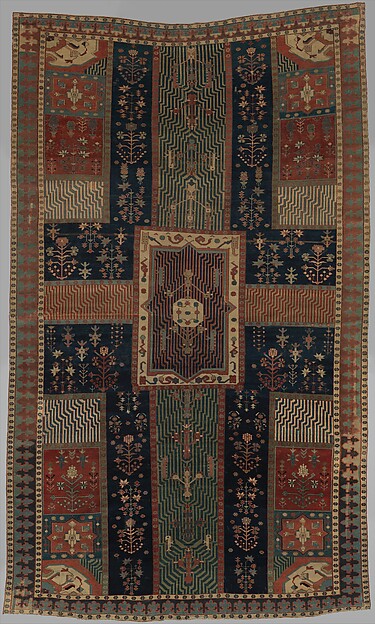
Representative photographs only. Marketplace examples rely on seller descriptions; CraftPersia has not independently authenticated their maker, origin, or rights status. Follow each source link for the listing context.
| Type | Structure | Notes |
|---|---|---|
| City pile prayer rug | Fine knots | Floral, lamps, columns |
| Village prayer rug | Coarser knots | Geometric arches |
| Gelim prayer rug | Slit tapestry | Stepped arch |
| Saf | Pile or flat | Multiple niches in a row |
References and further reading
These sources provide context, not authentication or provenance for an individual object. Editorial interpretations remain under review.