
Beginner guide · 13 min
Meybod pottery and its motifs
Editorial team · updated 2026-09-29
Accessed 15 October 2026.; attribution and origin follow the Commons record and are not independently verified. · Faqscl · CC BY-SA 4.0 (per Wikimedia Commons; rights review pending) · Photo source ↗
- Type
- Beginner guide
- Reading
- 13 min
- Chapters
- 11
- Photos
- 1
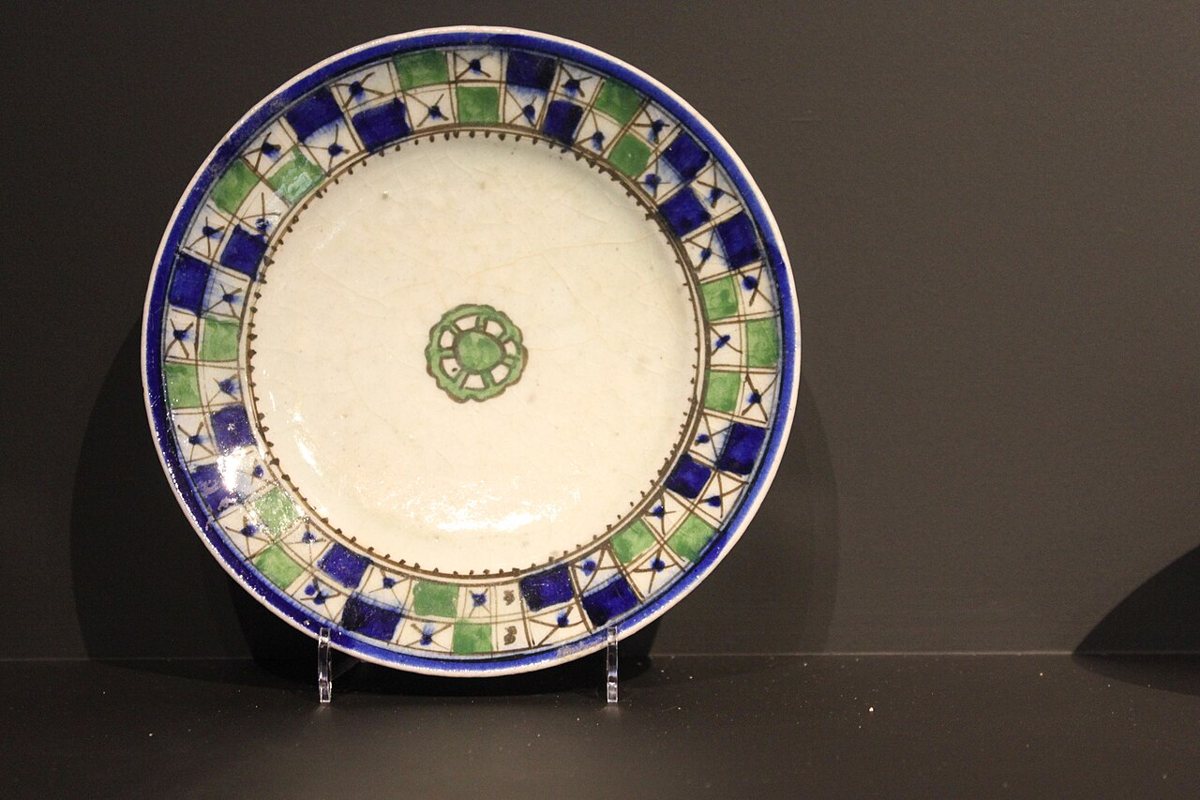
Painted earthenware from Meybod in Yazd province, with fish and sun motifs.
Look
Painted plates with fish, birds and radiating sun designs.
Making
Wheel-thrown, slip-painted and glazed.
Buying
Hand-painted work shows brush variation.
Where Meybod pottery comes from
Meybod, a historic town near Yazd, has a long tradition of earthenware pottery. Workshops in the old quarter still throw pieces on kick or electric wheels, using local clay that fires to a reddish body.
Motifs and colours
Decoration is usually painted in slip and glazes under a clear or turquoise glaze. Common motifs include stylised fish, birds and the radiating ‘sun’ or rosette.
- Fish: often interpreted as abundance or water, a precious resource in the desert
- Sun and rosette: a central radiating design
- Palette: blue, green, yellow and brown on cream
Buying and care
Hand-painted pieces show brushstrokes and slight differences between ‘matching’ plates. Ask whether the glaze is food-safe. Low-fired earthenware can chip, so wrap pieces carefully for travel and avoid sudden temperature changes.
Workshop visits
Several Meybod potteries welcome visitors, and the town also has a pottery and ceramics museum, a caravanserai craft market and zilu workshops. Buying directly supports small family workshops.
A note on this guide
This is a general introduction written by the CraftPersia editorial team. It has not yet been reviewed by a specialist. Practice varies between workshops; confirm details with makers or museums, and treat any dates as approximate.
Crafts covered in this guide
Lalejin pottery (سفال لالجین) — A regional pottery tradition centred on the town of Lalejin near Hamadan, producing thrown and press-moulded glazed and unglazed earthenware, from utilitarian storage vessels to decorative tableware, in a large number of household workshops.
Materials, techniques and centres
Lalejin pottery is recorded in the archive with clay (earthenware) as principal materials, and wheel throwing and underglaze painting as techniques. Associated centres include Hamadan and Lalejin; a place name on its own does not establish where an individual object was made.
Collecting and next steps
When applying this guide to a specific object, work from what can be observed: structure, materials, tool marks, repairs and documentation. Ask the seller or maker for written statements about who made the piece, where, from what materials, and what has been repaired or replaced.
The steps here are educational; identification, conservation and valuation of an individual object require appropriate independent expertise.
References and further reading
- [1] H. E. Wulff, The Traditional Crafts of Persia, MIT Press, 1966.General historical craft reference, not evidence for a particular object.
These sources provide context, not authentication or provenance for an individual object. Editorial interpretations remain under review.