
Beginner guide · 11 min
Crafts of Mashhad and Khorasan: turquoise, soapstone, carpets
Editorial team · updated 2026-10-03
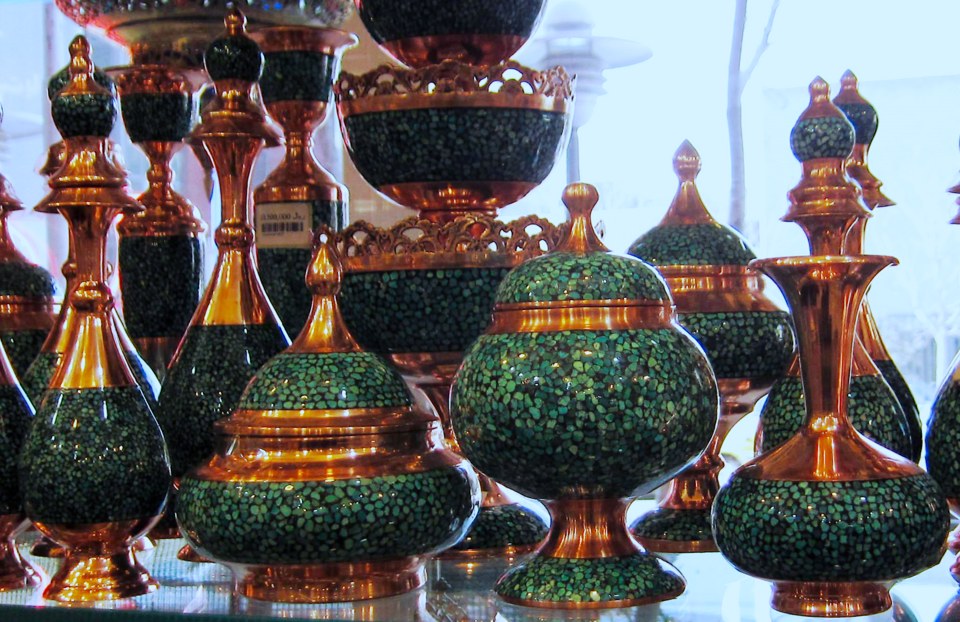
accessed 2026-09-30 · MRG90 · CC BY-SA 4.0 (Wikimedia Commons; JPG conversion) · Photo source ↗
- Type
- Beginner guide
- Reading
- 11 min
- Chapters
- 9
- Photos
- 6
Mashhad is the market for Neyshabur turquoise, carved soapstone cookware and Khorasan carpets.
Highlights
- Neyshabur turquoise in jewellery
- Soapstone pots and bowls
- Khorasan and Baluch rugs
- Saffron and barberries
Turquoise caution
Ask whether stones are natural, stabilised or dyed; tested stones from reputable dealers are safer.
Turquoise from Neyshabur
Mashhad is the main market for turquoise from the Neyshabur area. Stabilised, dyed and reconstituted stones are common. Natural stones vary in colour and often show matrix; very uniform blue at a low price is a warning sign.
- Ask whether the stone is natural, stabilised or treated
- Request a written receipt describing the treatment
- Firuzeh-kubi (turquoise inlay) should have tightly fitted small stones
Carpets and stone
Khorasan has long weaving traditions, and Mashhad also sells soft-stone vessels associated with the region. Many pilgrims shop near the shrine; prices there may be higher.
Planning a craft visit to Mashhad
Workshops and bazaar shops usually keep morning and late-afternoon hours, and many close on Friday and for a midday break. Bring cash or a local payment card, as international cards generally do not work in Iran. When you find a maker you like, ask for a business card or a phone number used for messaging apps so you can order later; many workshops also ship within Iran. Photograph labels and written descriptions rather than relying on verbal claims.
- Ask whether the piece was made in the shop or bought in
- Request materials in writing (wool or silk, natural or synthetic dye, wood species, metal)
- Check export rules for carpets, antiques and old manuscripts before paying
- Wrap fragile enamel and ceramics yourself if you doubt the shop's packing
A note on this guide
This guide is general information from the CraftPersia editorial team and has not been reviewed by a specialist. Prices, workshop locations and practices change; check current details before travelling or buying.
Crafts covered in this guide
Turquoise inlay (Firuzeh-kubi) (فیروزهکوبی) — A decorative technique, associated particularly with Mashhad, in which small chips of turquoise are set edge to edge with adhesive onto a metal object's surface to create a dense mosaic-like covering, most often seen on vessels, jewellery and decorative plates.
Stone carving (Hajjari) (حجاری) — The carving of marble, limestone, alabaster and softer stones for architectural elements, gravestones, inscriptions and vessels.
Persian carpet (فرش ایرانی) — A hand-knotted pile textile woven across Iran in city workshops, village looms and pastoral camps, distinguished by regional structure, palette and design vocabulary.
Materials, techniques and centres
Turquoise inlay (Firuzeh-kubi), Stone carving (Hajjari) and Persian carpet are recorded in the archive with copper, turquoise, marble and soapstone, wool, silk and cotton as principal materials, and turquoise fragment inlay, stone turning and carving and knotted pile weaving as techniques. Associated centres include Mashhad, Isfahan, Tabriz, Kashan, Kerman and Qom; a place name on its own does not establish where an individual object was made.
Collecting and next steps
When applying this guide to a specific object, work from what can be observed: structure, materials, tool marks, repairs and documentation. Ask the seller or maker for written statements about who made the piece, where, from what materials, and what has been repaired or replaced.
The steps here are educational; identification, conservation and valuation of an individual object require appropriate independent expertise.
Related photographs and screened examples
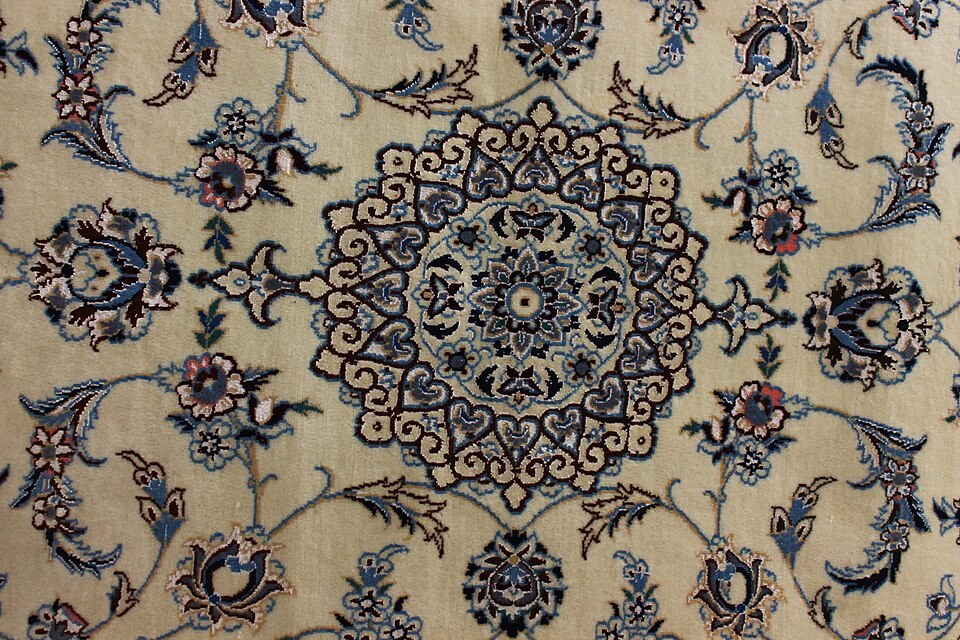

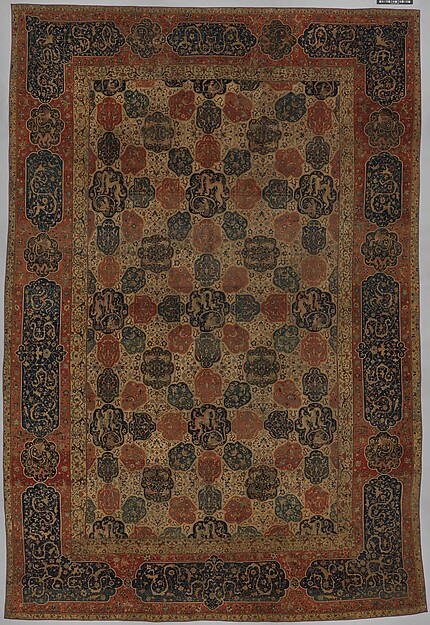
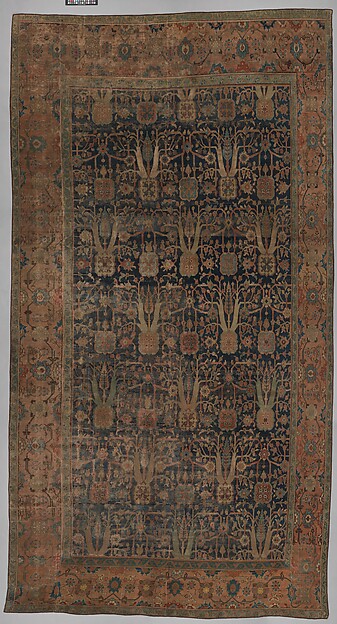
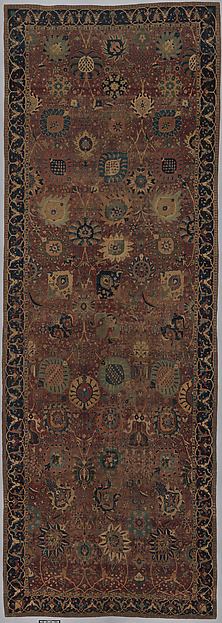
Representative photographs only. Marketplace examples rely on seller descriptions; CraftPersia has not independently authenticated their maker, origin, or rights status. Follow each source link for the listing context.
| Craft | Associated centres | Key materials |
|---|---|---|
| Turquoise inlay (Firuzeh-kubi) | Mashhad | Copper, Turquoise |
| Stone carving (Hajjari) | Isfahan, Tabriz, Mashhad | Marble and soapstone |
| Persian carpet | Tabriz, Isfahan, Kashan | Wool, Silk, Cotton |
References and further reading
- [1] H. E. Wulff, The Traditional Crafts of Persia, MIT Press, 1966.General historical craft reference, not evidence for a particular object.
These sources provide context, not authentication or provenance for an individual object. Editorial interpretations remain under review.