
Buying guide · 5 min
Buying Zanjan silver filigree (malileh)
Editorial team · updated 2026-10-20
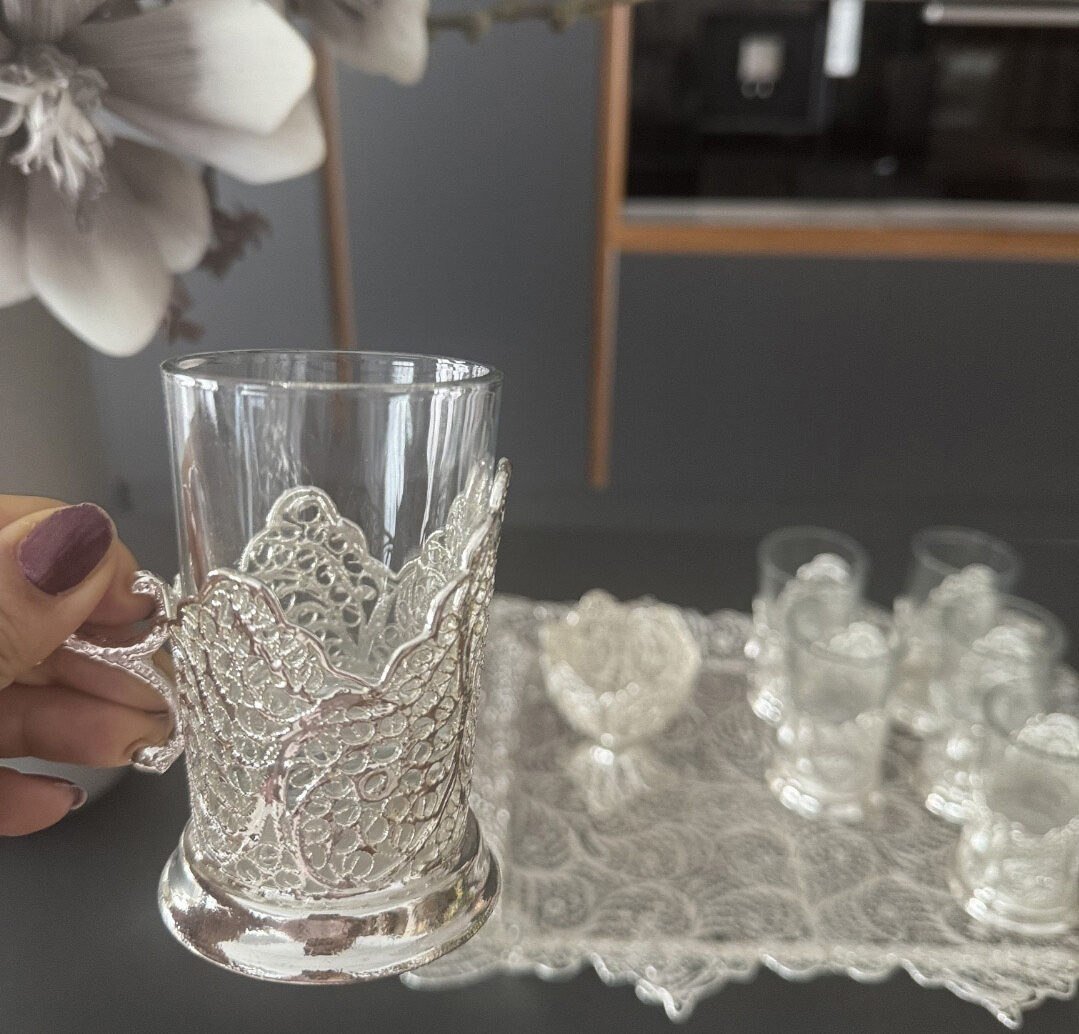
Example photograph, date unverified · Shop / studio (photographer not stated) · Permission status not reviewed · Photo source ↗
- Type
- Buying guide
- Reading
- 5 min
- Chapters
- 5
- Photos
- 1
Scope and evidence
This reading separates visible construction, documented materials and origin claims. The photographs retain their own source context; they do not authenticate a purchase or demonstrate every stage described below. Historical examples and contemporary maker statements require different kinds of evidence.
- Construction: Fine wire elements supported by frames
- Marks: A purity stamp is not independent verification
- Care: Cloths can snag fine wire
- Construction
- Fine wire elements supported by frames
- Marks
- A purity stamp is not independent verification
- Care
- Cloths can snag fine wire
Read wirework from frame to filling
Filigree combines fine wire elements with a supporting framework, joined to form open or backed decoration. Twisting, flattening and shaping can produce different textures. Record the wire pattern, frame and any separate fittings rather than judging the whole piece from a single scroll.
Historic Iranian jewellery includes gold wirework as well as the silver associated with many modern Zanjan objects. Do not transfer a medieval object’s material or attribution to a contemporary tea set. The archive’s commercial photograph is a representative example whose rights and origin have not been independently reviewed.
Hand assembly and casting are different questions
A close view may help distinguish separate wire elements from a cast reproduction of their appearance, but it does not provide a complete account of manufacture. Cast frames, hand-shaped wire and hand finishing can coexist. Casting is not automatically incompatible with skilled handmade work.
Ask the maker which elements were formed and joined by hand, whether any supplied components are used, and where final assembly took place. Under the archive’s sourcing rule, replicas and style-only imports are excluded; a repeating design alone is not sufficient to classify a piece.
Check joints without testing their strength
Look for separated wires, old repairs, sharp ends and distorted frames. Solder can differ from the main wire, and heavy deposits may be a repair rather than a simple grade of poor workmanship. Do not flex an openwork panel or press a scroll to check its spring.
Ask for metal purity documentation and the exact meaning of any stamp. A mark such as 925 is a claim that needs context, not proof of independent assay or Iranian origin. For tea-glass holders or serving objects, clarify whether the piece is decorative and how it is intended to be used.
- Record frame and fine-wire construction
- Ask which components were hand-shaped
- Check for loose wires without pressing
- Keep purity and origin documentation separate
Prevent snagging and unsuitable polishing
A polishing cloth can catch wire or deform fine details, while liquid dips may affect coatings, repairs and other materials. Do not prescribe either as routine care for unassessed filigree. Support the object during movement and avoid gripping an openwork handle or scroll.
Storage and tarnish control depend on the whole object and suitable materials. A new maker can provide instructions for a known finish; historic, gilded, repaired or mixed-material filigree needs conservation advice. Brightness is not a reliable measure of age, purity or quality.
| Look at | Record | Do not infer |
|---|---|---|
| Wire and frame | Separate elements and joins | Handwork from minor variation |
| Loose scroll | Location and condition | Safe to flex |
| Purity mark | Exact mark and supporting documentation | Independent assay or origin |
| Surface finish | Gilding, coatings and repairs | Safe for cloths or dips |
References and further reading
- [1] The Met — Earring with wirework and granulation ↗Specific medieval Iranian jewellery example; not evidence for the commercial silver set pictured here.
- [2] National Park Service — Curatorial care of metal objects ↗Museum handling and storage guidance; composite surfaces need individual assessment.
These sources provide context, not authentication or provenance for an individual object. Editorial interpretations remain under review.