
Collector guide · 12 min
Kerman carpets: features and history
Editorial team · updated 2026-09-29
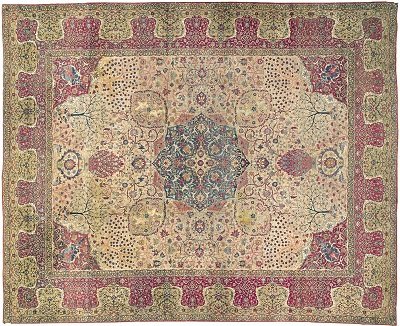
Accessed 15 October 2026.; attribution and origin follow the Commons record and are not independently verified. · Hossainjubayer · CC BY-SA 4.0 (per Wikimedia Commons; rights review pending) · Photo source ↗
- Type
- Collector guide
- Reading
- 12 min
- Chapters
- 10
- Photos
- 6
Soft-coloured, finely drawn rugs from south-east Iran, including the famous Laver Kerman.
Design
Kerman weavers are known for detailed floral fields, vase designs and pictorial carpets.
Palette
Pastel and soft tones became popular for export in the twentieth century.
Identification
Structure, wool quality and border style help distinguish Kerman from other centres.
Recognising a Kerman rug
No single feature proves where a rug was made, so look at several together: the design, the colours, the knot type, the foundation, and how the edges and ends are finished. Dealers' labels are sometimes used loosely, and ‘Kerman design’ rugs are woven in other towns and countries.
- Rich floral designs, often with a wide range of colours
- Medallion or all-over layouts
- Cotton foundation, asymmetric knot
Judging quality
Kerman weavers have historically produced finely drawn floral rugs; check how fluid the curves are. Turn the rug over: hand-knotted rugs show the pattern clearly on the back, with small irregularities. A glued backing cloth or an even grid of stitches suggests a tufted or machine-made rug.
- Even, clear drawing of the motifs
- Wool that springs back when pressed
- Straight sides, and ends that are not pulling in
- No dye run between colours
Care and value
Vacuum regularly without a beater bar, rotate the rug once a year, and keep it out of strong sun. Value depends on condition, fineness, materials, age and design rather than on the city name alone. Get any valuation from an independent appraiser, not from the seller.
A note on this guide
This is a general introduction written by the CraftPersia editorial team. It has not yet been reviewed by a specialist. Practice varies between workshops; confirm details with makers or museums, and treat any dates as approximate.
- Region
- Kerman, south-east Iran
- Character
- Floral city designs; fine antique and later production
- Caution
- Antique Kerman attributions attract forgeries of paperwork
Design traditions
Kerman's carpets are known for elegant floral design — medallion, all-over and vase compositions, often in soft, light palettes, and historically for pictorial and portrait rugs in the later nineteenth and early twentieth centuries. The region also produces the very different flat-woven and embroidered traditions covered elsewhere in this archive.
Kerman was a major export centre, and its designs were commercial successes: they were and are reproduced in other weaving centres. Design appreciation and origin attribution are separate exercises.
Construction and age claims
Kerman city carpets typically use asymmetric knots, with quality varying widely across periods and workshops. Older export pieces may show the effects of heavy use and of washing or chemical treatments applied for Western markets — look for unnatural sheen, brittle pile and colour changes that such treatments leave.
Antique Kerman carpets are a collecting category in their own right, which means age claims are commercially loaded. The antique-value guide's rules apply: age, condition and provenance claims each need their own evidence, and restoration history must be disclosed and priced.
- Asymmetric knots, quality varies by period
- Check for treatment: sheen, brittle pile, colour shift
- Antique claims need provenance, not just wear
- Restoration must be disclosed and priced
Evidence before price
Regional names in the rug trade describe styles and markets as often as weaving places. Treat the pointers here as questions to ask, not proof of origin: only a documented maker, workshop record or reliable provenance establishes where a particular rug was woven.
For high-value Kerman attributions — named workshops, dated antique pieces, pictorial rugs — commission an independent appraisal and buy the documentation, not the story.
Related photographs and screened examples
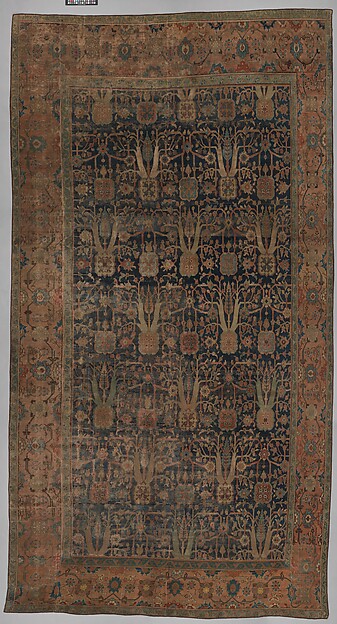
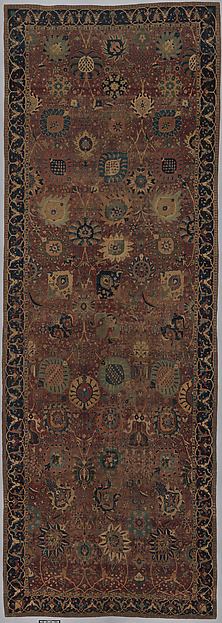

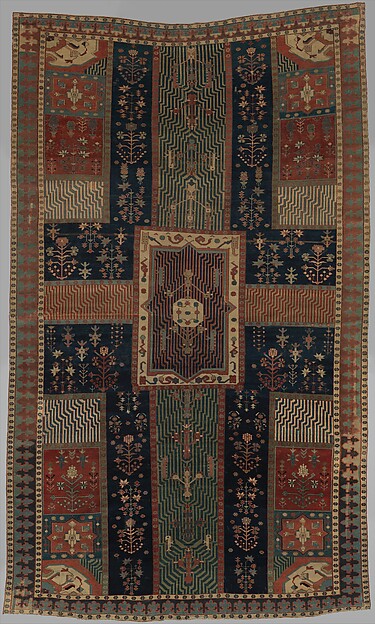

Representative photographs only. Marketplace examples rely on seller descriptions; CraftPersia has not independently authenticated their maker, origin, or rights status. Follow each source link for the listing context.
| Pointer | What it suggests | What it cannot prove |
|---|---|---|
| Soft floral city design | The Kerman design tradition | Region or period of weaving |
| Apparent age and wear | Possible old piece | Antique status — needs provenance |
| Pictorial subject | A known Kerman genre | Date or workshop |
References and further reading
- [1] H. E. Wulff, The Traditional Crafts of Persia, MIT Press, 1966.General historical craft reference, not evidence for a particular Kerman object.
These sources provide context, not authentication or provenance for an individual object. Editorial interpretations remain under review.