
Collector guide · 10 min
Kashan rugs: history, medallion designs and identification
Editorial team · updated 2026-09-29
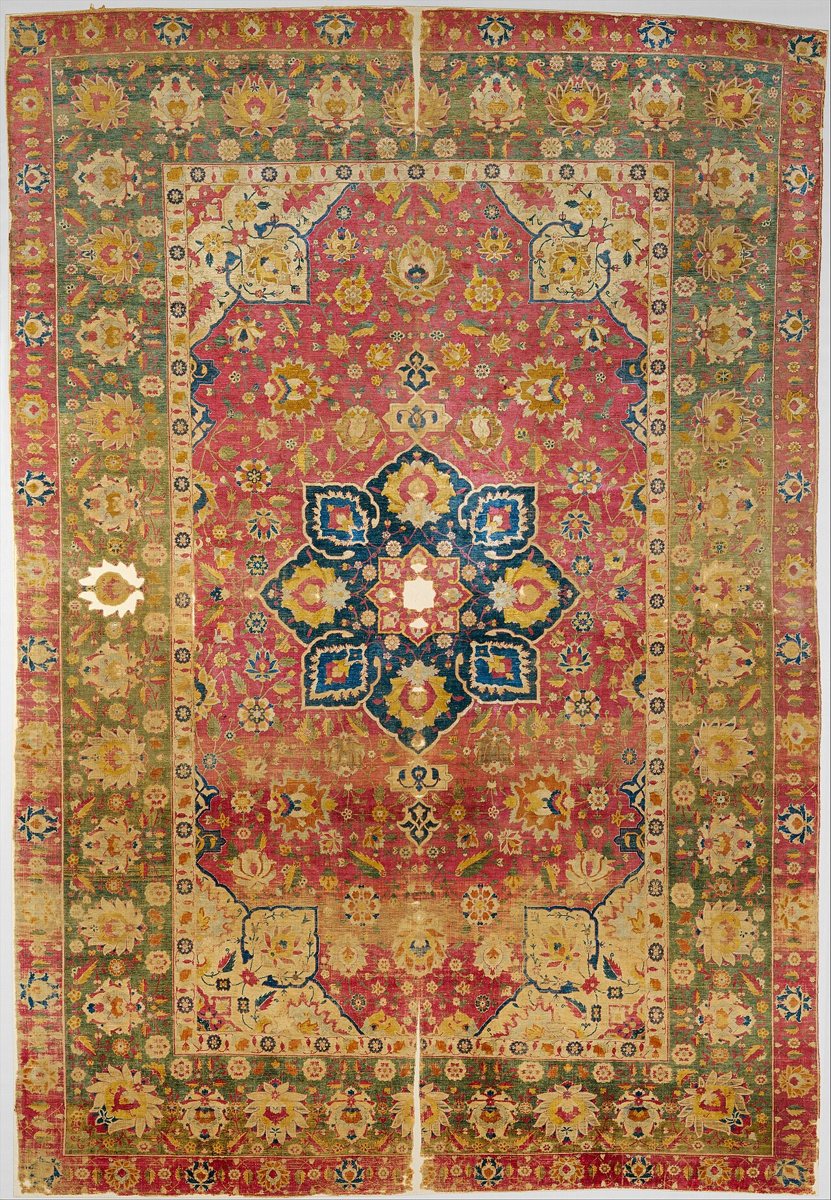
Accessed 15 October 2026.; attribution and origin follow the Commons record and are not independently verified. · Not stated on Commons · CC0 (per Wikimedia Commons; rights review pending) · Photo source ↗
- Type
- Collector guide
- Reading
- 10 min
- Chapters
- 9
- Photos
- 6
Kashan rugs are fine city carpets from central Iran, famous for deep red fields, navy borders and elaborate central medallions.
What is a Kashan rug?
A Kashan rug is a hand-knotted carpet from Kashan, an oasis city between Tehran and Isfahan. Kashan was a leading court weaving centre in the Safavid period and revived strongly in the late 19th century, becoming known for fine wool and silk carpets.
Design
The classic Kashan layout is a large central medallion on a deep red or ivory field, with navy blue borders and dense floral detail. Prayer designs, vase designs and all-over floral patterns also appear.
Structure
Kashan rugs use the asymmetrical (Persian) knot on a cotton foundation, with short, dense pile. The famous 'Mohtasham' and 'Motasham' Kashans of about 1880–1910 used exceptionally soft Merino-type wool.
How to identify one
Look for tight asymmetrical knots, cotton warps and wefts (often blue-dyed wefts in older pieces), close-clipped pile and crisp floral drawing. Manchester Kashans refer to pieces woven with imported fine wool.
Buying tips
Many medallion rugs are sold as 'Kashan design'. Ask for the place of weaving and look at the back. Condition, age and wool quality drive value; we do not provide valuations.
- Region
- Kashan, central Iran
- Typical look
- Central medallion, red or navy fields, ivory spandrels
- Knot
- Asymmetric (Persian)
History
Kashan was a major silk-weaving centre under the Safavids and is associated with some of the most celebrated surviving silk carpets of that era. Carpet weaving revived there in the late nineteenth century, when local merchants are said to have used fine Merino-type wool imported via Manchester — the source of the trade term 'Manchester Kashan'.
Design
Classic Kashan rugs show a lobed central medallion with pendants, framed by corner spandrels on a densely floral field. Deep madder reds and dark blues dominate, with ivory accents. Prayer-rug and pictorial designs were also woven.
Structure clues
Typical workshop Kashans use cotton warps and wefts, a short, dense wool pile and the asymmetric knot. Many older pieces were chemically washed or painted after weaving to change colours for export taste; look for colour sitting on pile tips only.
Buying notes
Because 'Kashan' is a common design name, ask for country of origin in writing. Compare knot density on the back with similar documented pieces, and ask whether colours have been washed or restored.
Related photographs and screened examples
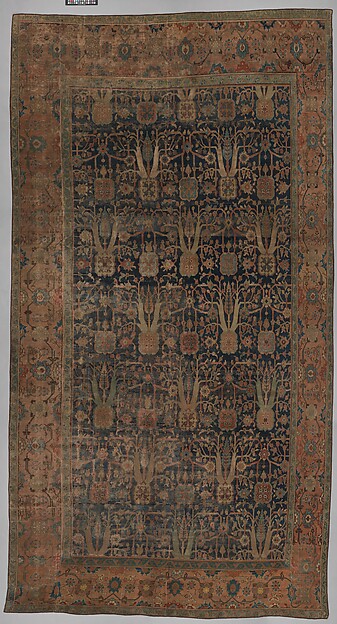
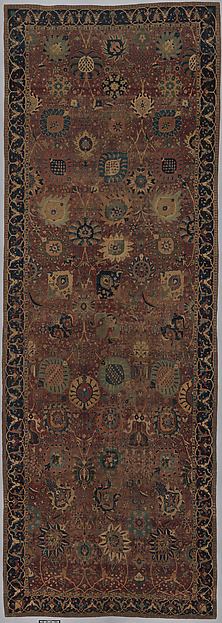

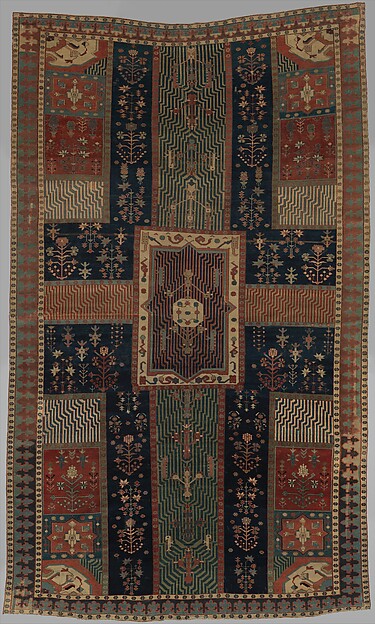

Representative photographs only. Marketplace examples rely on seller descriptions; CraftPersia has not independently authenticated their maker, origin, or rights status. Follow each source link for the listing context.
| Centre | Field | Pile | Feel |
|---|---|---|---|
| Kashan | Dense floral, medallion | Short, dense wool or silk | Firm |
| Qom | Varied, often silk | Very fine silk | Supple |
| Isfahan | Precise drawing, pastels | Fine wool, silk foundation | Thin, firm |
References and further reading
- [1] Victoria and Albert Museum — The Ardabil Carpet ↗
- [2] UNESCO Intangible Cultural Heritage — Traditional skills of carpet weaving in Kashan ↗
These sources provide context, not authentication or provenance for an individual object. Editorial interpretations remain under review.