
Beginner guide · 11 min
Jajim and narrow-band flatweaves
Editorial team · updated 2026-09-29
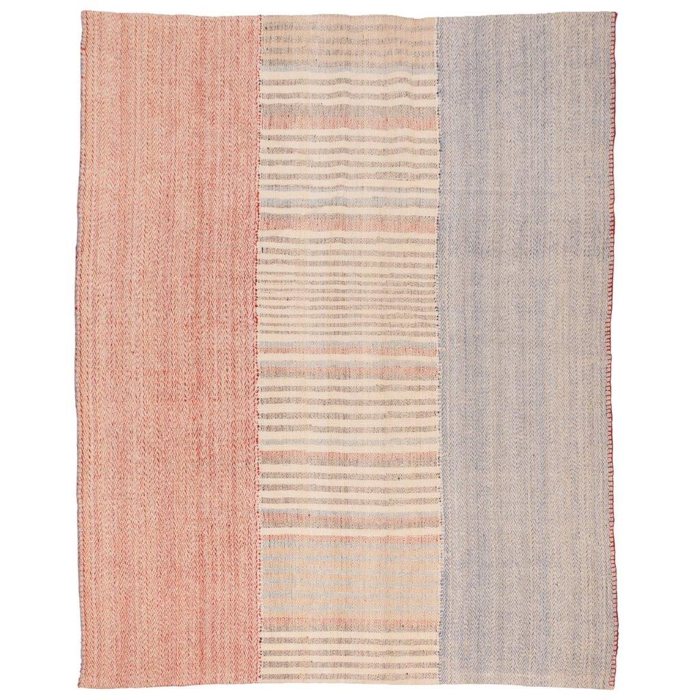
Example photograph, date unverified · Shop / studio (photographer not stated) · Permission status not reviewed · Photo source ↗
- Type
- Beginner guide
- Reading
- 11 min
- Chapters
- 9
- Photos
- 1
Warp-faced striped textiles woven in narrow strips and sewn together.
How jajim is made
Jajim is woven on narrow looms in long strips, then the strips are sewn side by side. The pattern is formed by the warp threads.
Uses
Used as covers, bedding wraps and hangings in nomadic and village homes.
Identifying
Look for the seams between strips and warp-faced stripes.
How jajim are made
Jajim are woven in narrow strips on simple looms, then sewn together. Warp-faced stripes and small patterns are typical.
Where and why
Jajim are warp-faced flatweaves made by nomadic and village weavers in many regions, including the Bakhtiari, Qashqai, Talesh and Azerbaijani communities. They are woven in narrow strips on simple ground looms or band looms, then sewn together into blankets, covers and bedding wraps. Bright stripes and small geometric patterns come from coloured warps being raised in sequence.
Using and caring
Jajim are light enough for throws, wall hangings and bed covers. Wash them gently, or have them professionally washed, because some dyes may run. Check the seams joining the strips, and repair any loosening early.
- Count the strips: older blankets often have several
- Look for handspun wool, with slight irregularity
- Ask about natural or synthetic dyes
Crafts covered in this guide
Jajim (جاجیم) — A narrow-strip flatwoven textile, usually made in warp-faced bands on a portable loom and then sewn together into a wider cloth, traditionally used as bedding cover, floor spread or door hanging by village and pastoral households.
Materials, techniques and centres
Jajim is recorded in the archive with wool and cotton as principal materials, and warp-faced strip weaving and supplementary weft brocade as techniques. Associated centres include Tabriz and Isfahan; a place name on its own does not establish where an individual object was made.
Collecting and next steps
When applying this guide to a specific object, work from what can be observed: structure, materials, tool marks, repairs and documentation. Ask the seller or maker for written statements about who made the piece, where, from what materials, and what has been repaired or replaced.
The steps here are educational; identification, conservation and valuation of an individual object require appropriate independent expertise.
References and further reading
- [1] H. E. Wulff, The Traditional Crafts of Persia, MIT Press, 1966.General historical craft reference, not evidence for a particular object.
These sources provide context, not authentication or provenance for an individual object. Editorial interpretations remain under review.