
Collector guide · 10 min
Isfahan rugs: fine knots, silk foundations and famous workshops
Editorial team · updated 2026-09-29
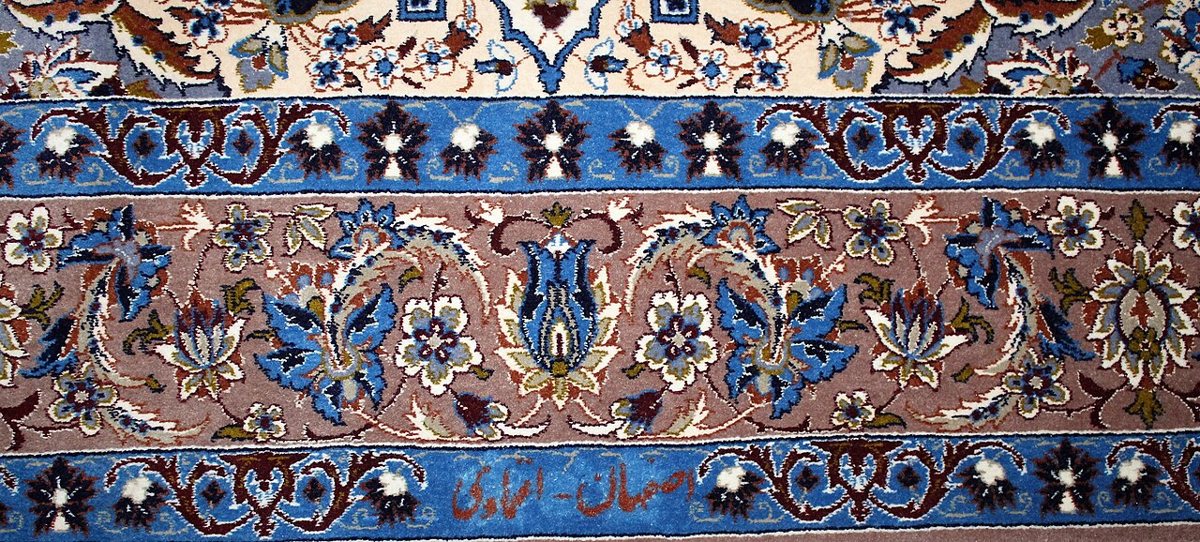
Accessed 15 October 2026.; attribution and origin follow the Commons record and are not independently verified. · Anton biederwolf · CC BY-SA 4.0 (per Wikimedia Commons; rights review pending) · Photo source ↗
- Type
- Collector guide
- Reading
- 10 min
- Chapters
- 8
- Photos
- 6
Isfahan rugs are among Iran's finest city carpets, with high knot density, silk foundations and balanced medallion designs.
What is an Isfahan rug?
An Isfahan rug is a hand-knotted carpet from Isfahan in central Iran. The city was the Safavid capital and a centre of court weaving. Modern Isfahan weaving revived in the 1920s and is known for very fine knotting.
Features
- Asymmetrical (Persian) knot
- Silk or cotton foundation; silk warps are common in fine pieces
- Kork (fine wool) pile, often with silk outlining
- Central medallion with arabesques and palmettes
- Ivory, navy, rose and turquoise palettes
Famous workshops
Names such as Seirafian, Haghighi and Davari are associated with 20th-century Isfahan weaving. Signatures appear woven into the border. A signature is not proof by itself; forged signatures exist.
Buying tips
Check the foundation (fringe), knot clarity on the back and wool quality. Ask for provenance on signed pieces.
Workshops and names
Some Isfahan workshops, such as those associated with the Seirafian family, became known by name in the twentieth century, and their signatures sometimes appear in the border. Signatures can be copied, so documentation matters more than a woven name alone.
- Silk warps are common in finer pieces
- The central medallion is usually framed by arabesques
- Fineness is often very high
Crafts covered in this guide
Persian carpet (فرش ایرانی) — A hand-knotted pile textile woven across Iran in city workshops, village looms and pastoral camps, distinguished by regional structure, palette and design vocabulary.
Materials, techniques and centres
Persian carpet is recorded in the archive with wool, silk, cotton and natural dyes as principal materials, and knotted pile weaving as the technique. Associated centres include Tabriz, Isfahan, Kashan, Kerman, Qom and Shiraz; a place name on its own does not establish where an individual object was made.
Collecting and next steps
When applying this guide to a specific object, work from what can be observed: structure, materials, tool marks, repairs and documentation. Ask the seller or maker for written statements about who made the piece, where, from what materials, and what has been repaired or replaced.
The steps here are educational; identification, conservation and valuation of an individual object require appropriate independent expertise.
Related photographs and screened examples
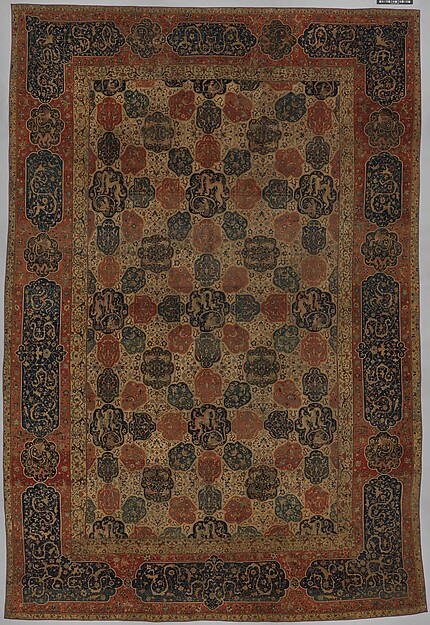
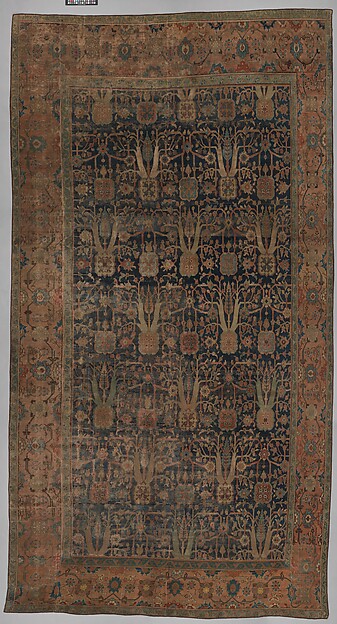
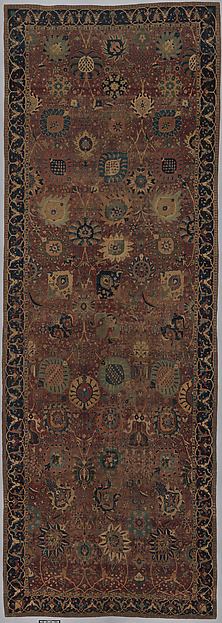

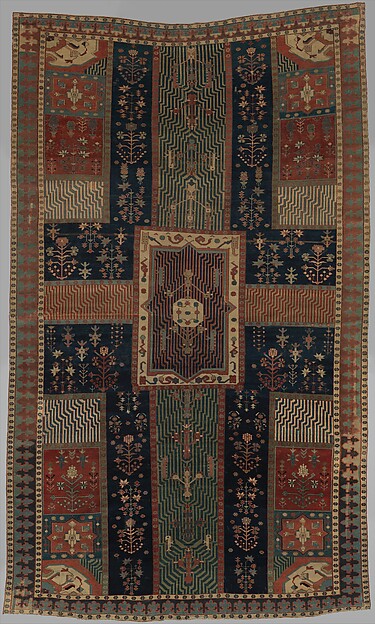
Representative photographs only. Marketplace examples rely on seller descriptions; CraftPersia has not independently authenticated their maker, origin, or rights status. Follow each source link for the listing context.
References and further reading
- [1] H. E. Wulff, The Traditional Crafts of Persia, MIT Press, 1966.General historical craft reference, not evidence for a particular object.
These sources provide context, not authentication or provenance for an individual object. Editorial interpretations remain under review.