
Buying guide · 10 min
How to tell a real hand-knotted Persian rug
Editorial team · updated 2026-09-29
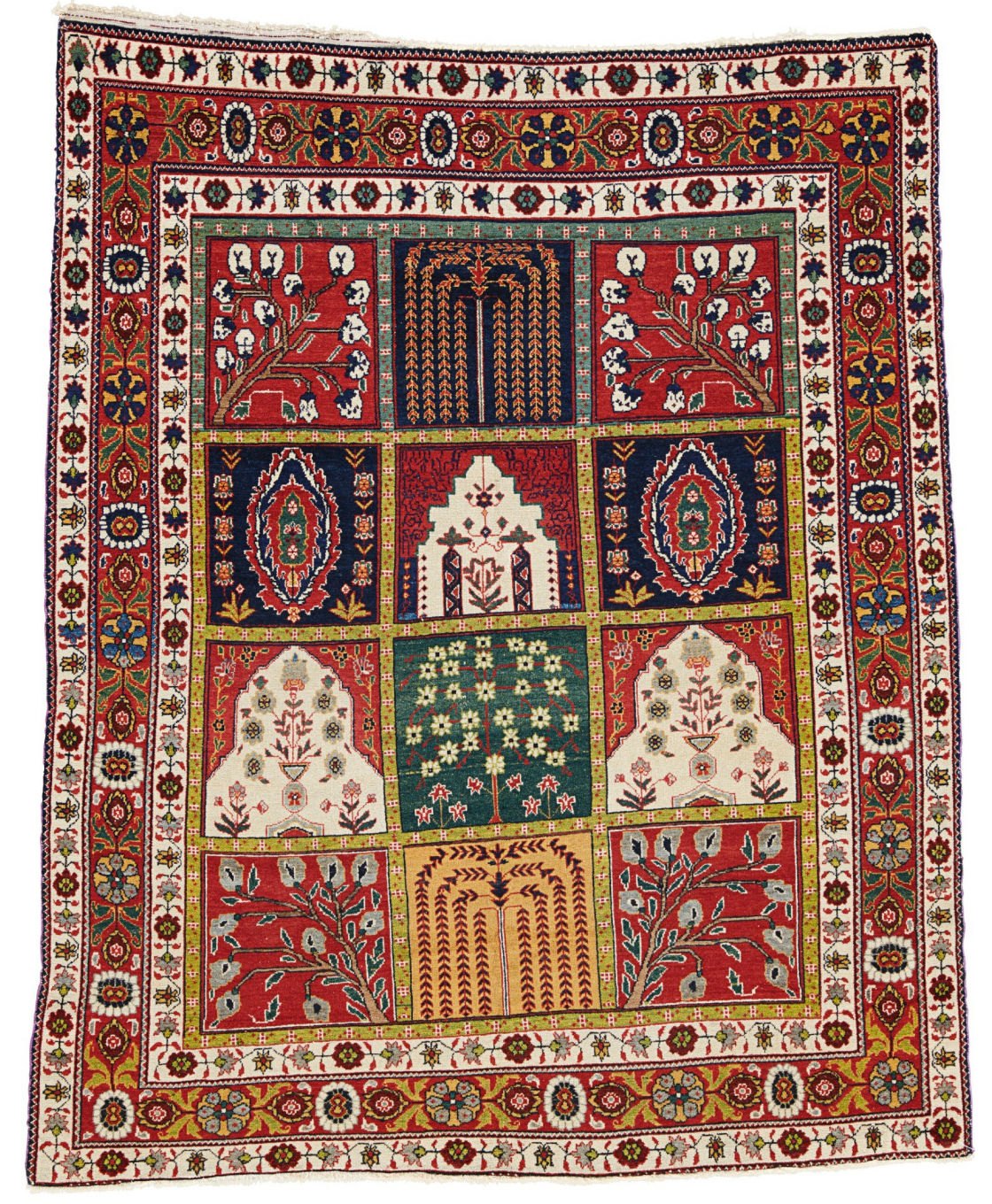
accessed 2026-09-30 · Unknown weaver; Wikimedia Commons photograph · Public domain (per Wikimedia Commons) · Photo source ↗
- Type
- Buying guide
- Reading
- 10 min
- Chapters
- 8
- Photos
- 6
Turn the rug over: a real hand-knotted Persian rug shows each knot on the back, slight irregularities and a fringe made from the warps.
The short answer
Look at the back. A hand-knotted rug shows the design clearly, knot by knot, with small irregularities. The fringe is the end of the warp threads, not sewn on. Machine rugs look perfectly even, often have a stiff backing and a fringe stitched on afterwards.
Quick checks
- Back: clear design, small uneven knots
- Fringe: continues from the rug's body
- Edges: hand-wrapped, slightly uneven
- Shape: slightly irregular is normal
- Pile: fold the rug to see knots at the base of the pile
- Label: 'Persian design' or 'Persian style' is not origin
Hand-knotted vs. hand-tufted
Hand-tufted rugs are made with a tufting gun and usually have a glued cloth or latex backing. They are not knotted and are not Persian rugs in the traditional sense.
Made in Iran?
Iranian-style rugs are woven in many countries. Structure helps, but origin is best supported by the seller's written statement, invoice and knowledgeable identification.
When in doubt
Ask an independent specialist. This guide cannot confirm that a specific rug is genuine.
- Key checks
- Back of rug, fringe, knots, origin documentation
Turn it over
The back of a hand-knotted rug shows the design clearly, with individual knots slightly irregular. Machine-made rugs show perfectly regular rows; tufted rugs have a glued fabric backing hiding the structure.
Check the fringe
On a hand-knotted rug the fringe is the end of the warps running through the rug. A sewn or glued-on fringe indicates machine or tufted production.
- Fringe continuous with foundation
- Sides overcast by hand
- Slight size variation end to end
Hand-knotted is not the same as Persian
Many hand-knotted rugs are made in India, Pakistan, Nepal and elsewhere in Persian designs. A genuine Persian rug is one woven in Iran; ask for a specific region and seller documentation. A bare 'Persian design' label is a style description.
Related photographs and screened examples

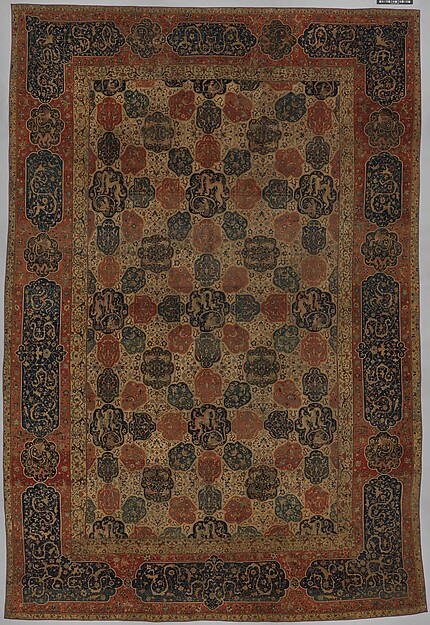
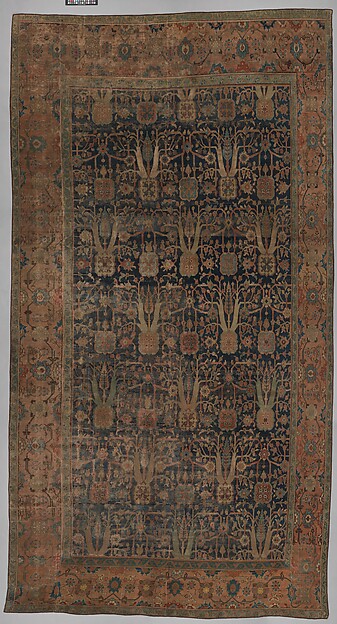
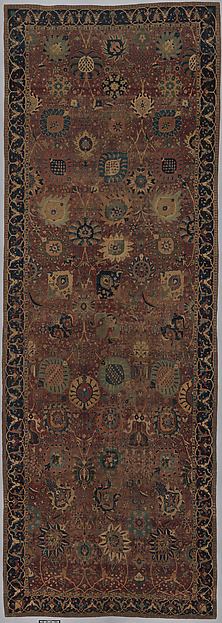

Representative photographs only. Marketplace examples rely on seller descriptions; CraftPersia has not independently authenticated their maker, origin, or rights status. Follow each source link for the listing context.
| Check | Hand-knotted | Hand-tufted | Machine-made |
|---|---|---|---|
| Back | Visible knots, design clear | Glued fabric backing | Uniform grid |
| Fringe | Warp ends | Sewn on | Sewn on |
| Flexibility | Folds softly | Stiff | Varies |
References and further reading
These sources provide context, not authentication or provenance for an individual object. Editorial interpretations remain under review.