
Buying guide · 12 min
How to spot a machine-made rug
Editorial team · updated 2026-09-29
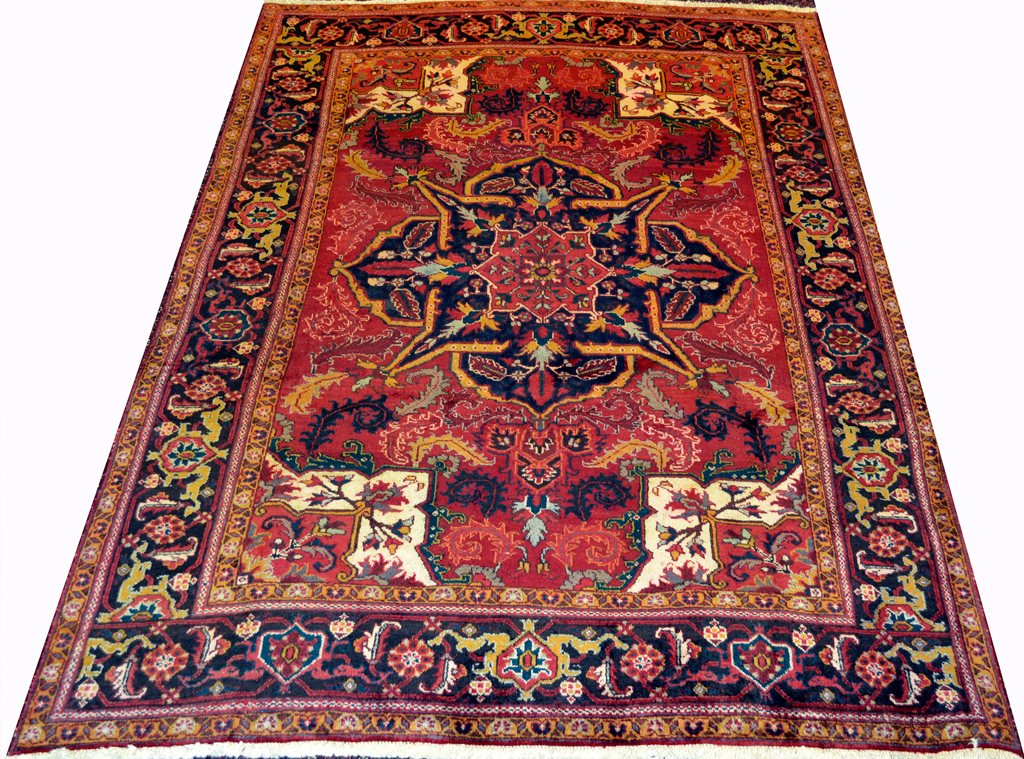
Accessed 15 October 2026.; attribution and origin follow the Commons record and are not independently verified. · Treasure Gallery Inc · CC BY-SA 3.0 (per Wikimedia Commons; rights review pending) · Photo source ↗
- Type
- Buying guide
- Reading
- 12 min
- Chapters
- 11
- Photos
- 6
Simple checks to tell hand-knotted rugs from machine copies.
Back
Hand-knotted backs show individual knots and small irregularities; machine backs look grid-perfect.
Fringe
In hand-knotted rugs the fringe is the warp; sewn-on fringes are a warning sign.
Edges
Hand-overcast sides differ from machine binding.
- Uneven knots
- Integrated fringe
- Slight size differences end to end
Five quick checks
- Back: hand-knotted rugs show the pattern clearly, with slight irregularities; machine rugs have a uniform grid
- Fringe: inspect warp continuity; sewn fringe can be a manufacturing finish or later repair
- Edges: hand-overcast sides vary slightly
- Pile: request close photographs of the foundation; do not fold brittle rugs
- Backing: glued cloth or latex often indicates tufting, but later support can conceal other structures
Tufted versus knotted
Hand-tufted rugs are made with a tufting gun and glued backing. They are handmade in a sense, but they are not knotted and usually last for much less time. Sellers sometimes describe them only as ‘handmade’, so ask directly whether a rug is knotted.
Labels and price
A very low price for a large ‘Persian’ rug is a warning sign. Ask for the country of manufacture in writing; ‘Persian design’ is not the same as made in Iran.
A note on this guide
This is a general introduction written by the CraftPersia editorial team. It has not yet been reviewed by a specialist. Practice varies between workshops; confirm details with makers or museums, and treat any dates as approximate.
- Main question
- How is the pile held in the foundation?
- Fringe
- Attachment is a clue, not a verdict
- Limit
- Hand-knotted construction does not prove Iranian origin
Trace the construction on the reverse
Hand-knotted pile is secured by knots tied around foundation warps and held in rows with wefts. Hand-tufted pile is inserted through a pre-existing base, often secured with adhesive and a backing. Power-loom manufacture uses mechanical interlacement. These are different constructions, not simply different levels of regularity. A seller’s word handmade needs clarification about the actual method.
Ask for close photographs of the reverse, a side and both ends of the actual rug. A skilled hand-knotted workshop carpet may be very regular, and a mechanical rug can display an elaborate reverse design. If a backing hides the foundation, state that the construction cannot be fully inspected rather than guessing from the face.
Fringe and backing can be later additions
An integral fringe consists of foundation warp ends extending from the rug. Sewn fringe may be a mechanical finish, but it can also be a replacement or decorative addition to an older hand-knotted rug. Likewise, a lined or backed rug may have received a support after manufacture. “Sewn-on fringe equals machine-made” is not a reliable rule.
Examine the junction between fringe and foundation without unpicking it. Ask when ends were repaired, whether the rug was shortened and what a lining conceals. Mechanical edging does not by itself identify the pile construction. Treat finishes, repairs and the main woven body as separate observations in the record.
Separate fibre, pattern and place of manufacture
Wool can be used in machine manufacture; synthetic fibres can occur in products described as handmade. Softness, shine and a floral Persian design do not resolve the construction. Burning or chemically testing fibres at home risks damage and cannot establish a maker or geographic origin. Ask for a material specification and the evidence supporting it.
A confirmed hand-knotted structure still does not prove that a rug was made in Iran. Similar methods are used in many countries. The cultural design label, actual making site and named maker must be documented independently. For an important purchase, have a qualified specialist inspect the rug rather than make a definitive judgment from one online image.
Turn inspection into written purchase terms
Collect a dated invoice, dimensions, material statement, making method, stated origin and condition report. Ask for photographs of stains, foundation wear, altered ends and repairs, not just the face. The seller should distinguish a documented maker from an attribution and should identify what could not be inspected.
Price is not a construction test. Size, condition, fibre, labour, demand and the seller’s market all affect it. Compare several pieces with similar specifications, and check returns and shipping before payment. Archive photographs illustrate weaving contexts; they are not paired laboratory examples proving a machine-versus-hand distinction.
- Inspect foundation rather than pattern alone
- Treat sewn fringe and backing as clues requiring context
- Request origin evidence separately from construction
- Clarify repairs, returns and transport terms
Related photographs and screened examples

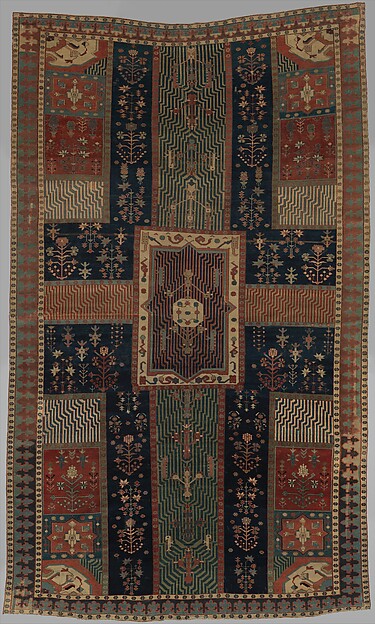

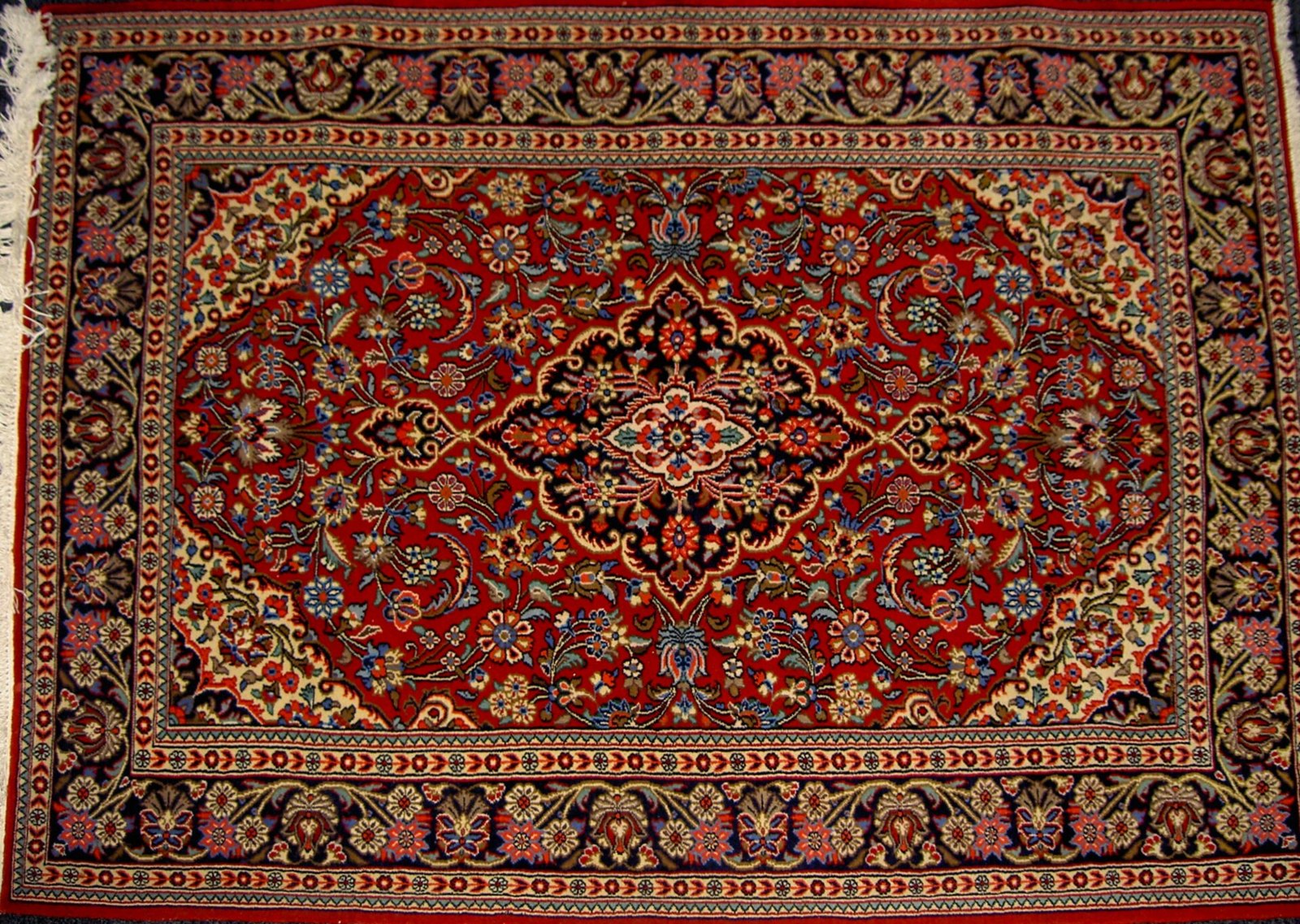
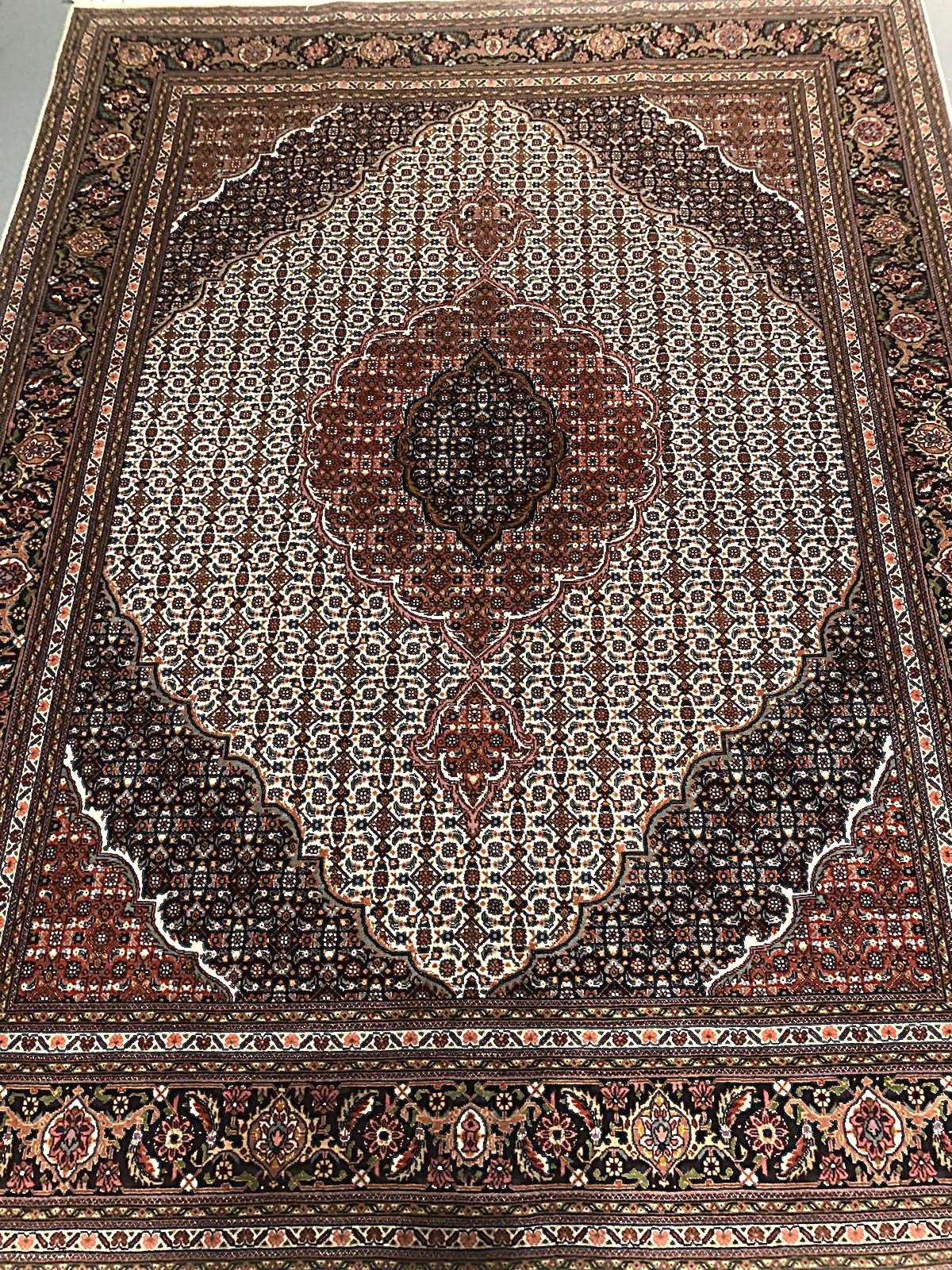
Representative photographs only. Marketplace examples rely on seller descriptions; CraftPersia has not independently authenticated their maker, origin, or rights status. Follow each source link for the listing context.
| Observation | Possible explanation | Next check |
|---|---|---|
| Integral warp fringe | Foundation continues into ends | Inspect knot and weft structure |
| Sewn-on fringe | Manufacturing finish or later repair | Check original ends and treatment history |
| Glued backing | Often hand-tufted construction | Ask what is beneath the backing |
| Highly regular reverse | Skilled workshop or mechanical production | Trace the actual interlacement |
References and further reading
- [1] UNESCO — Traditional skills of carpet weaving in Kashan ↗Documents handweaving practice, not authentication of a specific offered rug.
- [2] A. C. Edwards, The Persian Carpet (1953)Historical construction and production reference; not current price guidance.
These sources provide context, not authentication or provenance for an individual object. Editorial interpretations remain under review.