
Preservation · 11 min
How to clean a Persian rug at home — and when not to
Editorial team · updated 2026-09-29
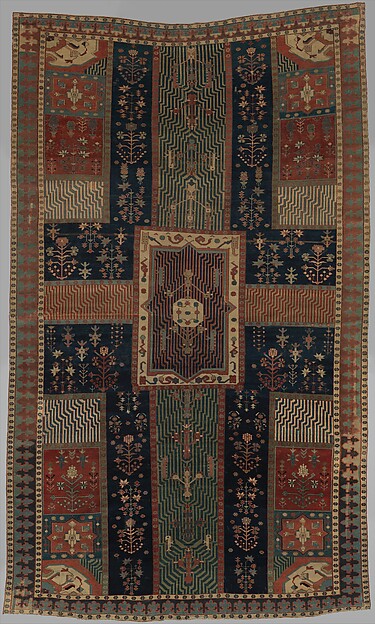
second half 18th century · accession 22.100.128 · The Metropolitan Museum of Art · CC0 (Met Open Access) · Photo source ↗
- Type
- Preservation
- Reading
- 11 min
- Chapters
- 10
- Photos
- 6
Clean a Persian rug at home by vacuuming both sides, shaking out grit and blotting spills with cold water; leave full washing to a specialist.
The short answer
Most Persian rugs only need regular dry care at home: vacuum the front and back, shake or beat out grit outdoors, and blot spills straight away with cold water. Full wet washing is best done by a specialist rug washer every few years, depending on use.
Routine care
- Vacuum weekly with suction only or the beater bar switched off
- Vacuum in the direction of the pile, not against it
- Vacuum the back every few months — grit works up from underneath
- Never vacuum the fringe; flip it under or use a hand brush
- Rotate the rug once or twice a year so wear and light even out
Spills and stains
Act quickly. Blot — never rub — with a white cloth, working from the outside in. Use cold water only. Avoid household carpet shampoos, bleach, oxygen cleaners and hot water, which can strip or bleed dyes. Test any damp cloth on a hidden corner first.
Snow cleaning
In some cold countries, rugs are laid pile-down on clean dry snow and beaten gently. It can freshen wool rugs, but do not use it on silk, fragile or old pieces.
When not to clean at home
- Silk or wool-and-silk rugs
- Antique or fragile rugs, or pieces with worn foundations
- Rugs with bleeding dyes, pet urine or mould
- Any rug too large to dry fully within a day
Choosing a professional
Look for a washer who hand-washes rugs in a dedicated facility, tests dyes first and dries rugs flat. Ask how they handle colour run and fringes. General carpet steam-cleaners are not suitable.
- First decision
- Assess fragility and dyes before introducing moisture
- Routine care
- Gentle suction when the condition permits
- Treatment
- No universal washing interval or home stain recipe
Decide whether routine cleaning is safe
A robust modern floor rug and a brittle historic textile should not receive the same treatment. Loose knots, powdering fibres, exposed foundation, detached edges or flaking repairs make even vacuuming a risk. Record the condition first. If the rug is fragile, valuable or of uncertain construction, ask a textile conservator before attempting treatment.
There is no universal schedule requiring a specialist wash every few years. Use, soiling, structure, previous treatments and dye stability matter. A cleaning business should assess the actual rug rather than choose a process from its sales name. Ask which problems cleaning can address and which require repair or conservation instead.
Prevent dirt and abrasion before wet treatment
For a stable rug, gentle suction without a rotating beater can reduce loose dust. Avoid drawing fringes or loose yarns into the nozzle; reduce suction and stop if fibres detach. Fragile textiles may need a protective screen and professional handling. Regular inspection is more useful than aggressive repeated cleaning.
An appropriate underlay can reduce slipping and mechanical wear, but its materials should not stain or grip the rug destructively. Keep the floor dry, move heavy furniture carefully and avoid direct sunlight. Rotation can distribute exposure when handling is safe; it is not a reason to drag a large rug by its edges.
Respond to a spill without escalating damage
Remove loose solids gently and absorb liquid with a clean dry absorbent cloth, without scrubbing. Do not automatically add water: moisture can spread a stain or mobilise unstable colour. Avoid household spot removers, bleach, steam and improvised mixtures on an uncertain rug. Contact an appropriate specialist promptly, especially for coloured liquids or pet contamination.
Document what spilled, when, and any action already taken. If colour transfers or the textile changes texture, stop. A small damp test by a buyer is not a dependable dye-stability assessment and can itself damage an object. Cleaning suitability must be considered for the complete fibre, dye, backing and repair system.
Choose treatment and transport with care
Ask a cleaner or conservator about dye assessment, dust removal, backing and adhesive risks, drying and the handling of previous repairs. Not every rug can be immersed, and a treatment suitable for a modern wool carpet may be unsuitable for silk, metallic yarns or degraded fibres. Obtain the scope and limits in writing.
Active pests or suspected mould need isolation and specialist advice, not household sprays or a generic home-freezing instruction. Handling a large or damp rug can also distort it. Agree how it will be supported, packed and returned, and request before-and-after documentation. The goal is stable continued use or preservation, not making every old rug look new.
- Assess loose or weakened areas before cleaning
- Blot with dry absorbent material; do not scrub
- Avoid water and chemicals when stability is unknown
- Consult a specialist for pests, mould or fragile textiles
Related photographs and screened examples

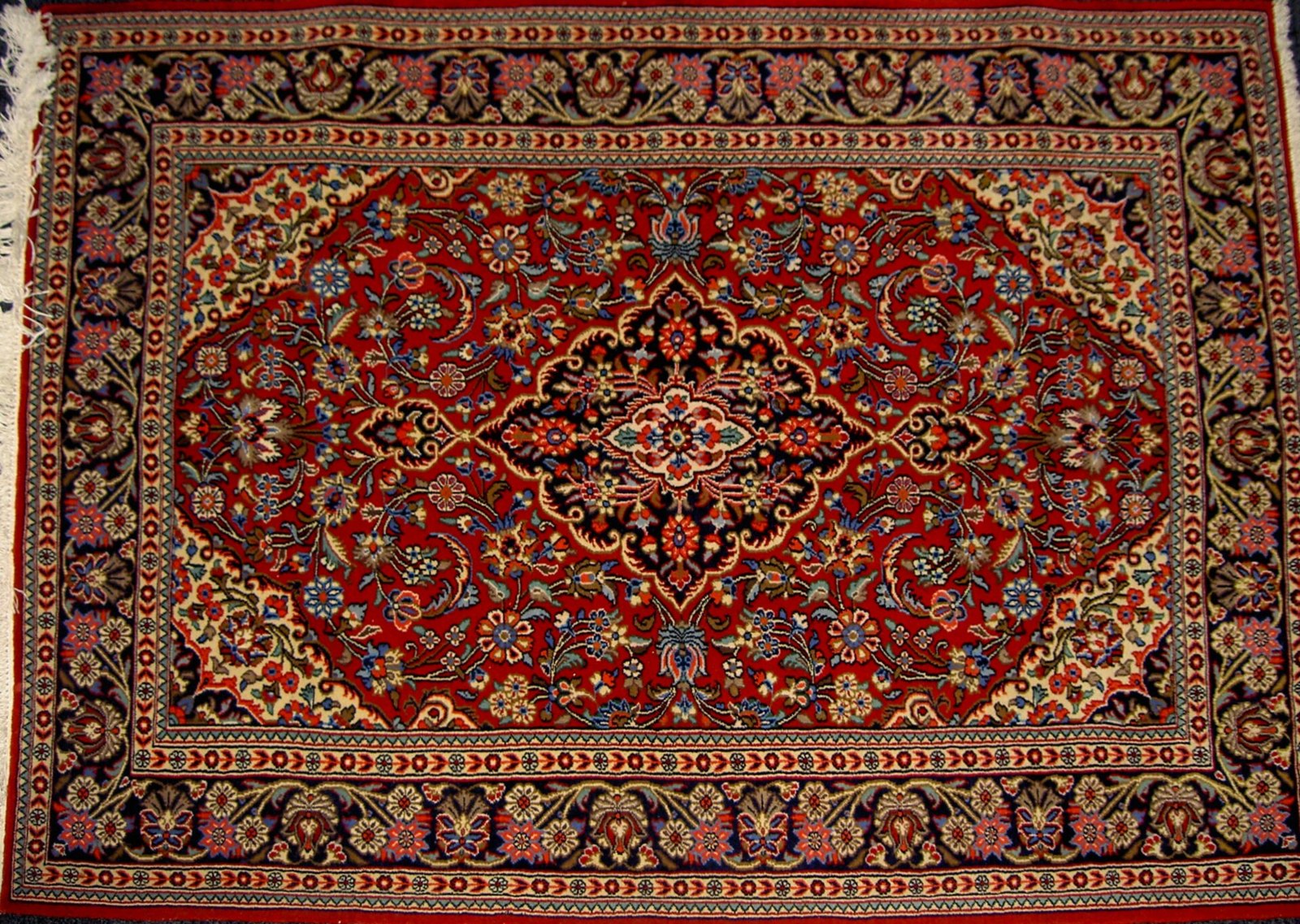
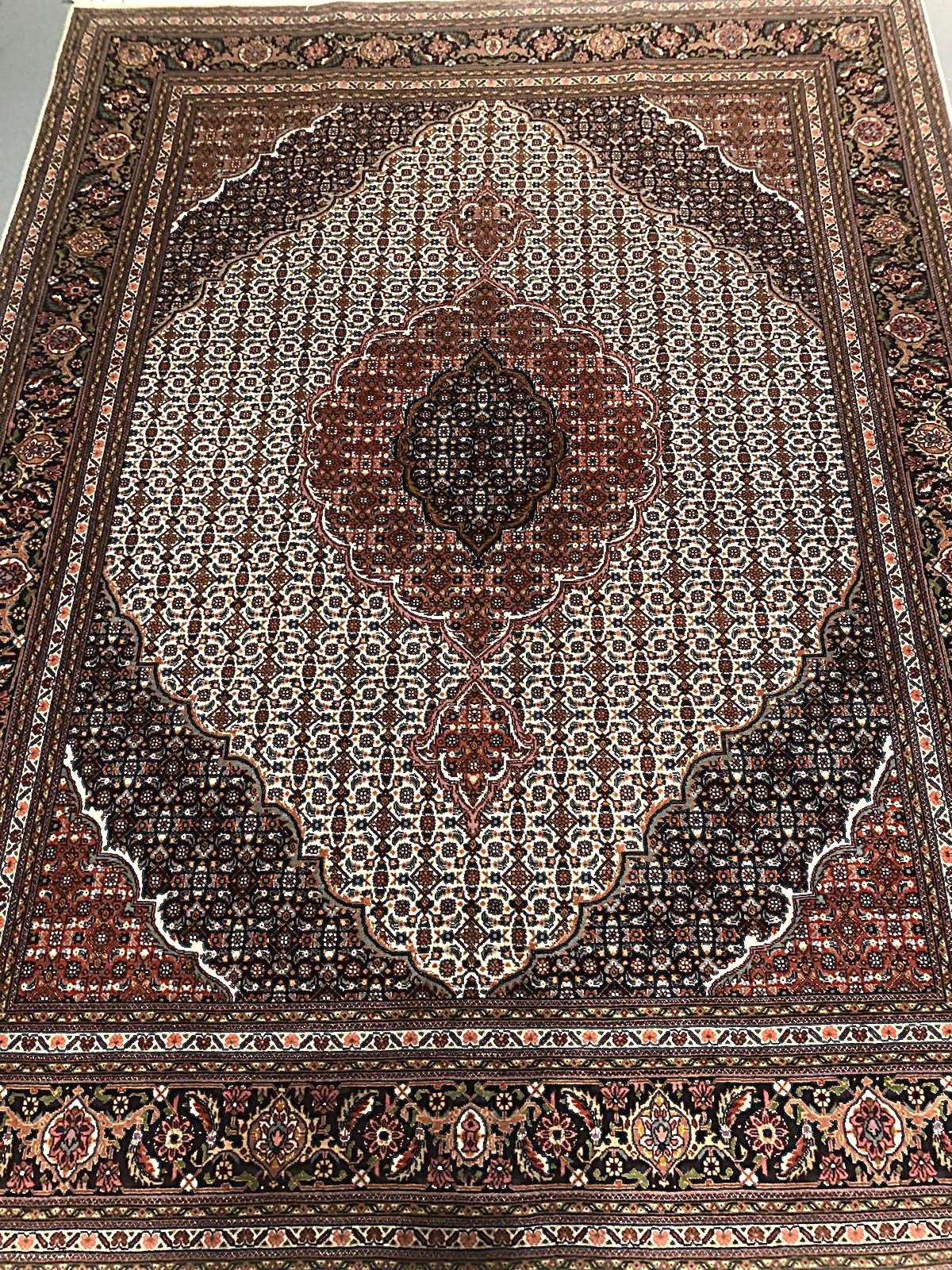
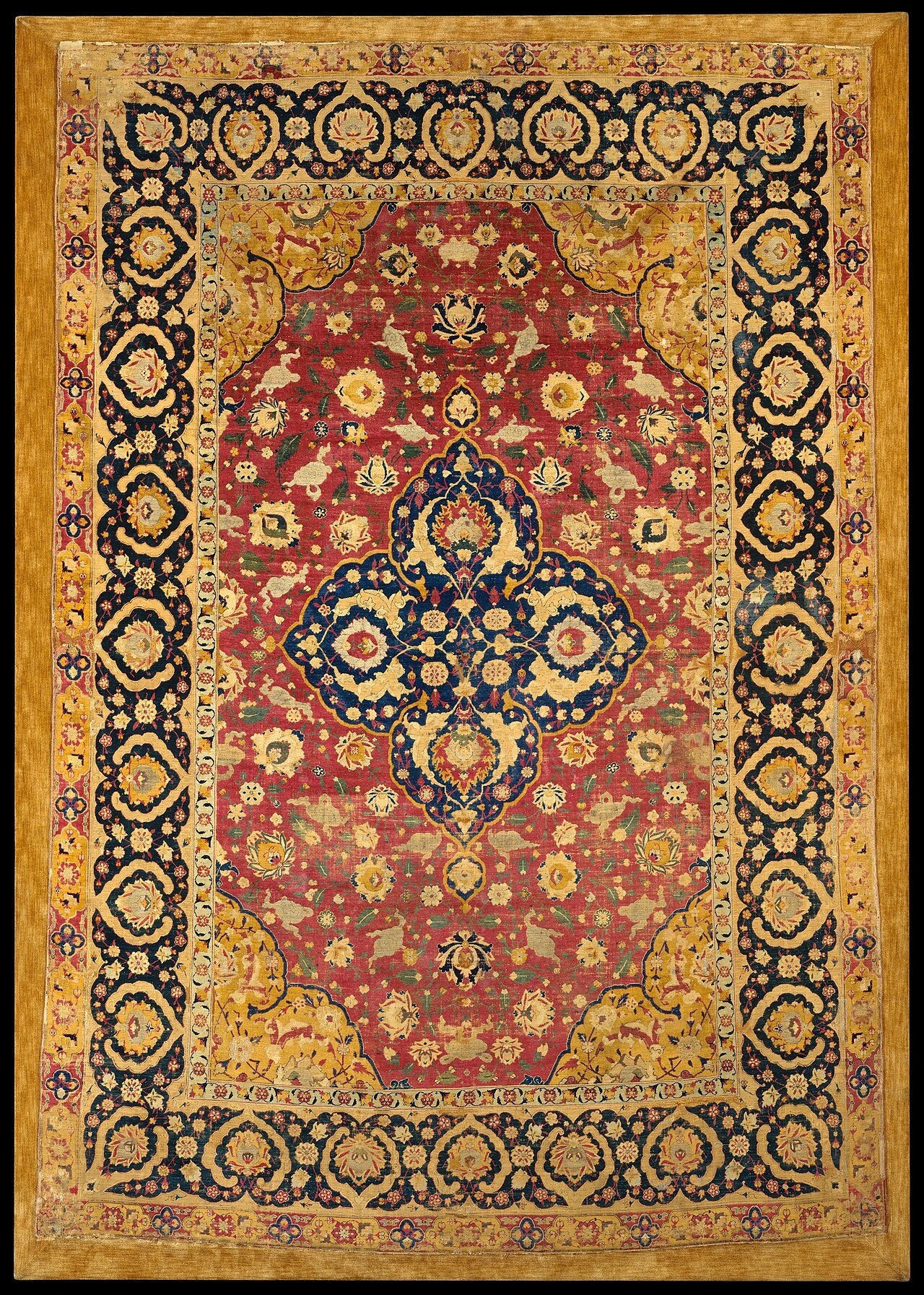
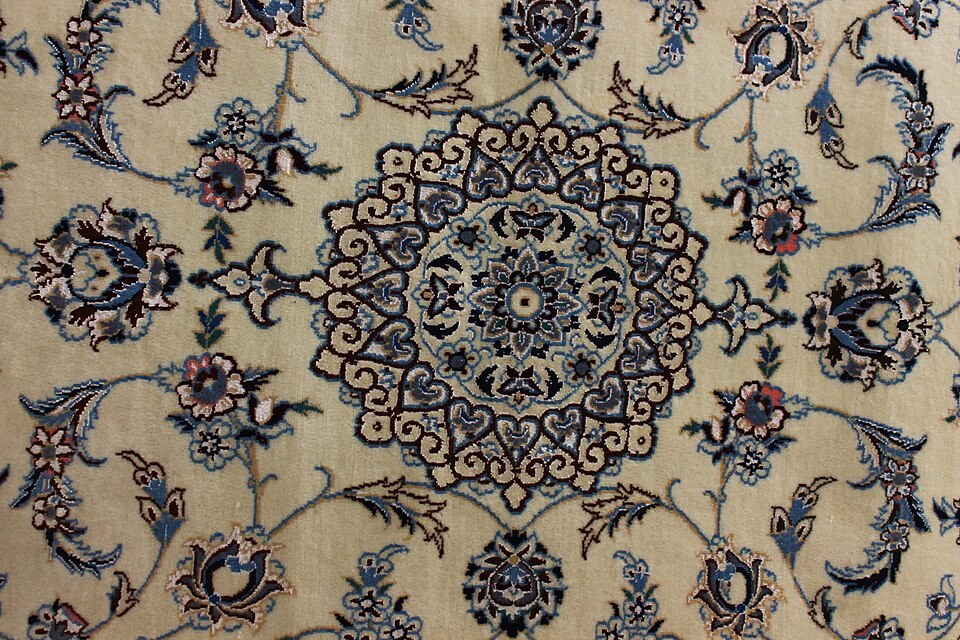
Representative photographs only. Marketplace examples rely on seller descriptions; CraftPersia has not independently authenticated their maker, origin, or rights status. Follow each source link for the listing context.
| Situation | Low-risk first response | Seek help when |
|---|---|---|
| Loose dust on stable rug | Gentle suction avoiding fringe | Fibres or knots detach |
| Liquid spill | Dry absorption without rubbing | Colour moves or liquid penetrates |
| Loose foundation or repairs | Limit handling and support the rug | Any cleaning is being considered |
| Pests or suspected mould | Separate from other textiles safely | Before treatment or repacking |
References and further reading
- [1] Canadian Conservation Institute — Caring for textiles and costumes ↗Preventive care and risk assessment, not a universal cleaning recipe.
These sources provide context, not authentication or provenance for an individual object. Editorial interpretations remain under review.