
Beginner guide · 11 min
How termeh is woven
Editorial team · updated 2026-09-29
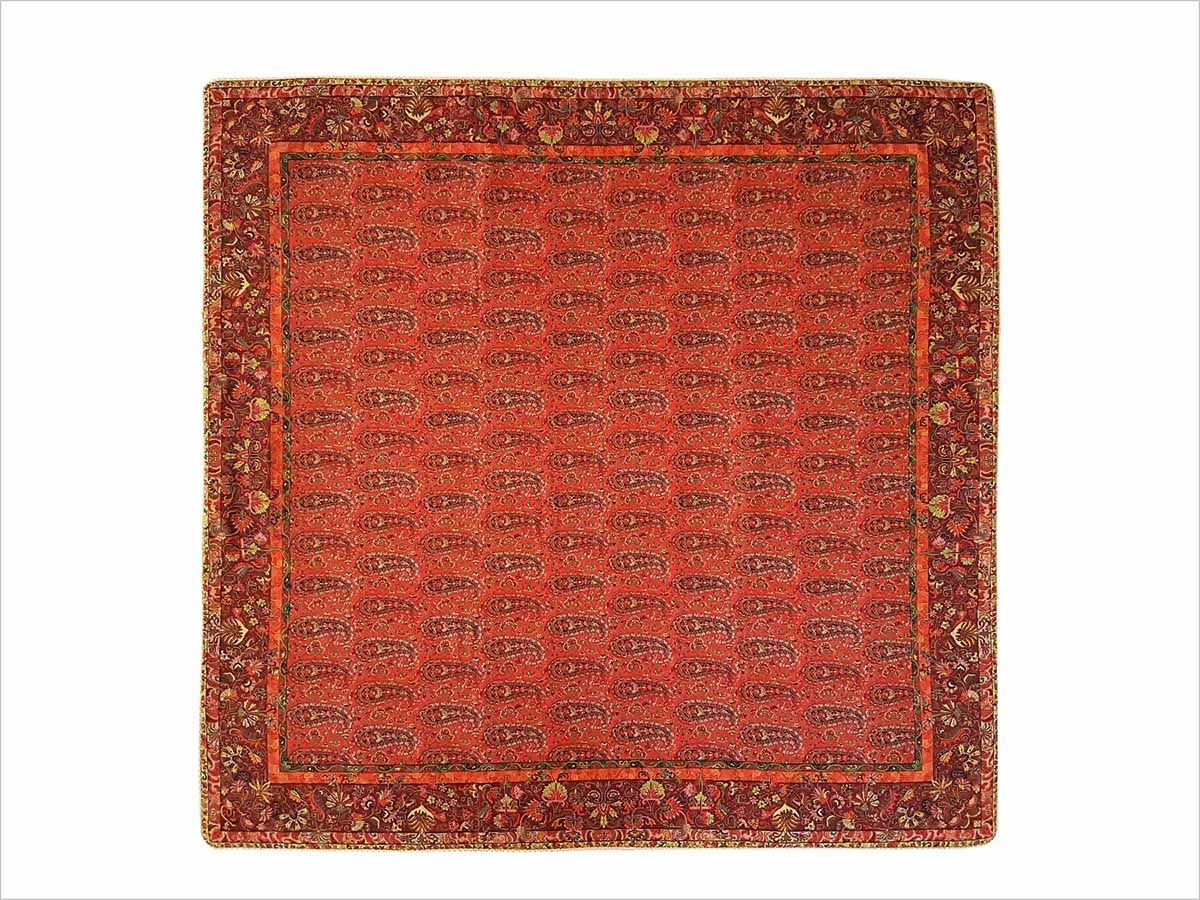
Listing image, date unverified · Craftestan (photographer not stated) · Permission status not reviewed · Photo source ↗
- Type
- Beginner guide
- Reading
- 11 min
- Chapters
- 10
- Photos
- 1
Yazd’s patterned wool-and-silk cloth, its looms, and how to tell woven termeh from printed fabric.
The loom
Traditional termeh is woven on draw looms where the pattern is lifted thread by thread. Today many workshops use mechanised Jacquard looms; hand-woven pieces are rarer and slower to make.
Woven or printed?
Inspect accessible front and reverse views for thread interlacement. Woven patterns need not form a neat reverse mirror image, and printing can appear on both faces. A lined or low-resolution view may leave construction uncertain.
What to ask
Ask how the loom was operated, which stages were mechanised, and what fibres occur in the ground and pattern yarns. Handweaving also uses a loom. For this archive’s marketplace, a woven appearance alone does not meet the handmade Iranian origin criteria.
Loom and weaving
Termeh is woven on a drawloom. A helper (the draw-boy) lifts sets of warp threads according to the pattern while the weaver passes the wefts. Progress can be only a few centimetres a day, which explains the cost of hand-woven pieces.
Hand-woven versus machine-woven
- Hand termeh: dense, slightly stiff, with weft floats visible on the reverse
- Machine termeh: very even, sometimes on a synthetic base
- Yazd is the historic centre of hand weaving
A note on this guide
This is a general introduction written by the CraftPersia editorial team. It has not yet been reviewed by a specialist. Confirm details with makers, conservators or museums, and treat any dates as approximate.
- Structure
- Patterned woven cloth; inspect documented construction
- Handwork
- A woven pattern does not establish a hand-operated loom
- Materials
- Fibre names require separate evidence
Read the interlacement, not just the boteh
Termeh is associated with richly patterned cloth and with Yazd production, but pattern name and colour are not enough to identify how a textile was made. Museum descriptions include twill structures and supplementary pattern wefts. Do not generalise one diagram or one object’s thread arrangement to every cloth sold under the name.
Examine accessible front and reverse views together. Record the ground structure, pattern yarns, edges and any added lining. A lined object may conceal the reverse, and a photograph may be too small to resolve interlacement. Keep the uncertainty rather than describing a structure you cannot actually see.
Woven and handwoven are different questions
A woven pattern is produced by the organisation of warp and weft; printed decoration is applied to a textile surface. Patterning equipment can include traditional systems and mechanised looms. The broad opposition between handwoven and loom-woven is misleading because handweaving also uses a loom. Ask who operated the loom and which stages were mechanised.
A detailed reverse pattern may support a woven construction, but it does not certify handweaving. Printing can penetrate or appear on both faces, while woven structures do not all show a neat mirror image. Thread-level photographs and a workshop account are more useful than a rule that a pale back always means a print.
Keep fibre and production claims separate
Listings may name silk, wool, cotton or synthetic fibres, sometimes as blends. A lustrous yarn is not automatically silk, and a soft handle does not identify wool. Ask for the composition, whether it applies to ground and pattern yarns alike, and whether the description is documented or simply a seller attribution.
An old patterned fragment and a contemporary furnishing cloth may require very different care. Do not burn fibres, pull yarns or wash an unknown textile to settle an identification question. Changes in dye, finishing and fibre supply also make a single historical recipe unsuitable as a certificate for present-day cloth.
- Request front, reverse and edge views
- Ask about loom operation, not just weaving
- Record ground and pattern fibres separately
- Avoid destructive identification tests
Finishing changes a cloth into a composite object
A cushion, runner or ceremonial cloth can add lining, embroidery, trims, seams and fittings to the woven base. These additions deserve their own attribution and condition record. A retailer may commission sewing elsewhere even when the cloth comes from Yazd; distinguish weaving location from assembly location.
Support the textile during handling and avoid lifting it by a trim or weakened edge. Follow care information for the complete object, not just the fibre name. Photographs of related cloth show their stated source context; they do not demonstrate the loom operation, fibre composition or maker identity of another item.
| Question or feature | Useful evidence | Limit |
|---|---|---|
| Visible pattern yarns | Close front/reverse photographs | Not proof of handweaving |
| Lustrous thread | Documented fibre composition | Not silk from shine alone |
| Yazd label | Weaving and assembly records | A pattern name is not origin |
References and further reading
- [1] H. E. Wulff, The Traditional Crafts of Persia (1966)Historical process descriptions, not a current workshop survey or authentication of an individual object.
- [2] Canadian Conservation Institute — Caring for textiles and costumes ↗Preventive conservation; washing and treatment require object-specific assessment.
These sources provide context, not authentication or provenance for an individual object. Editorial interpretations remain under review.