
Beginner guide · 11 min
How qalamkar block printing works
Editorial team · updated 2026-09-29
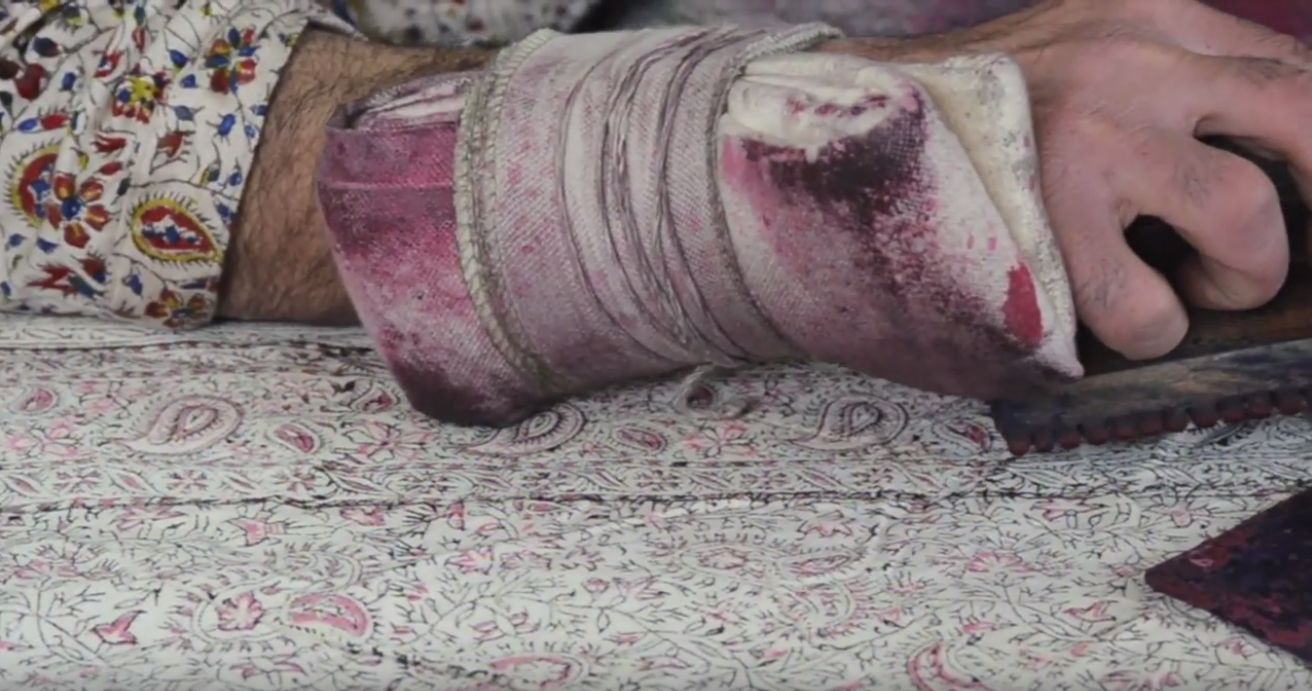
accessed 16 October 2026 · Wikimedia Commons contributor (per Commons record) · CC BY-SA 4.0 (per Wikimedia Commons; rights review pending) · Photo source ↗
- Type
- Beginner guide
- Reading
- 11 min
- Chapters
- 10
- Photos
- 4
Isfahan’s hand block-printed cotton: carved blocks, printing by hand, and signs that separate it from screen prints.
Carved blocks
Designs are carved into pear-wood blocks, one block per colour. The printer presses each block by hand, lining it up by eye.
Signs of hand printing
Small overlaps, gaps and colour variation can occur in block printing, but they do not prove handwork. Skilled hand printers can produce regular repeats; compare several areas and request making documentation.
Care
Do not wash unknown, historic or unstable printed cloth without specialist assessment. For stable contemporary textiles, follow documented instructions for the complete object, including trims and lining.
Workshop steps
- Cotton cloth is washed and sometimes treated with tannin
- The outlines are printed first, usually in black
- Colour blocks follow, each colour with its own block
- The cloth is washed in running water and laid out to dry
- Some workshops boil the cloth with mordants to fix the colours
Isfahan workshops
Isfahan is the best-known centre today. Workshops print tablecloths, wall hangings and bedspreads. Ask whether a workshop uses natural or synthetic dyes; both are used.
A note on this guide
This is a general introduction written by the CraftPersia editorial team. It has not yet been reviewed by a specialist. Confirm details with makers, conservators or museums, and treat any dates as approximate.
- Process
- Printed textile, not woven patterning
- Documentation
- Actual blocks and making account
- Care
- No universal washing recipe
A repeating design needs a sequence of impressions
Qalamkar uses carved blocks to transfer designs to cloth. Outline and colour elements may be applied with different blocks or impressions, and borders can be organised separately from the field. The size of a repeat, its registration and its relationship to corners provide useful questions for close observation. One photograph cannot reveal the entire printing sequence.
Traditional descriptions discuss particular block woods and preparation methods, but do not turn one workshop’s material into a requirement for all production. Ask whether the maker carved the blocks, printed the cloth or performed finishing only. A block displayed beside a textile is contextual evidence unless it is documented as the block used for that textile.
Registration is a clue, not a handmade test
Overlaps, small gaps and differences in colour strength can occur in hand printing. They can also arise from wear, uneven cloth preparation, later colour change or industrial processes. Skilled printers can achieve regular repeats. Neither imperfection nor perfection independently identifies the production method.
Compare several complete repeats with the border and reverse. Photograph the repeat with a scale where permission and handling allow. Do not treat a blurred online image as evidence of tool marks. A dated workshop account or making photographs tied to the actual object offer stronger support than a decorative close-up alone.
Colour preparation and washing depend on the actual recipe
Historical and contemporary printing can use different colourants, mordants, binders and finishing processes. The name qalamkar does not promise natural dyes or colourfastness. Nor does a faded palette establish antiquity. Ask which colour claims the maker can document and whether care instructions apply to this batch.
An unknown, old or fragile printed textile should not be washed under a blanket cold-water rule. Wetting can move colours, affect finishing or damage weak fibres. For a stable contemporary textile, follow documented manufacturer instructions after considering trims, lining and previous repairs. Historic objects need a conservator’s assessment before treatment.
- Compare several repeats and border joins
- Ask which making stages are documented
- Keep colour claims distinct from process claims
- Do not wash unknown or unstable cloth
Separate making location from collection location
Isfahan is a major historical centre, but block printing and related textile traditions are not confined to one city or country. A source image from a printing workshop in another Iranian location should keep that location in its caption. It cannot serve as documentary proof of a workshop in Isfahan simply because the craft is associated with the city.
For buying, request the printing location, maker or workshop and whether the item is a contemporary original. A printed reproduction of an old design can be honestly described yet remain outside this archive’s marketplace criteria if it is a replica or only Persian-style. Keep the source object’s record intact when using comparative photographs.
Related photographs and screened examples
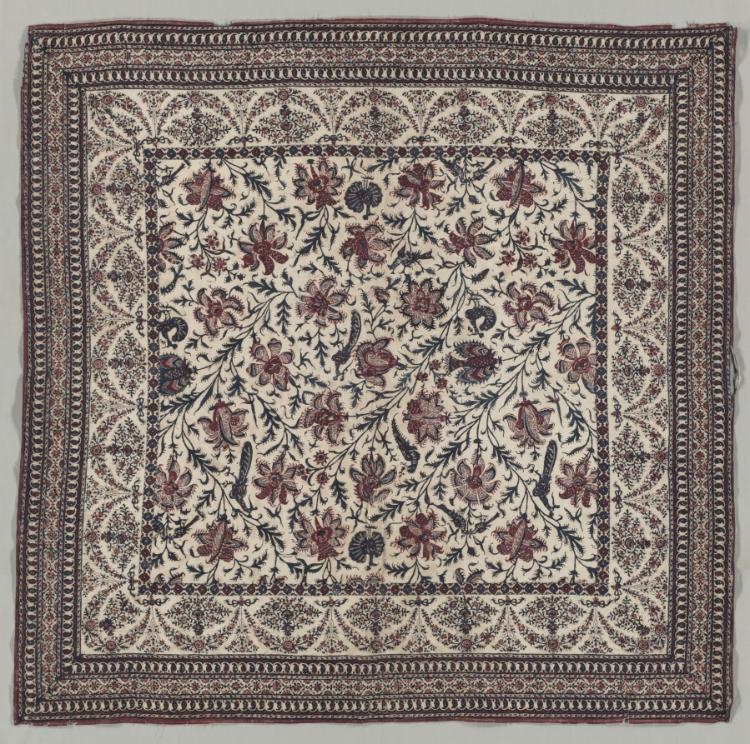
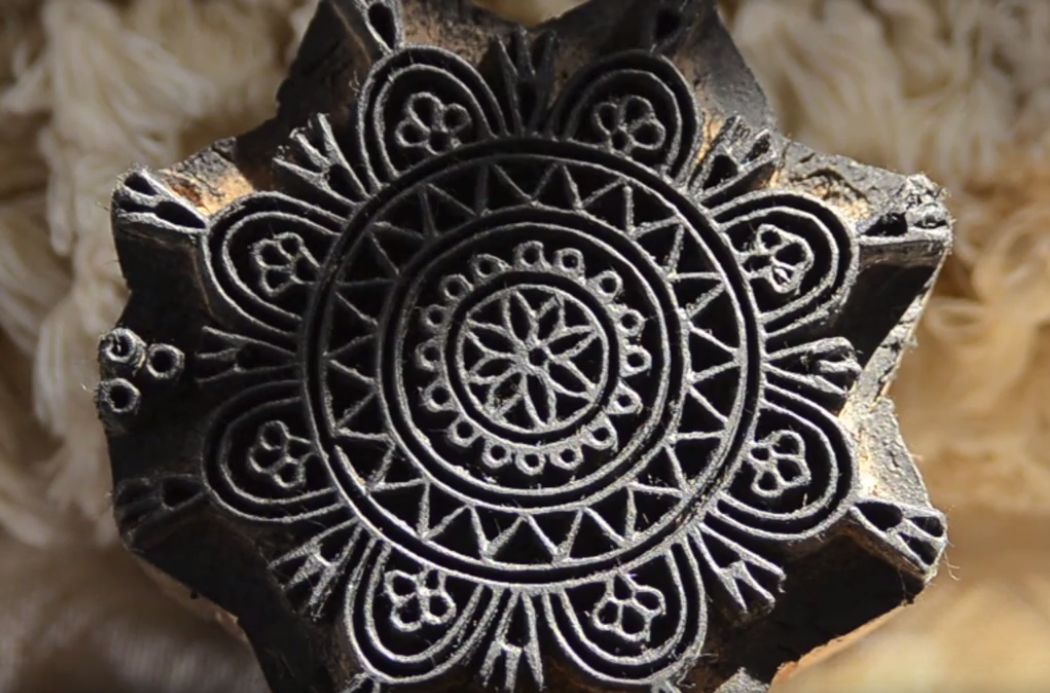
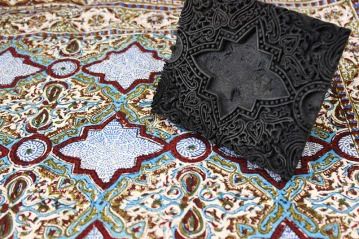
Representative photographs only. Marketplace examples rely on seller descriptions; CraftPersia has not independently authenticated their maker, origin, or rights status. Follow each source link for the listing context.
| Question or feature | Useful evidence | Limit |
|---|---|---|
| Small registration shifts | Comparison across repeat and border | Not proof of hand printing |
| Natural-dye claim | Recipe or technical documentation | Colour and fading are inconclusive |
| Workshop photograph | Its actual dated location | Not evidence of a different city |
References and further reading
- [1] H. E. Wulff, The Traditional Crafts of Persia (1966)Historical process descriptions, not a current workshop survey or authentication of an individual object.
- [2] Canadian Conservation Institute — Caring for textiles and costumes ↗Preventive conservation; washing and treatment require object-specific assessment.
These sources provide context, not authentication or provenance for an individual object. Editorial interpretations remain under review.