
Beginner guide · 11 min
How qalam-zani metal engraving works
Editorial team · updated 2026-09-29
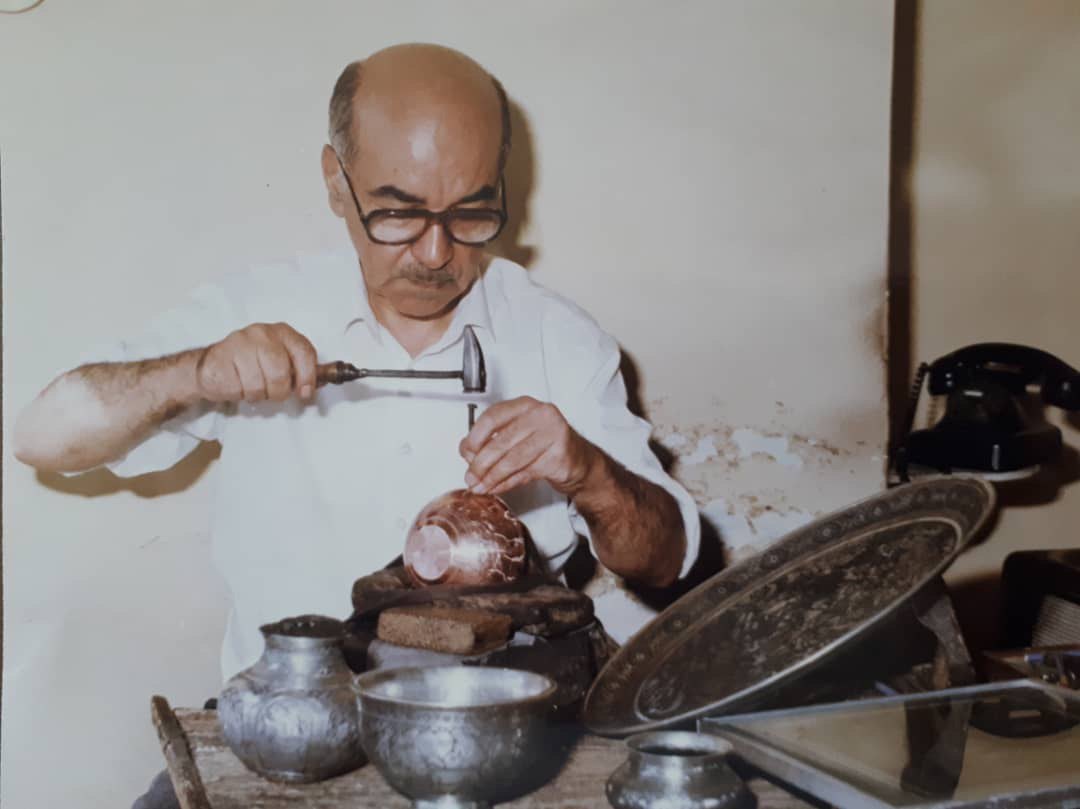
2015-01-01 · Mbmasoudi · CC BY-SA 4.0 · Photo source ↗
- Type
- Beginner guide
- Reading
- 11 min
- Chapters
- 9
- Photos
- 2
Chasing and engraving copper, brass and silver with small chisels, and what to look for in the finished surface.
Tools and support
The object is filled with pitch or tar to support the metal. The maker taps small chisels (qalam) with a hammer to push and cut the design.
Reading the surface
Hand work shows tiny tool marks and slight variation between repeats. Cast or pressed copies have soft, rounded edges and exactly identical repeats.
Care
Dust with a soft cloth. Avoid harsh polish, which wears down the fine lines.
Step by step
- The vessel is filled with pitch so it does not dent
- The design is drawn or transferred onto the surface
- Outlines are cut with fine chisels and a light hammer
- The background is textured with punches
- The pitch is melted out and the piece is cleaned and polished
Styles
Engraving depth varies from shallow line work to deep relief. Isfahan masters are known for very fine, dense designs that include figures, birds and arabesques.
A note on this guide
This is a general introduction written by the CraftPersia editorial team. It has not yet been reviewed by a specialist. Confirm details with makers, conservators or museums, and treat any dates as approximate.
- Centre
- Isfahan
- Metals
- Copper, brass, silver
- Tools
- Steel chisels (qalam) and a small hammer
Preparing the vessel
The vessel is filled with pitch or a resin mixture so the metal is supported while being struck. The design is drawn or transferred onto the surface.
Engraving and chasing
The engraver taps chisels of different profiles along the lines, pushing metal aside rather than cutting it away. Background areas are often textured with fine dots or lines so raised figures stand out.
- Outline first, then detail
- Background matting adds contrast
- Pitch removed by gentle heating
Finishing
Recesses may be darkened so the design reads clearly. Some pieces are then silver-plated or combined with enamel. Hand work shows tiny overlapping strike marks, unlike etched or pressed imitations.
Related photographs and screened examples
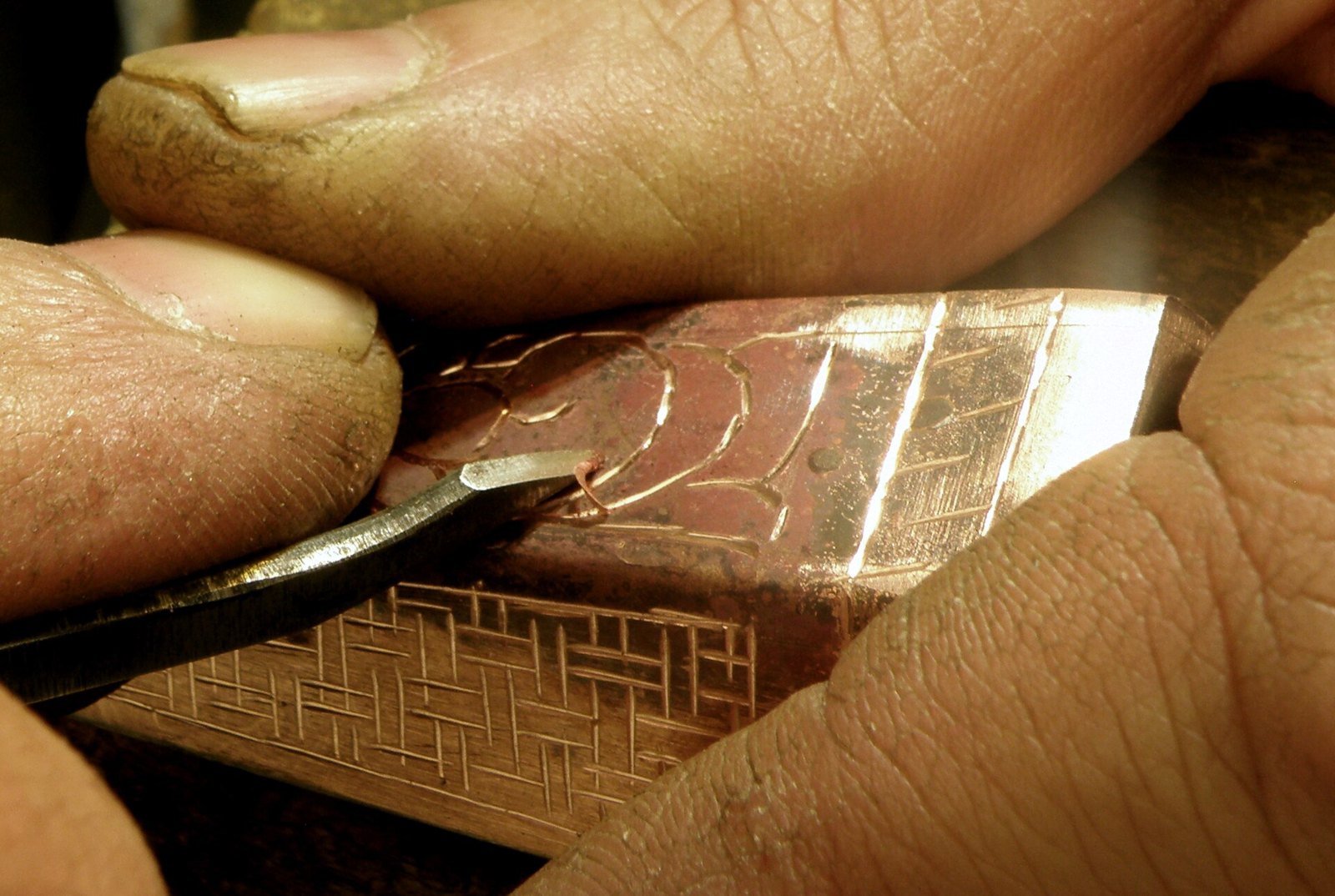
Representative photographs only. Marketplace examples rely on seller descriptions; CraftPersia has not independently authenticated their maker, origin, or rights status. Follow each source link for the listing context.
| Check | Hand qalam-zani | Pressed / etched |
|---|---|---|
| Lines | Overlapping strike marks | Smooth, uniform |
| Inside | Slight bumps opposite deep work | Mirror of pattern or flat |
| Detail | Varied depth | Even depth |
References and further reading
These sources provide context, not authentication or provenance for an individual object. Editorial interpretations remain under review.