
Collector guide · 10 min
Heriz rugs: geometric style, durability and dating
Editorial team · updated 2026-09-29
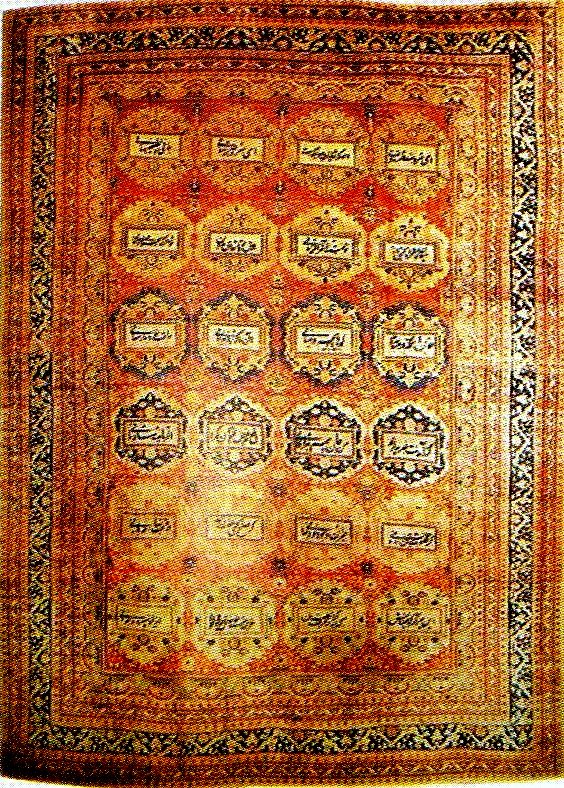
Accessed 15 October 2026.; attribution and origin follow the Commons record and are not independently verified. · Shikhlinski; unknown · Public domain (per Wikimedia Commons; rights review pending) · Photo source ↗
- Type
- Collector guide
- Reading
- 10 min
- Chapters
- 8
- Photos
- 6
Heriz rugs are sturdy, geometric village carpets from north-west Iran, prized for durability and bold angular medallions.
What is a Heriz rug?
A Heriz rug is a hand-knotted carpet from the Heriz area east of Tabriz. Village weavers there interpret city designs in a bold, angular style, usually woven from memory rather than a cartoon.
Style
The typical Heriz has a large angular medallion, straight-edged corner pieces and wide borders in brick red, navy, ivory and rust. Designs look geometric even when based on floral originals.
Why they are durable
Heriz weavers use thick, lustrous local wool, which is rich in copper minerals, and a heavy cotton foundation. Pile is often medium-thick. Heriz rugs are famous for surviving heavy traffic for generations.
Related names
Serapi, Bakshaish, Gorevan, Mehriban and Ahar are villages or trade names within the wider Heriz group. Serapi usually refers to older, lighter-coloured pieces.
Dating roughly
Older Heriz rugs tend to have softer, more varied natural colours, finer drawing and more abrash. Later pieces are often more uniform. Dating needs close inspection; treat dealer ages as estimates.
- Region
- Heriz and surrounding villages, East Azerbaijan
- Knot
- Symmetrical
- Design
- Large angular medallion, bold corners
The Heriz look
Heriz rugs translate curvilinear city designs into bold, angular geometry: a large stepped medallion, strong corner pieces and wide borders. Brick red, navy and ivory dominate, with abrash adding life.
Why they are durable
Local wool is high in lanolin and the rugs are densely packed with a firm handle, though knot counts are modest. That combination makes Heriz rugs famous for heavy-traffic durability.
- Coarse, firm handle
- Cotton foundation
- Copper-mineral water often credited for wool quality
Related names
Serapi is a trade name for older, finer, often lighter-coloured Heriz-area rugs; Bakshaish and Gorevan are other village names used in the trade. Attribution among them is debated, so use names with care.
Related photographs and screened examples
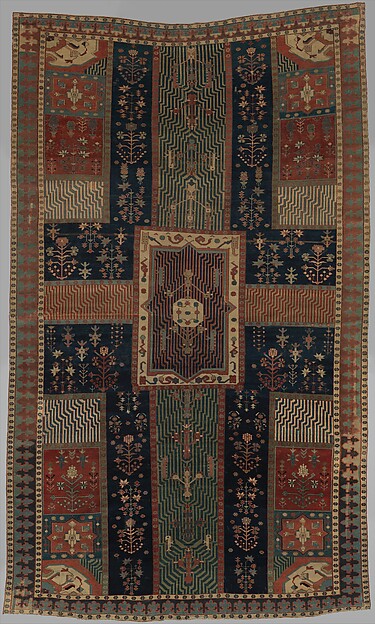

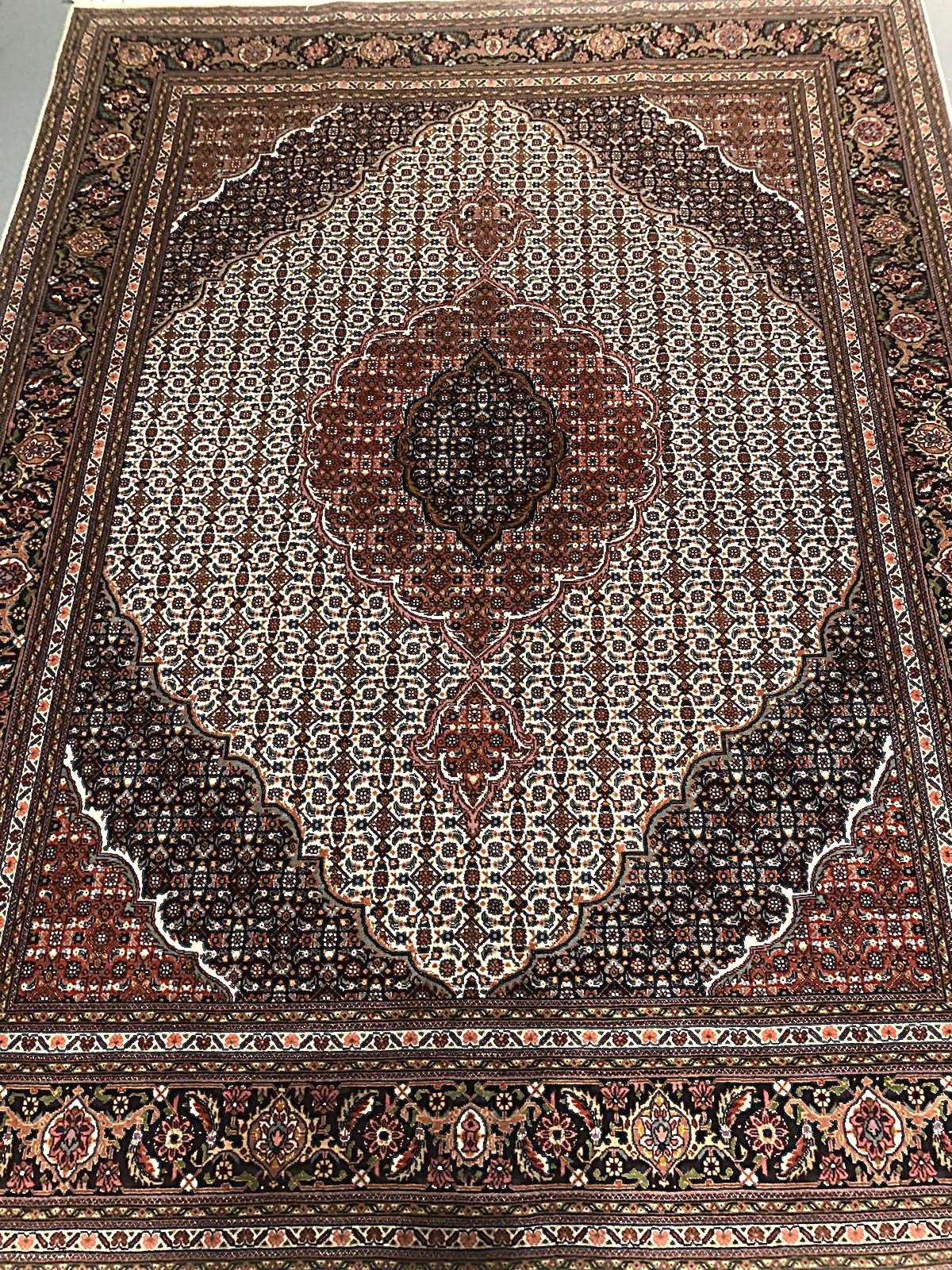
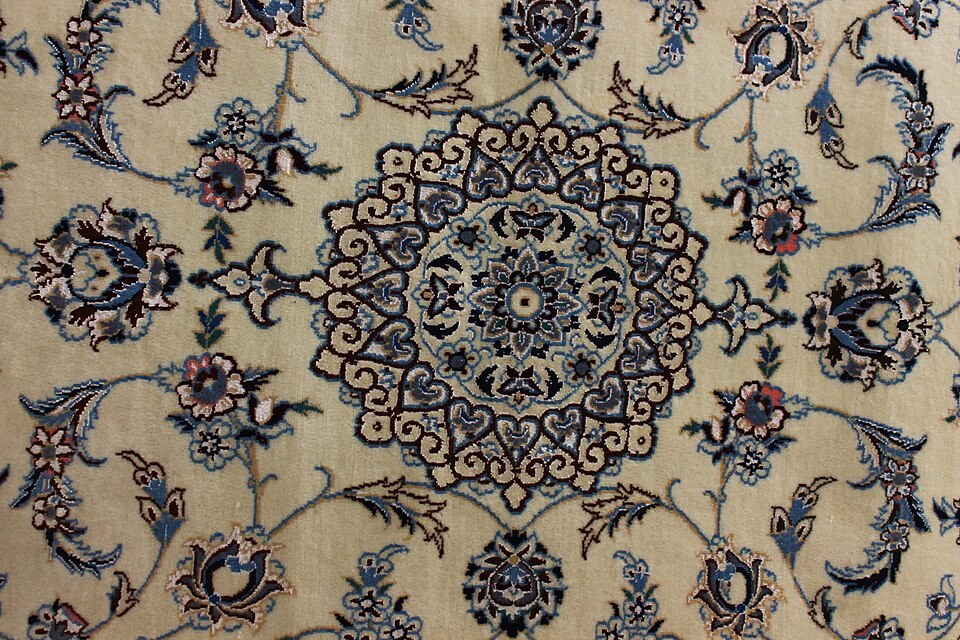
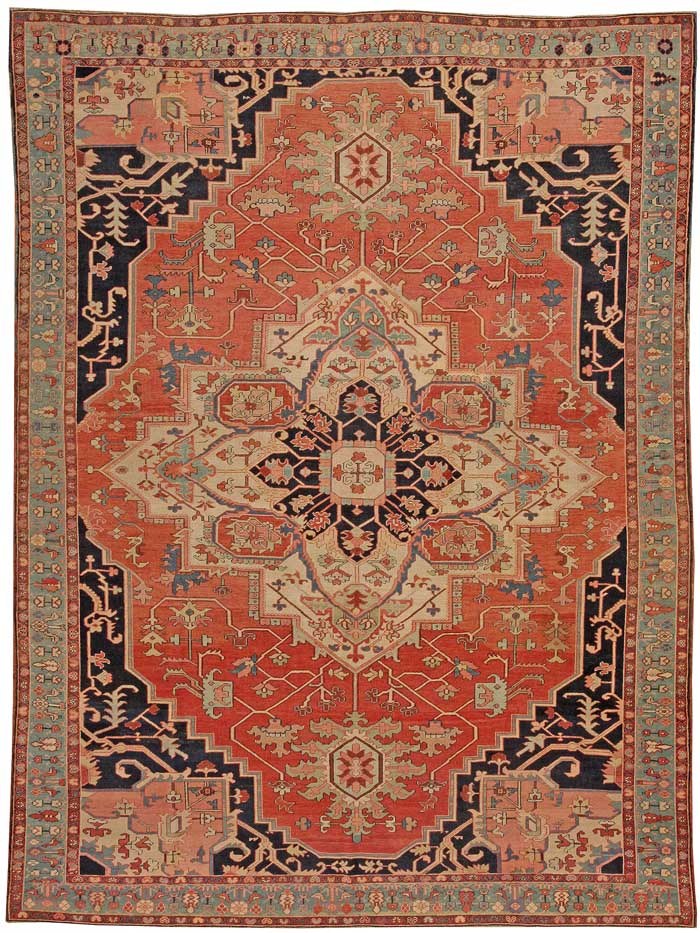
Representative photographs only. Marketplace examples rely on seller descriptions; CraftPersia has not independently authenticated their maker, origin, or rights status. Follow each source link for the listing context.
| Name | Typical features |
|---|---|
| Heriz | Bold medallion, red/navy, durable |
| Serapi | Older, more open field, softer palette |
| Gorevan | Coarser, very geometric |
| Bakshaish | Early, archaic designs, often all-over |
References and further reading
These sources provide context, not authentication or provenance for an individual object. Editorial interpretations remain under review.