
Beginner guide · 5 min
Hasir-bafi: Iranian mat-weaving and basketry
Editorial team · updated 2026-10-21
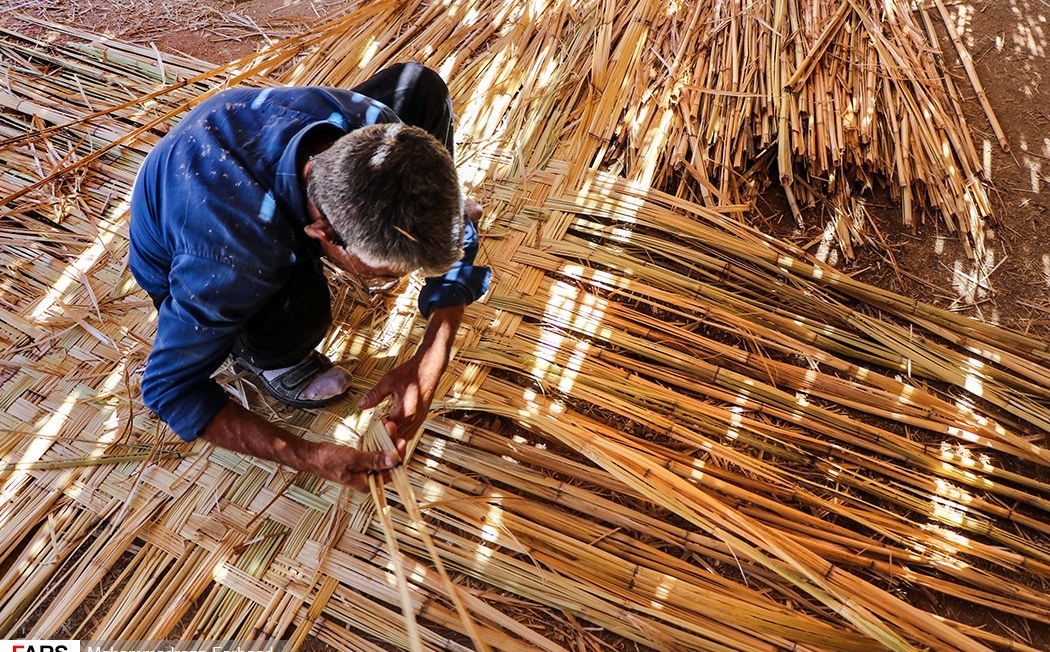
Photographed in Zarghan, 2021; accessed 2026-11-03; shows reed (boriya) plaiting, not palm-leaf work · Mohammadreza Farbood (Fars News Agency) · CC BY-SA 4.0 (Wikimedia Commons; bottom credit strip cropped, credit retained here) · Photo source ↗
- Type
- Beginner guide
- Reading
- 5 min
- Chapters
- 7
- Photos
- 2
Scope and evidence
This reading separates visible construction, documented materials and origin claims. The photographs retain their own source context; they do not authenticate a purchase or demonstrate every stage described below. Historical examples and contemporary maker statements require different kinds of evidence.
- Materials: Date-palm leaf, reeds, rushes, wheat straw
- Centres: Persian Gulf provinces, Khuzestan, Caspian wetlands, Hamun
- Photo gap: No screened photograph is in the archive yet
- Materials
- Date-palm leaf, reeds, rushes, wheat straw
- Centres
- Persian Gulf provinces, Khuzestan, Caspian wetlands, Hamun
- Photo gap
- No screened photograph is in the archive yet
A craft of local plants
Hasir-bafi — mat and basket weaving — is one of Iran's oldest everyday crafts, and it is organised around whatever strong, flexible plants grow nearby. In the Persian Gulf provinces of Bushehr and Hormozgan, and across Khuzestan, date-palm leaves are the main fibre, plaited into baskets, fans, food covers and floor mats. Around the Caspian wetlands of Gilan and Mazandaran, and beside Hamun Lake in Sistan, reeds and rushes serve the same purpose, while wheat straw is worked in parts of the northwest.
Because the materials are local and cheap, hasir-bafi has historically been household and supplementary work, much of it done by women, rather than a workshop trade with signed masters. That also means it is poorly documented compared with carpets: many pieces were used until they wore out and were never collected, and the craft is now classed among Iran's vulnerable traditions.
Techniques you can learn to recognise
Three structures cover most Iranian basketry. Coiled work wraps a bundle of fibre with a binding strand, building the object in a spiral — look for the continuous coil visible on both faces. Plaited or braided work interlaces flat strips diagonally, common in palm-leaf pieces. Over-under mat weaving passes straight wefts across a laid warp, producing the flat reed mats (booria) also used traditionally as building material and shade screens.
Hand work shows small irregularities in tension and spacing, and natural fibre shows variation in colour and thickness. Plastic-strip imitations are perfectly uniform, often brighter than any natural dye, and feel waxy or warm where reed and palm feel dry and slightly rough.
- Coiled: spiral bundle bound with a wrapping strand
- Plaited: diagonal interlacing of flat strips
- Mat weaving: straight wefts over a laid warp
- Natural fibre: varied colour, dry rough feel
- Plastic strip: uniform, waxy, unnaturally bright
Buying and caring for basketry
Ask what plant the piece is made from and where it was woven — a seller handling genuine work usually knows both. If the piece will touch food, ask whether the fibre has been dyed or treated and with what; traditional pieces are often undyed. Check the base and rim, where wear and repairs show first, and flex the piece gently: sound natural fibre gives slightly, brittle fibre cracks.
Keep basketry dry, out of direct sun, and off damp floors. Remove loose dust gently only if the fibres are sound; do not use a hairdryer, mist brittle fibres or force the rim to flex. Water can distort the structure and encourage mould. A brittle, valuable or old piece belongs with a conservator. Inspect stored pieces regularly for insects and damage.
- Ask the plant and the place of weaving
- For food use, ask about dyes and treatments
- Check base and rim for wear and repairs
- Store dry, shaded, and inspect for insects
Make a fibre and structure observation sheet
Record the plant name given by the maker, but keep it distinct from what the photograph shows. A flat strip, a bundled core and a round reed are structural observations, not botanical identifications. The same town may use more than one plant, and modern makers may purchase fibre from elsewhere.
Photograph the entire basket, the base, rim, handles and a close view of the interlacing. Describe a spiral core with wrapping strands as coiled construction, a diagonal interlacing as plaiting, or a grid of intersecting elements as a woven structure only where the image makes that visible. One detail cannot represent all Iranian basketry.
Preparation is a maker question, not a home experiment
Plant strips may be split, sorted, dried or softened during making, with methods depending on the plant and workshop. Ask the maker to explain their sequence and whether dyes, preservatives or other treatments were used. A preparation technique for raw fibre is not a care instruction for a completed old basket.
Do not mist brittle basketry to restore flexibility: wetting can distort the structure, mobilise colour or encourage mould. Avoid flexing a fragile rim as an inspection test. Support the base and record breakage before handling further; valuable or deteriorating examples need a conservator.
A photograph that closes this guide’s gap
A useful contribution shows an actual Iranian-made mat or basket, with maker or source context when known. Include a whole-object view and a clear weave detail rather than a generic palm basket from an unrelated tradition. State what is documented and what remains unknown.
For public use, identify the photographer and the permission granted. A caption can say “palm-leaf basket, maker states woven in Bushehr” when that is the evidence; it should not silently promote the statement into independent verification. Exclude watermarked or ambiguous-origin commercial images.
- Whole object and weave detail
- Maker/source and stated place
- Plant name with evidence level
- Photographer, date and permission
Related photographs and screened examples
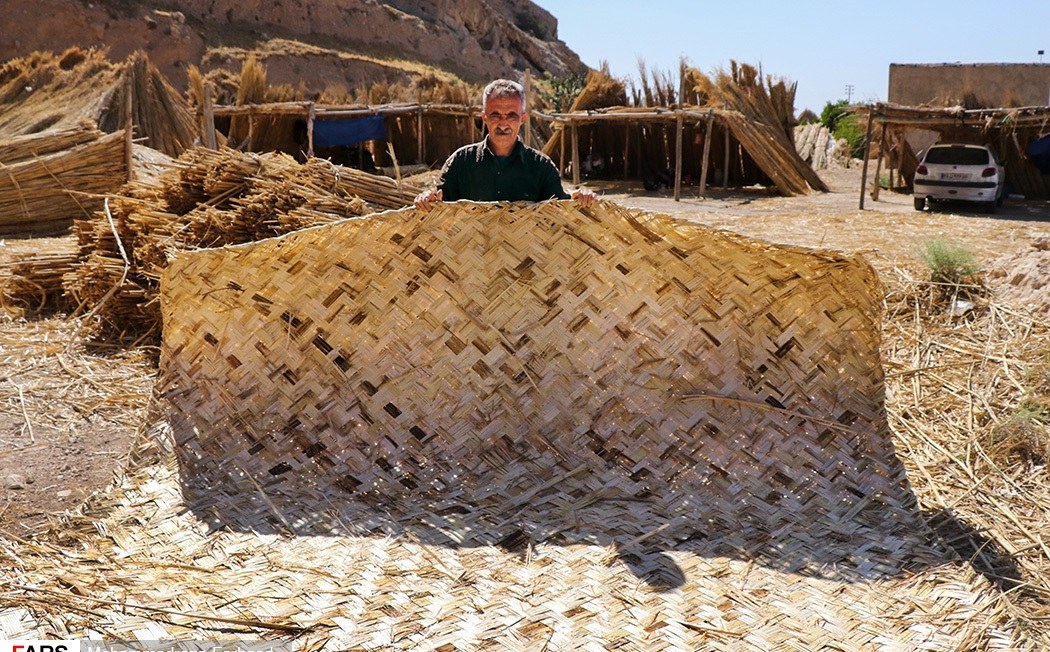
Representative photographs only. Marketplace examples rely on seller descriptions; CraftPersia has not independently authenticated their maker, origin, or rights status. Follow each source link for the listing context.
| Fibre | Main regions | Typical products |
|---|---|---|
| Date-palm leaf | Bushehr, Hormozgan, Khuzestan, Kerman | Baskets, fans, food covers, mats |
| Reeds and rushes | Gilan, Mazandaran, Hamun (Sistan) | Floor mats (booria), bags, screens |
| Wheat straw | Northwest Iran | Small baskets, trays, decorative work |
| View | What it can show | What it cannot prove |
|---|---|---|
| Whole view | Form and proportions | Workshop origin |
| Weave detail | Visible structure | Plant species alone |
| Base and rim | Wear and repairs | Age from wear alone |
| Maker record | Stated origin and process | Independent verification |
References and further reading
- [1] H. E. Wulff, The Traditional Crafts of Persia, MIT Press, 1966.General historical craft reference, not evidence for a particular basket.
These sources provide context, not authentication or provenance for an individual object. Editorial interpretations remain under review.