
Collector guide · 11 min
Haft-rang versus moarraq tile
Editorial team · updated 2026-09-29
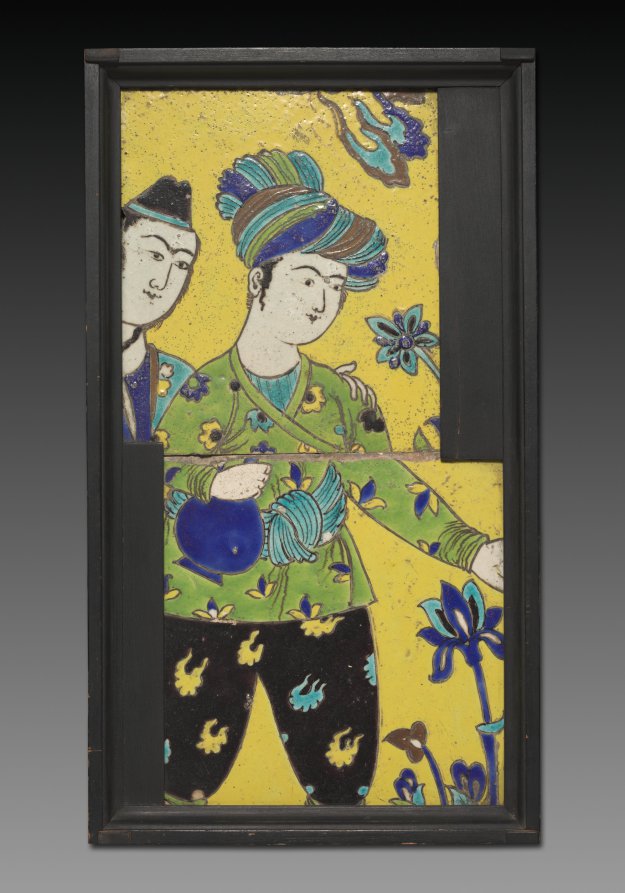
Cleveland Museum of Art · CC0 (museum open access) · Photo source ↗
- Type
- Collector guide
- Reading
- 11 min
- Chapters
- 9
- Photos
- 1
Two ways of making multi-coloured tile surfaces in Iranian architecture.
Moarraq
Mosaic tile: each colour is fired separately, then cut into pieces and assembled.
Haft-rang
Several colours painted on one tile and fired together; quicker and cheaper for large surfaces.
Telling them apart
Look for joints between pieces (moarraq) or colours meeting on one surface (haft-rang).
How each is made
Haft-rang (‘seven-colour’) tiles are square tiles painted with several coloured glazes side by side and fired once. Dark lines (cuerda seca) keep the colours apart. Moarraq is cut-tile mosaic: each colour is fired as a separate sheet of glazed tile, then cut into shapes and fitted together like a puzzle.
- Haft-rang: faster to make, with colours side by side on one tile
- Moarraq: brighter, purer colours and clear joints between pieces
- Both are used on Safavid and later monuments in Isfahan
Telling them apart on a wall
Look closely at colour boundaries. On moarraq you can see thin mortar joints between each coloured piece. On haft-rang, colours meet on one tile surface, and the square tile grid runs across the whole design.
A note on this guide
This is a general introduction written by the CraftPersia editorial team. It has not yet been reviewed by a specialist. Confirm details with makers, conservators or museums, and treat any dates as approximate.
Crafts covered in this guide
Haft-rang tilework (کاشی هفترنگ) — Square polychrome tiles painted with several overglaze colours and fired together, allowing large architectural schemes to be produced faster than cut tile mosaic.
Materials, techniques and centres
Haft-rang tilework is recorded in the archive with clay (earthenware) as principal materials. Associated centres include Isfahan, Kashan and Yazd; a place name on its own does not establish where an individual object was made.
Collecting and next steps
When applying this guide to a specific object, work from what can be observed: structure, materials, tool marks, repairs and documentation. Ask the seller or maker for written statements about who made the piece, where, from what materials, and what has been repaired or replaced.
The steps here are educational; identification, conservation and valuation of an individual object require appropriate independent expertise.
References and further reading
- [1] H. E. Wulff, The Traditional Crafts of Persia, MIT Press, 1966.General historical craft reference, not evidence for a particular object.
These sources provide context, not authentication or provenance for an individual object. Editorial interpretations remain under review.