
Buying guide · 11 min
Carpet terms every buyer should know
Editorial team · updated 2026-09-29
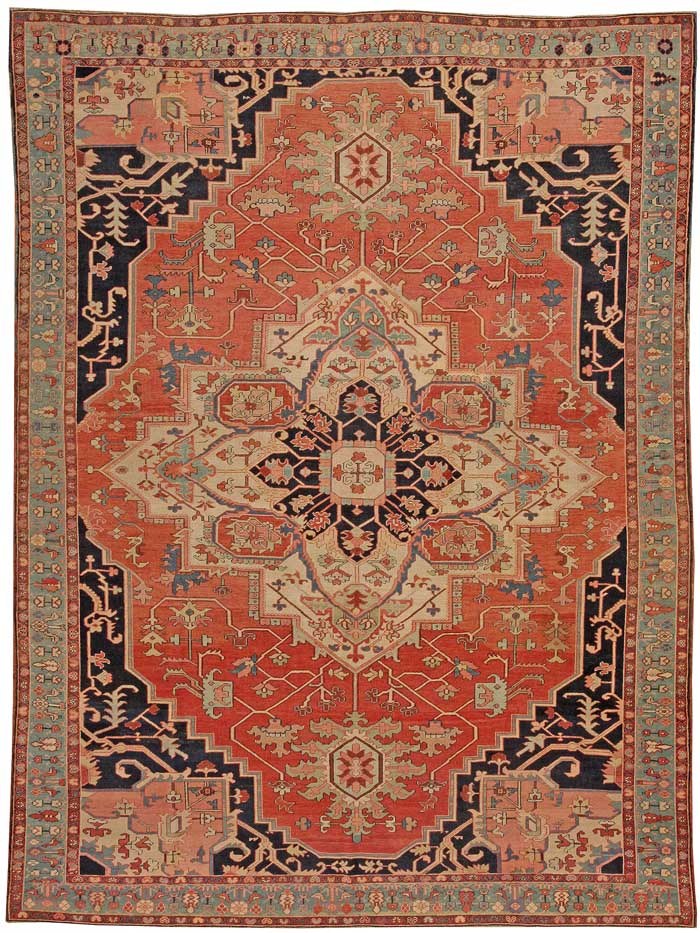
accessed 2026-09-30 · Nazmiyal · CC BY-SA 3.0 (Wikimedia Commons; JPG re-encoded) · Photo source ↗
- Type
- Buying guide
- Reading
- 11 min
- Chapters
- 9
- Photos
- 6
A short list of words used in rug listings, with plain explanations.
Structure
Warp: threads running lengthwise. Weft: threads across. Pile: the knotted surface.
- Abrash: natural colour banding
- Selvedge: side edge
- Kelleh: long narrow format
- Dozar: about 2 × 1.3 m size
Condition words
Low pile, reweaving, re-edging and moth damage should always be named in a listing.
More terms
- Abrash: tonal variation; not proof of natural dyes
- Raj: knot count used in Tabriz
- Warp and weft: the foundation threads
- Selvedge: the side cords
- Kilim end: a flatwoven band at the ends
Design terms
- Herati: a small repeating fish-and-rosette pattern
- Boteh: the teardrop or paisley motif
- Toranj: the central medallion
- Lachak: the corner pieces
- Mihrab: the prayer arch
- Khesti: garden-panel compartments
Structure terms
- Symmetric (Turkish) knot
- Asymmetric (Persian) knot
- Jufti: a ‘false’ knot tied over four warps, which lowers quality
- Depressed warps: one warp level lies behind the other, giving a firm rug
- Overcasting: the wrapping on the sides
A note on this guide
This is a general introduction written by the CraftPersia editorial team. It has not yet been reviewed by a specialist. Practice varies between workshops; confirm details with makers or museums, and treat any dates as approximate.
- Use
- Quick reference for listings and condition reports
Structure terms
Knowing structural vocabulary helps you read listings precisely and compare like with like.
- Warp — lengthwise foundation threads; the fringe is their end
- Weft — crosswise threads between knot rows
- Pile — the cut knot ends forming the surface
- Selvedge / overcast — finished sides
- KPSI / raj — knot-density measures
Design terms
Design names describe layout and motif.
- Medallion — central form
- Herati — rosette-and-leaf repeat
- Boteh — teardrop (paisley) motif
- Abrash — natural colour variation
- Guard stripe — narrow border bands
Condition terms
These appear in condition reports and change value.
- Low pile / worn — reduced pile height
- Reweave — knots replaced
- Dry rot — weakened cotton foundation
- Painted — dye applied to hide wear
- Chemical wash — bleaching to soften colours
Related photographs and screened examples
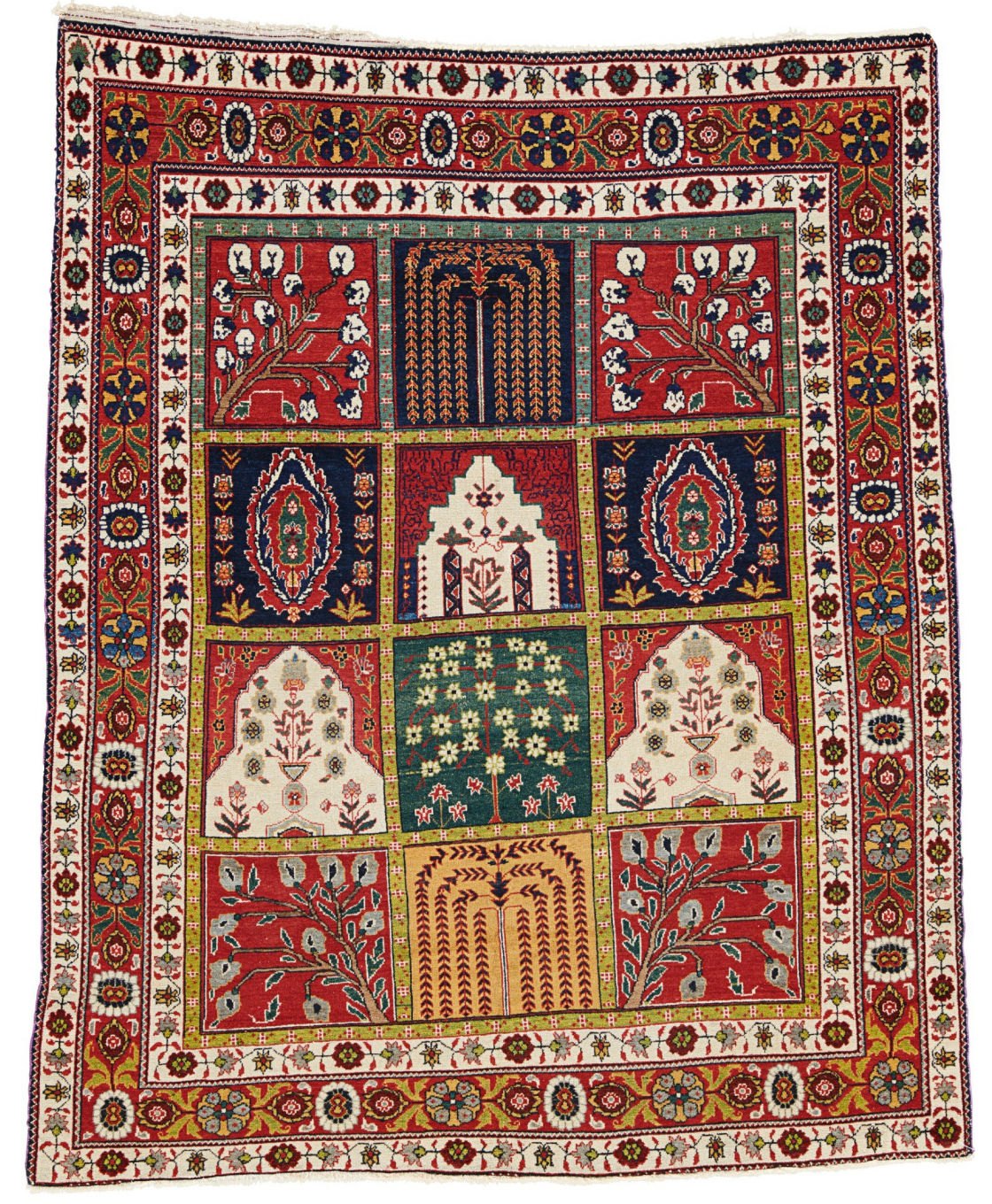

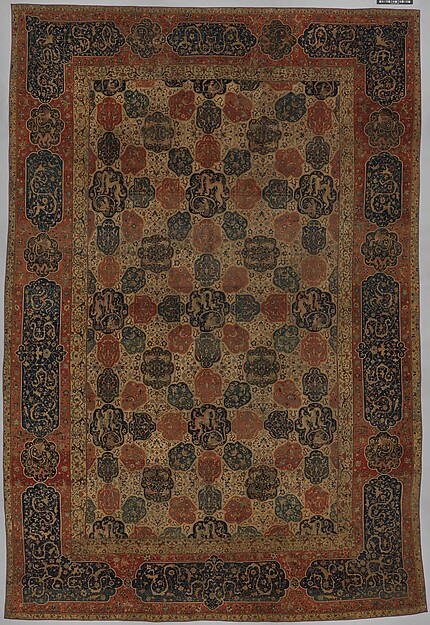
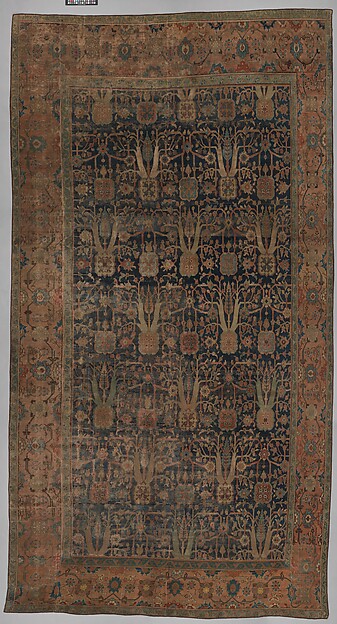
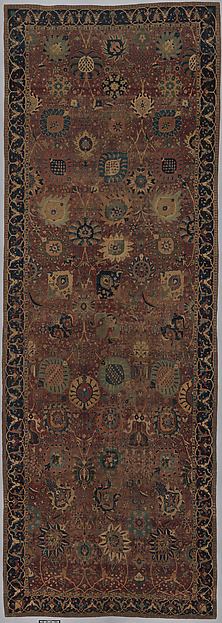
Representative photographs only. Marketplace examples rely on seller descriptions; CraftPersia has not independently authenticated their maker, origin, or rights status. Follow each source link for the listing context.
Key terms
- Raj رج
- Knots per 7 cm along warp, an Iranian density measure
- Abrash ابرش
- Natural colour variation in dye lots
- Ghali قالی
- Large pile carpet
- Gelim گلیم
- Flatwoven tapestry rug
- Kenareh کناره
- Runner
References and further reading
These sources provide context, not authentication or provenance for an individual object. Editorial interpretations remain under review.