
Buying guide · 5 min
Giveh shoes: buying and caring for handmade Iranian footwear
Editorial team · updated 2026-10-21
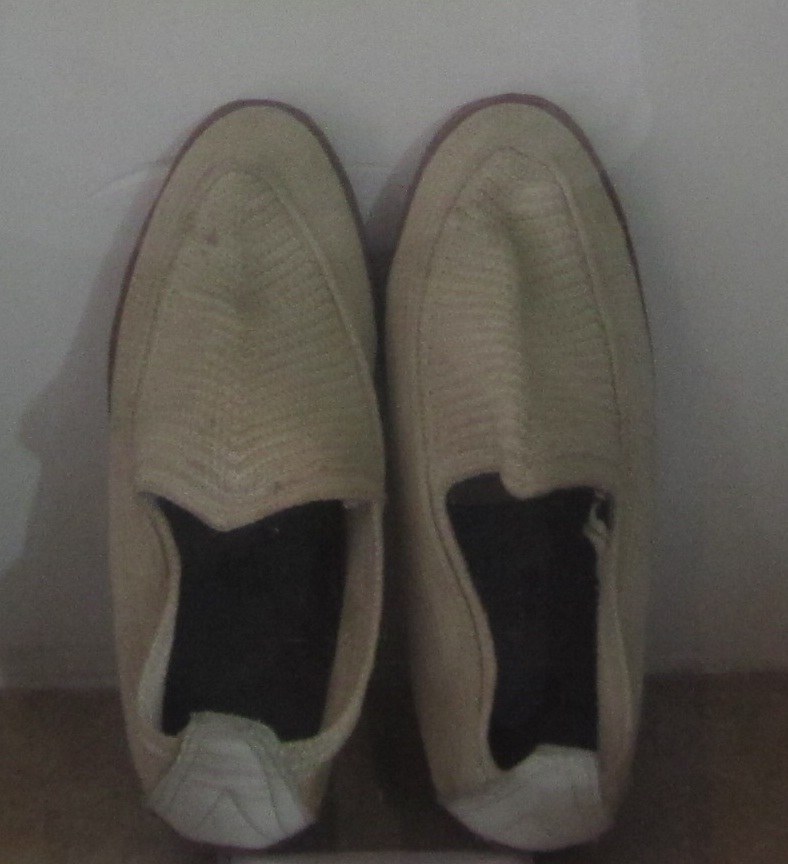
accessed 2026-09-30 · Fdmfi · CC BY-SA 3.0 (Wikimedia Commons; JPG re-encoded) · Photo source ↗
- Type
- Buying guide
- Reading
- 5 min
- Chapters
- 5
- Photos
- 1
Scope and evidence
This reading separates visible construction, documented materials and origin claims. The photographs retain their own source context; they do not authenticate a purchase or demonstrate every stage described below. Historical examples and contemporary maker statements require different kinds of evidence.
- Compare: Upper, sole and their joining stitch
- Fit: Measure both feet; allow for the maker’s fit guidance
- Care: The least water-tolerant component governs
- Compare
- Upper, sole and their joining stitch
- Fit
- Measure both feet; allow for the maker’s fit guidance
- Care
- The least water-tolerant component governs
Read the shoe as an assembly
Giveh combine a textile upper with a separately made sole, and contemporary versions may use cloth, leather, rubber or mixed materials. Record the upper fibre, sole construction and joining method separately. A handworked upper does not prove that every part was handmade or made in the same workshop.
Inspect the join around the full perimeter and the flexing area near the toes. Gaps, loose thread and a sole lifting from the upper deserve attention before use. Ask which parts were made by the named maker and which were purchased components; a transparent mixed construction is more informative than a vague authenticity promise.
Fit before judging decoration
Take measurements of both feet while standing and ask the maker which measurement system their sizes follow. Foot length is only one factor: toe width, instep and the shape of the sole also matter. Do not assume a stated European size fits identically across workshops.
Try both shoes on a clean indoor surface and check heel movement, pressure at the toes and how the sole bends. Some textile uppers change with wear, but expected stretching is not a remedy for painful fit. Keep the return terms in writing, especially for made-to-measure pairs.
Cleaning depends on the whole construction
Cotton in the upper does not make an assembled shoe machine-washable. Adhesives, leather, dyed threads and layered soles may react differently to moisture. Begin with dry removal of loose dirt using the maker’s recommended method; obtain written cleaning instructions before using water.
Do not soak an unknown sole or apply heat to accelerate drying. Stop wearing a pair with failed joins or a splitting sole and ask about repair. For older collected footwear, preservation rather than wear is the appropriate priority; support its shape without forcing it.
A purchase record that supports the maker
Record who worked the upper, who made the sole and where assembly happened when this is known. Place names are valuable cultural context but cannot identify the maker of an anonymous pair. Ask permission before using workshop or maker photographs publicly.
For cross-border purchases, confirm delivery, duties, returns and any material restrictions. A clear invoice should state the actual materials rather than only “traditional shoes”. Buy for the disclosed construction and fit, not for an unsupported claim that one visual detail proves regional origin.
- Upper fibre and making method
- Sole materials and repair options
- Standing measurements and return terms
- Named maker and place of assembly
| Check | Record before paying | Reason |
|---|---|---|
| Both feet | Length, width and fit notes | Feet can differ |
| Upper | Fibre and dye information | Cleaning and wear |
| Sole | Layers, glue and material | Moisture and repair limits |
| Returns | Deadline and custom-order exceptions | Fit may need adjustment |
References and further reading
- [1] H. E. Wulff, The Traditional Crafts of Persia (1966).Traditional construction context; current maker instructions govern care.
These sources provide context, not authentication or provenance for an individual object. Editorial interpretations remain under review.