
Beginner guide · 14 min
Ghalamzani: engraved metalwork
Editorial team · updated 2026-09-29
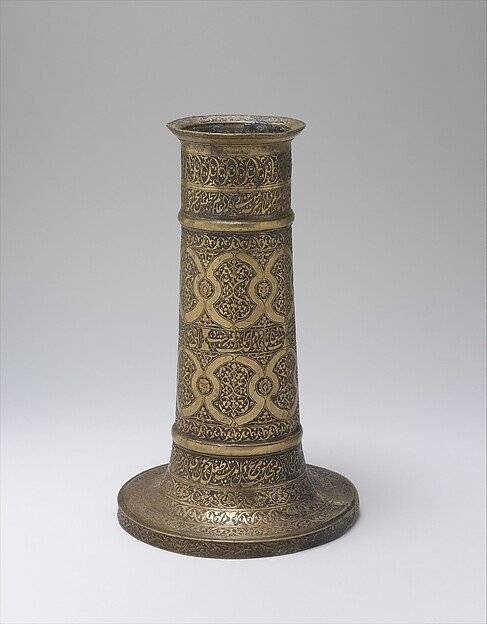
Accessed 15 October 2026. Catalogue: Brass; cast, engraved, and inlaid with black compound. Historical museum object illustrating the technique, not a modern product · The Metropolitan Museum of Art · CC0 (Met Open Access; resized and re-encoded) · Photo source ↗
- Type
- Beginner guide
- Reading
- 14 min
- Chapters
- 12
- Photos
- 3
Hand engraving and chasing on copper, brass and silver.
Tools
Craftspeople use small chisels and hammers to cut and push the metal.
Centres
Isfahan is the best-known centre.
Signs of hand work
Tool marks, slight asymmetry and depth variation.
- Look inside vessels
- Check for tool marks
- Compare repeats
Tools and process
The engraver fixes the object in pitch or on a sandbag, draws the design, then taps small chisels with a light hammer to cut lines and textures. Isfahan is the main centre of qalam-zani today.
Quality signs
- Deep, crisp lines with clean edges
- A finely punched background
- Even depth around curved forms
- Etched imitations have shallow, uniform lines
Care
Polish copper and brass lightly with a gentle cleaner. Silver can tarnish, so store it wrapped. Food use needs a tinned interior.
Common objects
Engravers decorate trays, vases, plates, tea-glass holders and boxes. Designs include eslimi arabesques, hunting scenes, poetry in calligraphy and portraits. Silver pieces are more expensive; copper and brass are the most common.
Masters and training
Engravers usually train for years under a master in family or bazaar workshops. Signed pieces from known masters cost more. Ask for the engraver's name and keep it with the receipt.
A note on this guide
This is a general introduction written by the CraftPersia editorial team. It has not yet been reviewed by a specialist. Practice varies between workshops; confirm details with makers or museums, and treat any dates as approximate.
- Craft
- Hand engraving of copper, brass and silver with steel chisels
- Centres
- Isfahan; also Shiraz and Tabriz
The technique
The vessel is filled with warm pitch to support the thin metal, and the engraver cuts the design directly with a range of chisels and a light hammer. Line depth and density create shading; no part of the design is cast or printed.
Judging engraving
Fine qalam-zani shows confident, even lines with varied depth, dense background texturing and well-composed scenes — often hunts, banquets or floral scrolls. Shallow, hesitant lines and sparse compositions mark apprentice or souvenir work.
- Crisp varied line depth
- Dense textured grounds
- Traditional figural or floral scenes
Care
Engraving relies on dark patina in the recesses for readability. Avoid polishing pastes, which round the lines; dust with a soft brush and handle with clean, dry hands.
Related photographs and screened examples
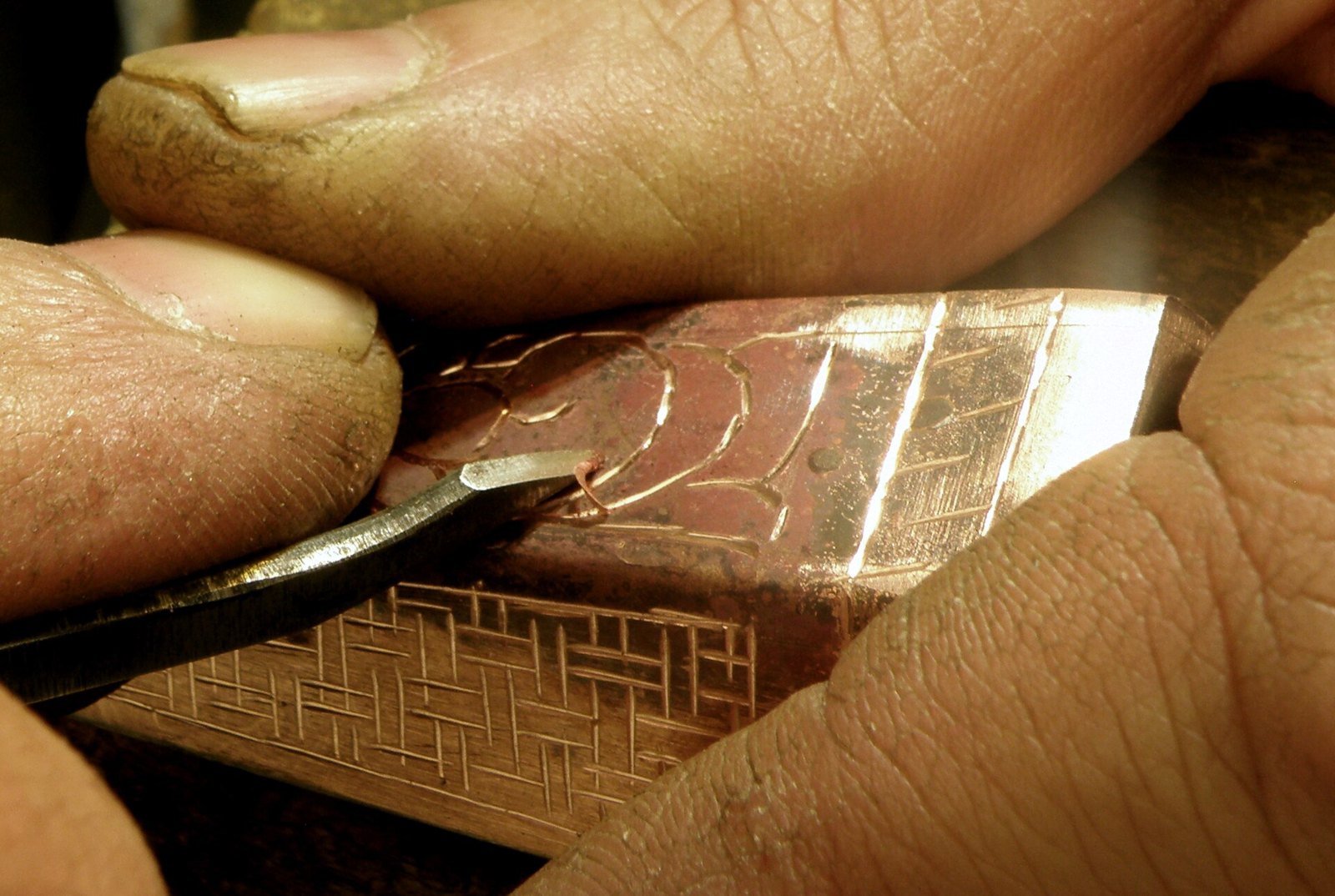
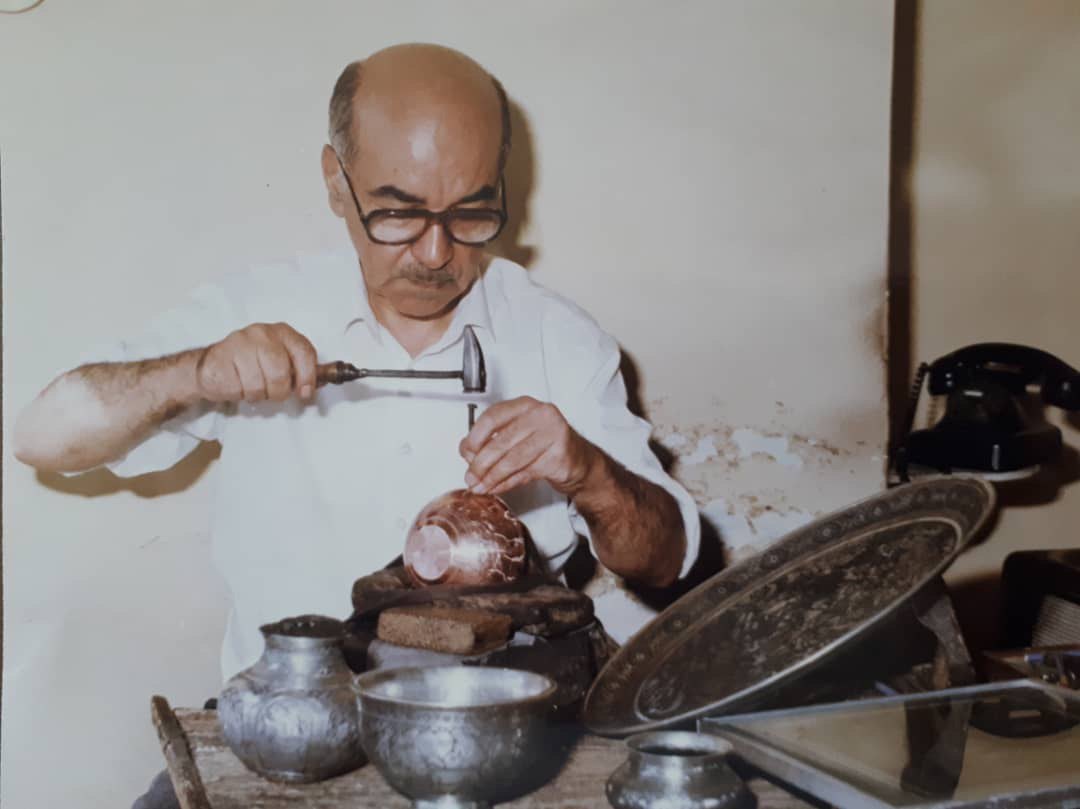
Representative photographs only. Marketplace examples rely on seller descriptions; CraftPersia has not independently authenticated their maker, origin, or rights status. Follow each source link for the listing context.
| Check | Hand engraved | Cast |
|---|---|---|
| Lines | Sharp, individually cut | Soft, moulded |
| Repetition | Motifs vary slightly | Identical repeats |
| Pitch residue | Sometimes in recesses | Absent |
References and further reading
These sources provide context, not authentication or provenance for an individual object. Editorial interpretations remain under review.