
Beginner guide · 5 min
Gereh-chini: Persian geometric wooden lattice
Editorial team · updated 2026-10-20
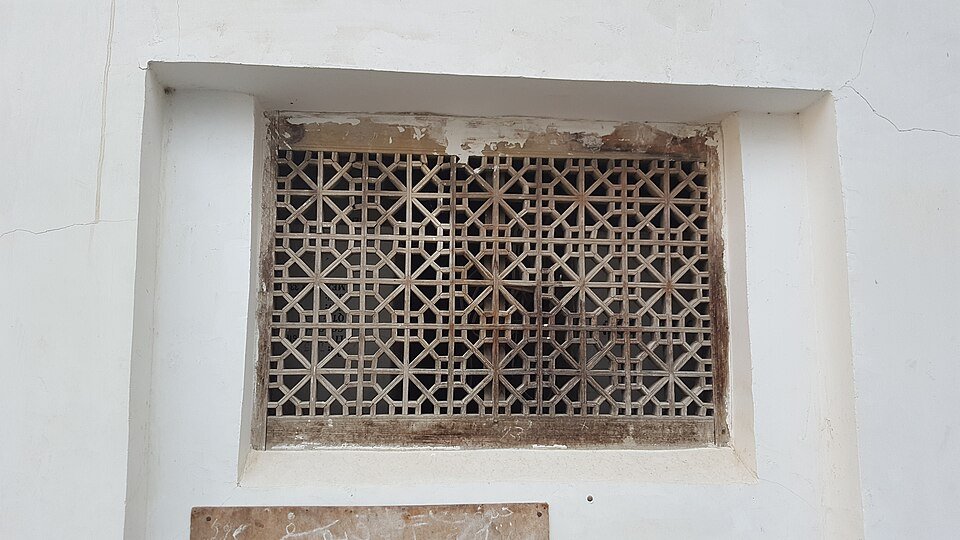
see source file page · MOHAMMADREZA PARIROKH · CC BY-SA 4.0 (attribution and share-alike; local JPG re-encoded) · Photo source ↗
- Type
- Beginner guide
- Reading
- 5 min
- Chapters
- 5
- Photos
- 1
Scope and evidence
This reading separates visible construction, documented materials and origin claims. The photographs retain their own source context; they do not authenticate a purchase or demonstrate every stage described below. Historical examples and contemporary maker statements require different kinds of evidence.
- Geometry: Pattern units are not structural joints
- Construction: Individual components rather than one cut sheet
- Scope: No universal rule about glue or nails
- Geometry
- Pattern units are not structural joints
- Construction
- Individual components rather than one cut sheet
- Scope
- No universal rule about glue or nails
Read the pattern and the assembly separately
Gereh-chini uses fitted wooden elements to create a geometric network. The visible star-and-polygon pattern is one level of description; the joints, framing and supports are another. A pattern diagram does not show how a full window carries weight or responds to use.
An orosi window can combine lattice, coloured glass, a surrounding frame and an opening mechanism. Not every lattice is an orosi sash, and not every geometric wooden screen uses the same joint system. Start with the source’s name for the specific structure.
Follow repeated units without dismantling
Trace how strips and small pieces meet within an accessible area, then compare that network with the border frame. A panel assembled from components differs from a single sheet cut to resemble latticework. Neither small gaps nor regularity alone prove a particular hand method.
Do not say that every example is held together without glue or nails. Construction, repairs and modern commissions can differ. Ask a maker to explain the joint method and any adhesive or mechanical fixings, including how glazing and the outer frame are secured.
Plan a commission as a building element
For a new panel, specify dimensions, indoor or outdoor location, whether it must open, the glazing and mounting method, and the expected maintenance. Decorative resemblance to an old window is not a substitute for suitable joinery and safe installation. Obtain qualified installation advice for architectural use.
For a historic window, preserve the distinction between original components and later replacements. A newly replaced strip may support an old frame; its colour mismatch is not automatically poor restoration. Ask the responsible conservation team how replacements are documented.
- Trace joints visually, not by pulling
- Distinguish pattern from load-bearing frame
- Ask about glazing and fixings
- Record repairs and replaced components
Movement, weather and surface care
Wood moves with environmental change, and glass can be vulnerable where it is held in a moving frame. Check for loose glazing, distorted elements and failed attachments without pressing the panel. A decorative lattice should not be lifted by a thin strip or internal star.
Do not wash or re-glue an unassessed historic window. Sun, moisture and failing finishes require a plan for the whole structure. Keep dusting limited to stable accessible areas and leave structural repair, coatings and glazing work to qualified practitioners.
| Look at | Record | Do not infer |
|---|---|---|
| Pattern | Repeated geometric units | Joint method from motif |
| Intersection | Visible component joins | No glue or nails anywhere |
| Frame and glass | Attachments, movement and repairs | All lattice is orosi |
| New commission | Location, mounting and function | Structural safety from appearance |
References and further reading
- [1] Encyclopaedia Iranica — Isfahan XIII: Crafts ↗Regional history; practices changed over time and are not a timeless national formula.
These sources provide context, not authentication or provenance for an individual object. Editorial interpretations remain under review.