Collector guide · 10 min
Gabbeh rugs: Qashqai and Luri origins, symbolism, real vs. copy
Editorial team · updated 2026-09-29
What is a gabbeh rug?
A gabbeh is a hand-knotted pile rug made by Qashqai, Luri and Bakhtiari nomadic weavers in Fars and the Zagros mountains. The name comes from a Persian word for 'raw' or 'natural'. Gabbehs have long, thick pile and few knots per inch, with bold, simple designs.
Designs and symbolism
Gabbeh designs are often open fields of colour with small figures: animals, trees, people or rectangles. Weavers improvise rather than follow a cartoon, and meanings are personal. Avoid over-reading 'fixed' symbolism.
Structure
Wool warps and wefts, several wefts between rows of knots, and long pile make gabbehs soft and heavy. Natural dyes are common in better pieces.
Real vs. copy
Many 'gabbeh-style' rugs are made in India or by machine. Signs of genuine Iranian gabbeh:
- Wool foundation, not cotton
- Irregular edges and slight colour banding (abrash)
- Hand-spun wool texture
- A seller who can name the region and weaving group
Care
Vacuum gently, shake outdoors and avoid home wet cleaning; thick wool dries slowly.
Related photographs
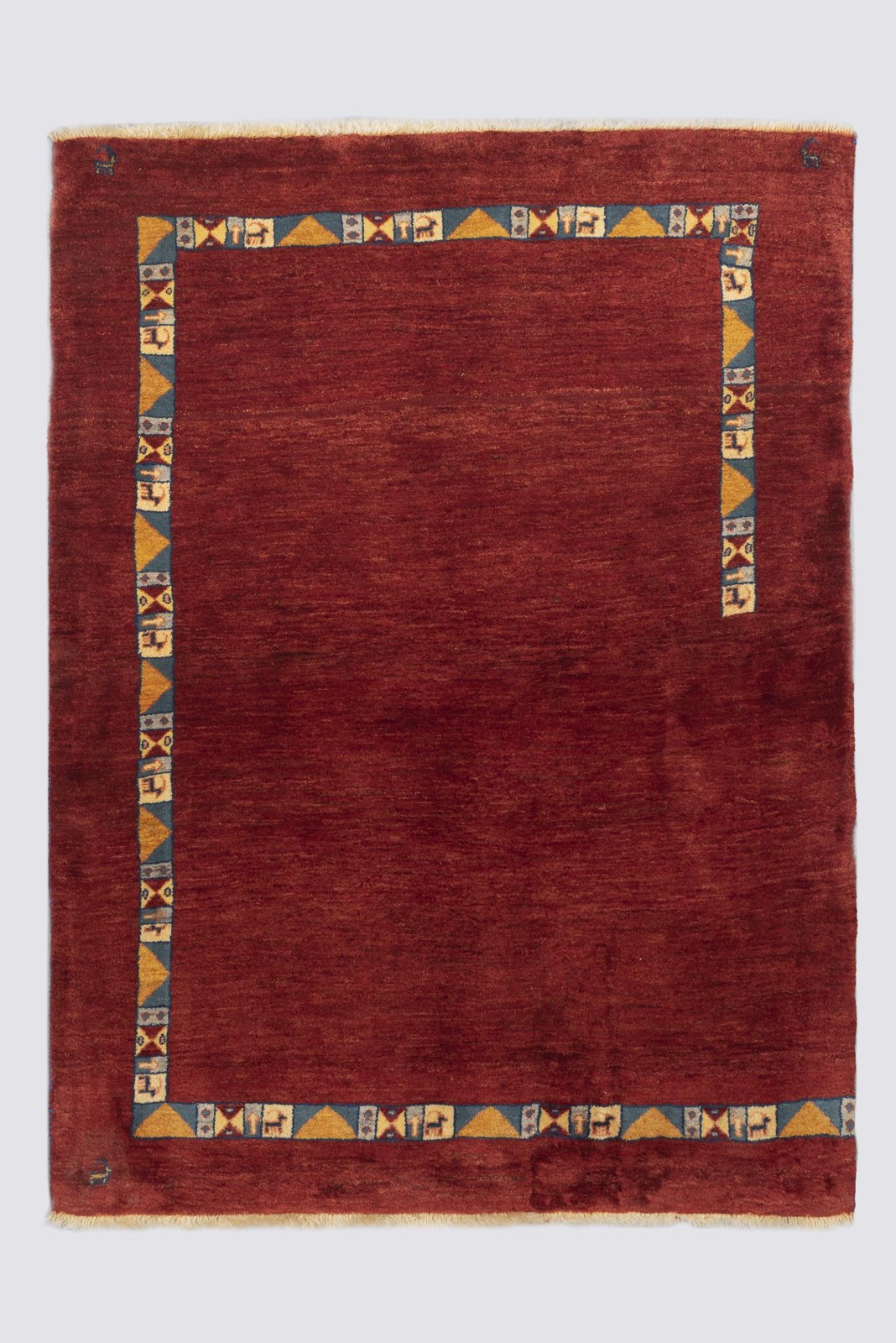
Representative photographs, not of any specific catalogued object. Sources on the credits page.