
Beginner guide · 11 min
Gabbeh rugs: a beginner’s guide
Editorial team · updated 2026-09-29
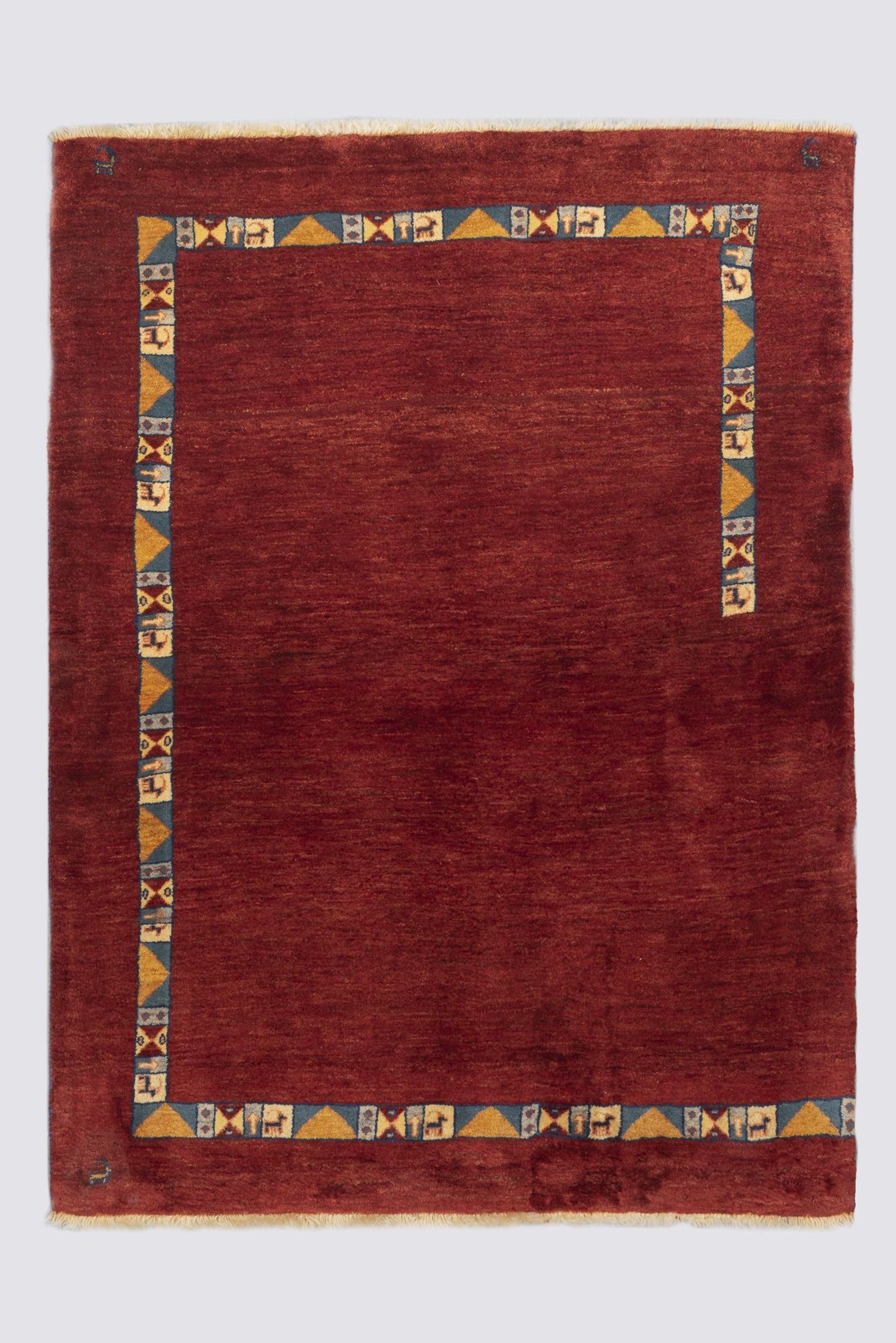
Listing image, date unverified · Dyad Artisans (photographer not stated) · Permission status not reviewed · Photo source ↗
- Type
- Beginner guide
- Reading
- 11 min
- Chapters
- 9
- Photos
- 1
The thick, simple-patterned pile rugs of the Qashqai and Luri weavers of south-west Iran.
What a gabbeh is
A gabbeh is a thick, loosely knotted pile rug with long wool pile and open fields of colour. It is mainly woven by nomadic and village weavers in Fars.
Designs
Designs are simple: plain fields, small animals, trees, people or stepped blocks. Modern gabbeh are often made for export with brighter colours.
What to check
Hand-spun wool, natural colour shifts (abrash) and a hand-finished edge are good signs. Machine gabbeh copies exist and are usually very even.
- Hand-spun wool
- Abrash colour bands
- Wool, not cotton, foundation in many older pieces
What makes gabbeh different
Gabbeh are thick, long-pile rugs woven by nomadic and village weavers in Fars, especially the Qashqai and Luri. They often have simple fields of colour with small figures such as animals, trees or people. They are typically coarser than city rugs, with several wefts between each row of knots.
Buying and care
Ask about dyes and wool; quality varies widely. Gabbeh are robust and suit casual rooms. Vacuum regularly and shake out dust outdoors.
A note on this guide
This is a general introduction written by the CraftPersia editorial team. It has not yet been reviewed by a specialist. Confirm details with makers, conservators or museums, and treat any dates as approximate.
Crafts covered in this guide
Gabbeh (گبه) — A thick, coarsely knotted pile rug woven mainly by pastoral and village weavers of the Zagros, with open fields, few motifs and a directly personal design language.
Materials, techniques and centres
Gabbeh is recorded in the archive with wool and natural dyes as principal materials, and knotted pile weaving as the technique. Associated centres include Shiraz; a place name on its own does not establish where an individual object was made.
Collecting and next steps
When applying this guide to a specific object, work from what can be observed: structure, materials, tool marks, repairs and documentation. Ask the seller or maker for written statements about who made the piece, where, from what materials, and what has been repaired or replaced.
The steps here are educational; identification, conservation and valuation of an individual object require appropriate independent expertise.
References and further reading
- [1] H. E. Wulff, The Traditional Crafts of Persia, MIT Press, 1966.General historical craft reference, not evidence for a particular object.
These sources provide context, not authentication or provenance for an individual object. Editorial interpretations remain under review.