
Preservation · 10 min
Caring for wooden inlay and lacquer work
Editorial team · updated 2026-09-29
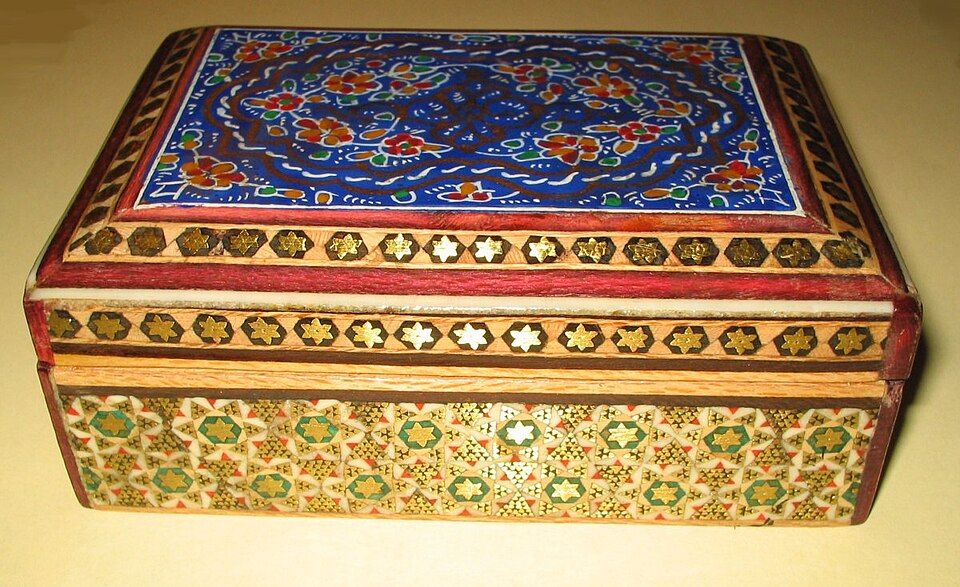
2006-05 · Fabienkhan (Wikimedia Commons) · Public domain (per Wikimedia Commons) · Photo source ↗
- Type
- Preservation
- Reading
- 10 min
- Chapters
- 9
- Photos
- 2
Humidity, light and handling for khatam, moarraq wood and painted lacquer.
Stable humidity
Wood swells and shrinks with humidity. Fast changes lift inlay and crack lacquer. Keep pieces away from radiators, air vents and damp walls.
Cleaning
Check for loose or flaking surfaces before dusting. Stop if unstable; do not use water, oils or furniture polish on inlay or lacquer.
Main risks
Environmental changes can stress the joins between wood, inlay and coatings. Heat and direct sunlight can also damage sensitive finishes; the response depends on the materials and condition.
- Keep pieces away from radiators, fireplaces and direct sun
- Avoid sudden environmental changes
- Do not dust loose or flaking surfaces; avoid spray polish
Small repairs
Have loose khatam pieces or lifting lacquer assessed by a furniture or objects conservator before deciding on reattachment. Keep fallen fragments in a labelled container; do not apply household glue.
A note on this guide
This is a general introduction written by the CraftPersia editorial team. It has not yet been reviewed by a specialist. Confirm details with makers, conservators or museums, and treat any dates as approximate.
Identify the support beneath the decoration
Khatam combines small inlay elements over a support; moarraq uses cut pieces arranged as a design; painted lacquer may cover wood, papier-mâché or another support. Their surfaces can look similarly glossy while their vulnerabilities differ. Do not treat every lacquered Iranian object as a solid wooden box.
Record the visible structure, fittings, lining and existing repairs without taking the object apart. If the support is concealed, preserve that uncertainty. Bone, metal, wood, pigments and adhesives can occur in the same assembly, so cleaning guidance for one material is not automatically suitable for the whole object.
Reduce environmental stress rather than chase a fixed recipe
Avoid direct sunlight, radiators, damp windows and sudden environmental changes. Wood and other supports can respond differently from an inlay or coating, stressing the joins between them. Lifting pieces, open seams and cloudy finishes are reasons to seek advice, not proof of one specific humidity problem.
Use a stable position and support the base during movement. A box should not be lifted by its lid or fragile handle. Do not place wet glasses, plant pots or hot vessels on decorated surfaces, and keep surfaces free from contact with materials that may stick or stain.
Assess surface stability before any dusting
Loose inlay, flaking paint or a cracked coating can detach under a brush or cloth. Inspect before cleaning; if the surface is unstable, stop and consult a conservator. For a sound surface, gentle dry dust removal may be appropriate, but do not assume vigorous rubbing is harmless because the object looks varnished.
Avoid water, solvents, furniture polish, oil and silicone sprays on an unknown composite surface. A cleaner can cloud a finish, move pigment or affect an adhesive, while polishing can remove evidence of earlier use. Do not try to flatten lifted inlay with pressure or apply household glue to a detached piece.
Keep fragments and repair history together
If a piece detaches, retain it in a labelled container with the object rather than force it back. Photograph the location and any existing loss. A conservator can assess whether stabilisation, reattachment or no intervention is appropriate; a visually invisible repair is not necessarily the best preservation outcome.
Ask which material will be added, what original material will be changed and how the work will be documented. Keep dated photographs and the treatment report. Photographs of related inlaid or painted objects illustrate differences in construction; they are not a cleaning demonstration or evidence of the condition of your object.
- Support the base, not the lid or fitting
- Stop dusting if the surface flakes
- Avoid household polish and adhesive
- Keep detached fragments and records
Related photographs and screened examples
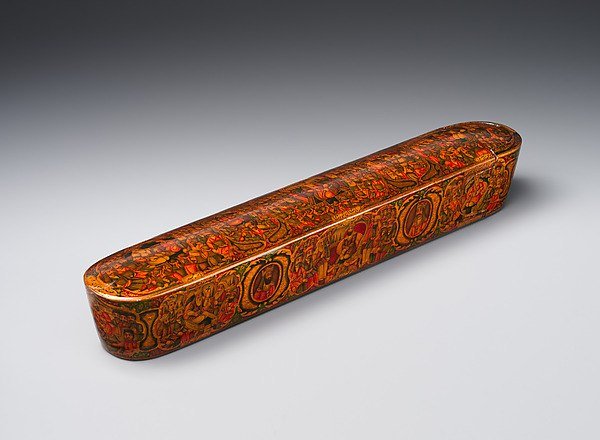
Representative photographs only. Marketplace examples rely on seller descriptions; CraftPersia has not independently authenticated their maker, origin, or rights status. Follow each source link for the listing context.
| Component | Risk to consider | Avoid |
|---|---|---|
| Inlay and joins | Loose elements and differential movement | Rubbing or forcing flat |
| Painted coating | Flaking and unknown solubility | Wet or solvent cleaning |
| Support and fittings | Weak hinges, cracks and distortions | Lifting by handles or lids |
References and further reading
- [1] H. E. Wulff, The Traditional Crafts of Persia (1966)Historical descriptions; not evidence of current prices, individual makers or present-day workshop access.
- [2] Canadian Conservation Institute — Basic care: furniture and objects made of wood ↗Preventive care; composite lacquered objects may require additional specialist assessment.
These sources provide context, not authentication or provenance for an individual object. Editorial interpretations remain under review.