
Collector guide · 13 min
Baluch rugs: dark tones and prayer designs
Editorial team · updated 2026-09-29
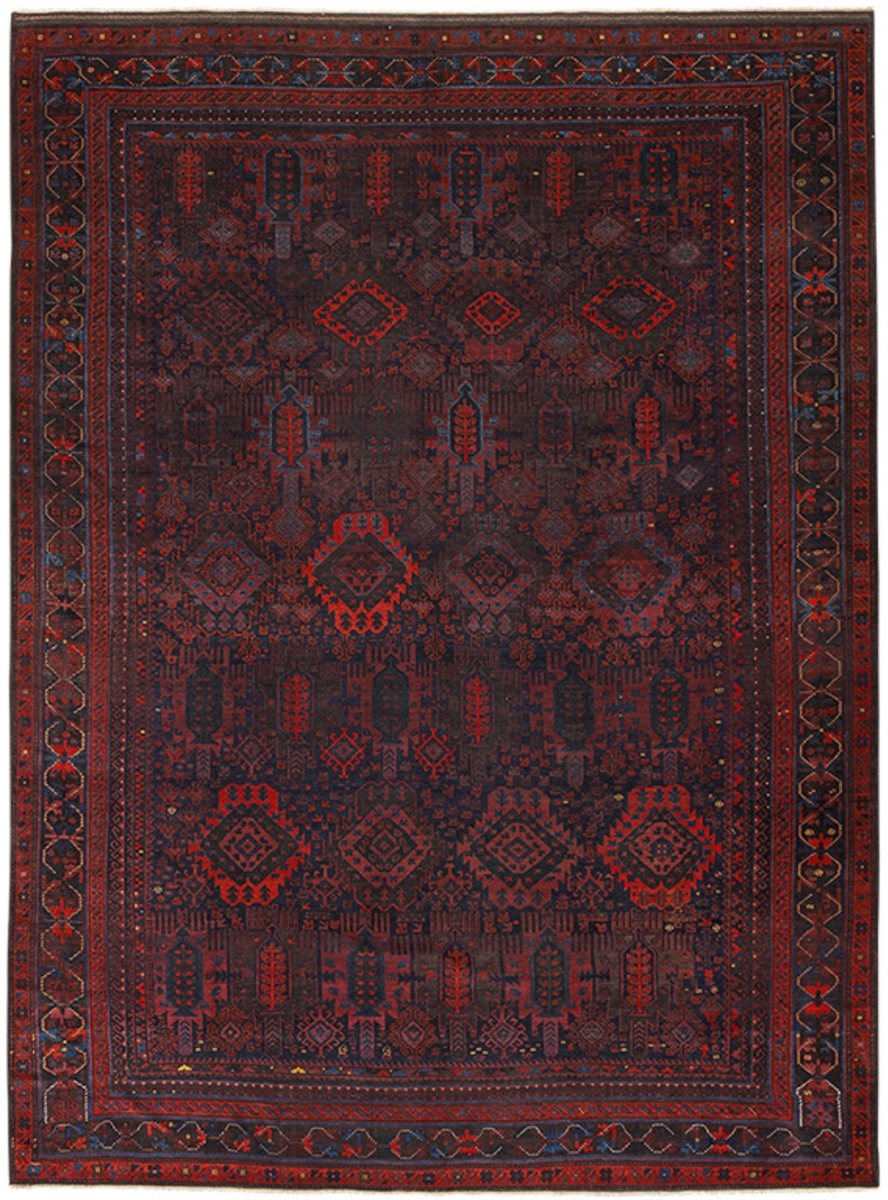
Accessed 15 October 2026.; attribution and origin follow the Commons record and are not independently verified. · Unknown weaver. Photo by museum · Public domain (per Wikimedia Commons; rights review pending) · Photo source ↗
- Type
- Collector guide
- Reading
- 13 min
- Chapters
- 11
- Photos
- 6
Rugs woven by Baluch groups in Khorasan and Sistan with deep reds, blues and camel tones.
Look
Dark palettes, geometric designs and prayer-rug formats are common.
Materials
Wool pile with wool or goat-hair elements; some use camel hair.
Care
Dark dyes can run if washed carelessly — use professionals.
What Baluch rugs look like
Baluch rugs are woven by Baluch groups in eastern Iran, in Khorasan and Sistan. They are often small, with dark reds, browns and blues, accents of camel or ivory, and geometric or prayer-arch designs. The weave is usually wool on wool.
Recognising a Baluch rug
No single feature proves where a rug was made, so look at several together: the design, the colours, the knot type, the foundation, and how the edges and ends are finished. Dealers' labels are sometimes used loosely, and ‘Baluch design’ rugs are woven in other towns and countries.
- Deep, dark palette
- Kilim ends and goat-hair edge cords are common
- Small formats: prayer rugs, bags, balisht cushions
Judging quality
Many Baluch rugs are village or nomadic in character, so some irregularity is expected. Turn the rug over: hand-knotted rugs show the pattern clearly on the back, with small irregularities. A glued backing cloth or an even grid of stitches suggests a tufted or machine-made rug.
- Even, clear drawing of the motifs
- Wool that springs back when pressed
- Straight sides, and ends that are not pulling in
- No dye run between colours
Care and value
Vacuum regularly without a beater bar, rotate the rug once a year, and keep it out of strong sun. Value depends on condition, fineness, materials, age and design rather than on the city name alone. Get any valuation from an independent appraiser, not from the seller.
A note on this guide
This is a general introduction written by the CraftPersia editorial team. It has not yet been reviewed by a specialist. Practice varies between workshops; confirm details with makers or museums, and treat any dates as approximate.
Crafts covered in this guide
Persian carpet (فرش ایرانی) — A hand-knotted pile textile woven across Iran in city workshops, village looms and pastoral camps, distinguished by regional structure, palette and design vocabulary.
Materials, techniques and centres
Persian carpet is recorded in the archive with wool, silk, cotton and natural dyes as principal materials, and knotted pile weaving as the technique. Associated centres include Tabriz, Isfahan, Kashan, Kerman, Qom and Shiraz; a place name on its own does not establish where an individual object was made.
Collecting and next steps
When applying this guide to a specific object, work from what can be observed: structure, materials, tool marks, repairs and documentation. Ask the seller or maker for written statements about who made the piece, where, from what materials, and what has been repaired or replaced.
The steps here are educational; identification, conservation and valuation of an individual object require appropriate independent expertise.
Related photographs and screened examples

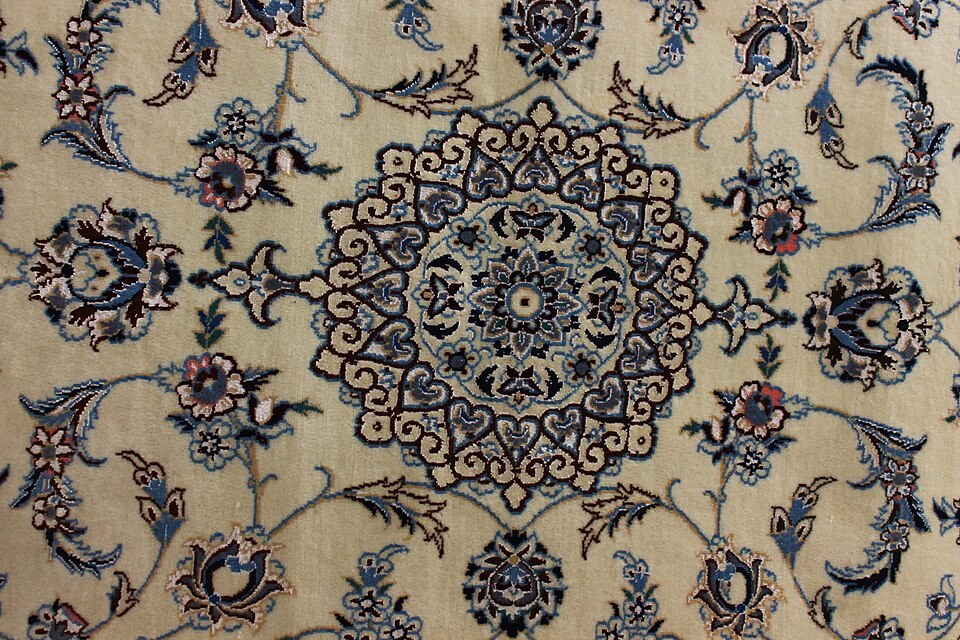

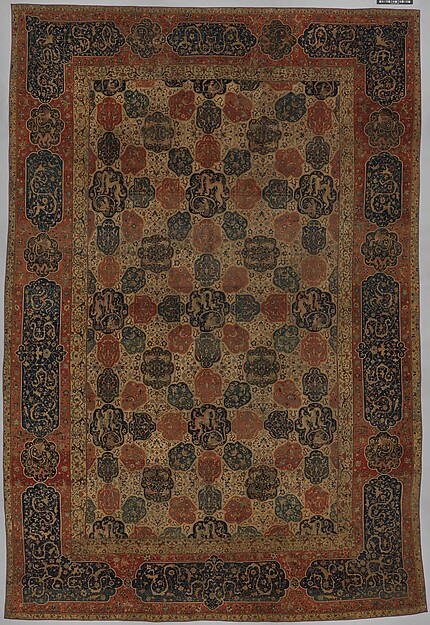
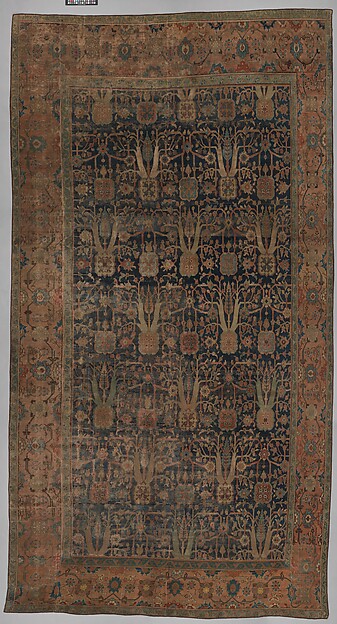
Representative photographs only. Marketplace examples rely on seller descriptions; CraftPersia has not independently authenticated their maker, origin, or rights status. Follow each source link for the listing context.
References and further reading
- [1] H. E. Wulff, The Traditional Crafts of Persia, MIT Press, 1966.General historical craft reference, not evidence for a particular object.
These sources provide context, not authentication or provenance for an individual object. Editorial interpretations remain under review.