
Collector guide · 11 min
Valuing antique Persian rugs: age, condition, provenance
Editorial team · updated 2026-09-29
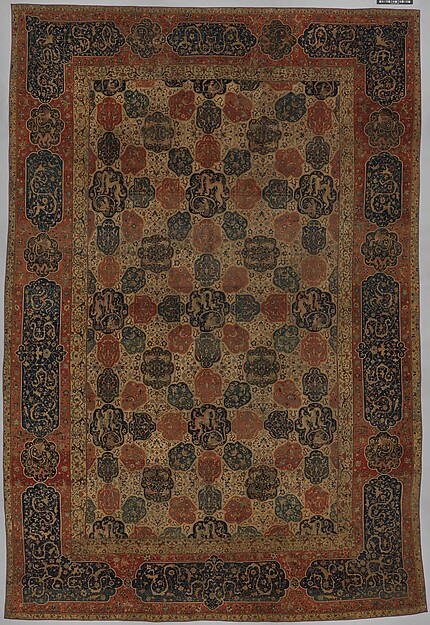
first half 16th century · accession 10.61.3 · The Metropolitan Museum of Art · CC0 (Met Open Access) · Photo source ↗
- Type
- Collector guide
- Reading
- 11 min
- Chapters
- 10
- Photos
- 6
Antique Persian rugs (usually 100+ years old) are valued on type, age, condition, colour, rarity and provenance — not age alone.
The short answer
In the rug trade, 'antique' usually means about 100 years old or more; 'semi-antique' is roughly 50–100. Age alone does not make a rug valuable. Condition, natural colours, rarity, design quality and provenance matter most. Only a qualified appraiser can value a specific rug.
What raises value
- Good condition with even, healthy pile
- Documented materials and colour quality; abrash does not prove natural dyes
- Rare types or designs
- Fine drawing and balance
- Documented provenance
What lowers value
- Heavy wear, holes or moth damage
- Poor or visible repairs
- Colour run or chemical washing
- Cut-down or re-shaped rugs
- Painted-in pile
Signs of age
Wear, lustre and colour shifts do not independently establish age or natural dyes. Dating requires qualified interpretation of structure, materials, inscriptions and comparative records, with uncertainty retained.
Export and legal notes
Exporting antiques from Iran is restricted. When buying abroad, ask for documentation.
What drives value
- Age and condition
- Rarity of the design and its origin
- Quality of dyes and wool
- Restoration history
- Documented provenance
- Age terminology
- Trade conventions are not universal legal thresholds
- Condition record
- Original format, losses, repairs and treatment
- Provenance
- A documented ownership chain, not a decorative story
Distinguish an age claim from evidence
“Antique” commonly refers to objects around a century old in the rug trade, but usage and legal definitions differ. An exact year should not be inferred from soft colours, shiny wool or worn pile. Those features can result from use, treatment or later imitation.
Dating combines construction, design, materials, inscriptions and comparative scholarship. Document the proposed range and its reasoning. A natural-dye claim does not independently date a rug; an inscription must be examined in its structural context.
Read the whole condition map
Check whether ends and sides survive, whether the original dimensions remain and whether low pile reflects normal wear, deliberate reduction or repairs. Restored areas should be located and described rather than concealed within “good condition”.
A large reweave, a small stabilised loss and a cut-down format have different implications. Assess conservation needs and market relevance separately. Never apply a blanket condition deduction without a qualified object-specific explanation.
- Original or altered format
- End and side losses
- Wear and exposed foundation
- Reweaving, applied colour and known treatment
Build a provenance chain from records
Receipts, inventories, dated photographs and publication references can support ownership history. Match descriptions, measurements and identifying details to the object; a family story or an old-looking label alone is not a chain of custody.
Missing history should remain missing, not be repaired with a famous collection or workshop attribution. Keep prior opinions alongside later revisions. Ask for lawful ownership and export/import documentation where relevant, with jurisdiction-specific advice for important transactions.
Compare within a dated market
Rarity and artistic interest do not guarantee a buyer or investment return. A valuation needs a defined purpose, effective date and relevant comparable evidence, with condition and attribution differences explained. Asking prices and museum accession records are not realised sale evidence.
Use an independent specialist when significance or value matters. The credited images here provide craft context only: their museum status, visual appeal or age must not be transferred to a rug offered for sale.
Related photographs and screened examples
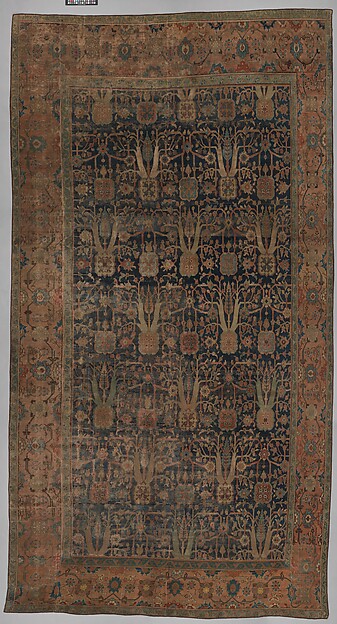
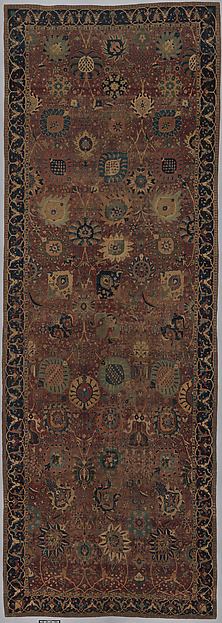

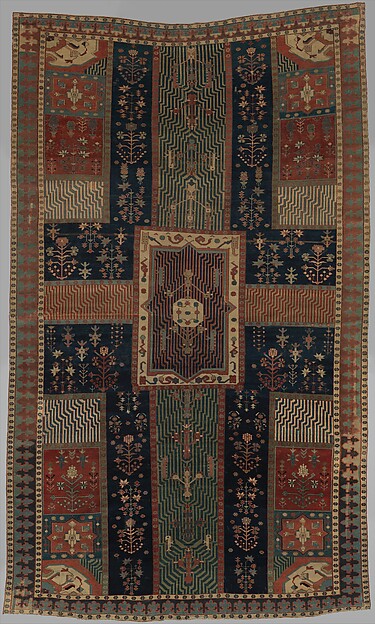

Representative photographs only. Marketplace examples rely on seller descriptions; CraftPersia has not independently authenticated their maker, origin, or rights status. Follow each source link for the listing context.
| Record or observation | What to do | What it cannot establish |
|---|---|---|
| Date range | Retain method and uncertainty | Exact age from wear or colour |
| Condition | Map repairs and original format | A standard deduction percentage |
| Ownership history | Match dated records to the object | Provenance from a story |
| Comparable result | Check date, condition and market | A guaranteed return |
References and further reading
- [1] Encyclopaedia Iranica — Carpets: overview and bibliography ↗Historical and technical context; not a valuation or authentication of the photographed objects.
- [2] The George Washington University Museum and The Textile Museum ↗Collection and textile-study resources; a photograph cannot substitute for structural examination.
These sources provide context, not authentication or provenance for an individual object. Editorial interpretations remain under review.