
Beginner guide · 9 min
A short history of Persian tilework
Editorial team · updated 2026-09-29
Brick and early glaze
Early Islamic buildings in Iran relied on patterned brick. Glazed accents grew more common under the Seljuks.
Lustre and Kashan
By the 12th and 13th centuries, Kashan produced lustre tiles and star-and-cross panels for shrines and palaces.
Mosaic tile
Timurid and Safavid builders developed cut-tile mosaic (moarraq), fitting small pieces of single-colour glazed tile together.
Seven-colour tile
Painted haft-rang tiles, faster to make than mosaic, spread widely in the Safavid period, especially in Isfahan.
Qajar pictorial tiles
Qajar tiles added figures, scenes and European-influenced flowers. Workshops in Tehran and Shiraz made many examples.
Related photographs
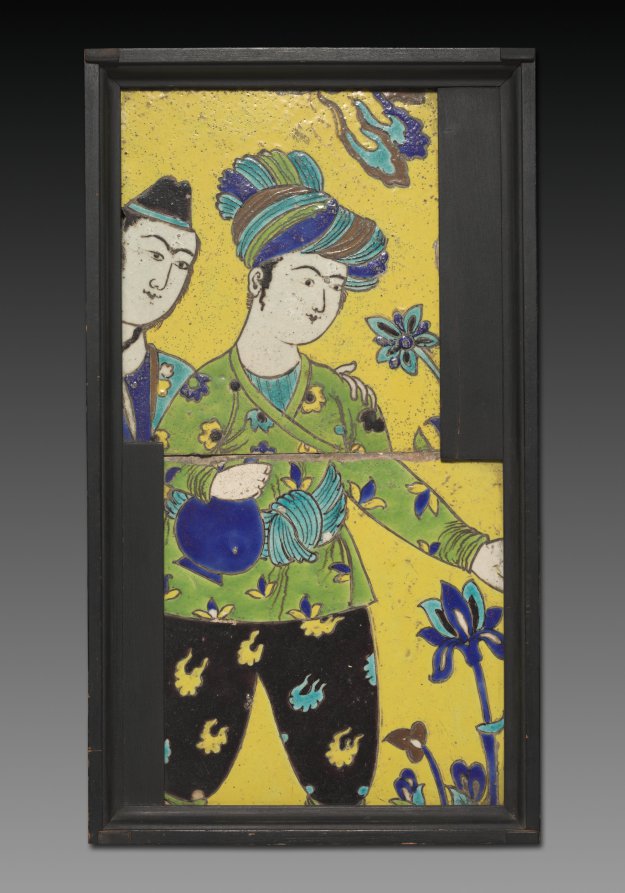
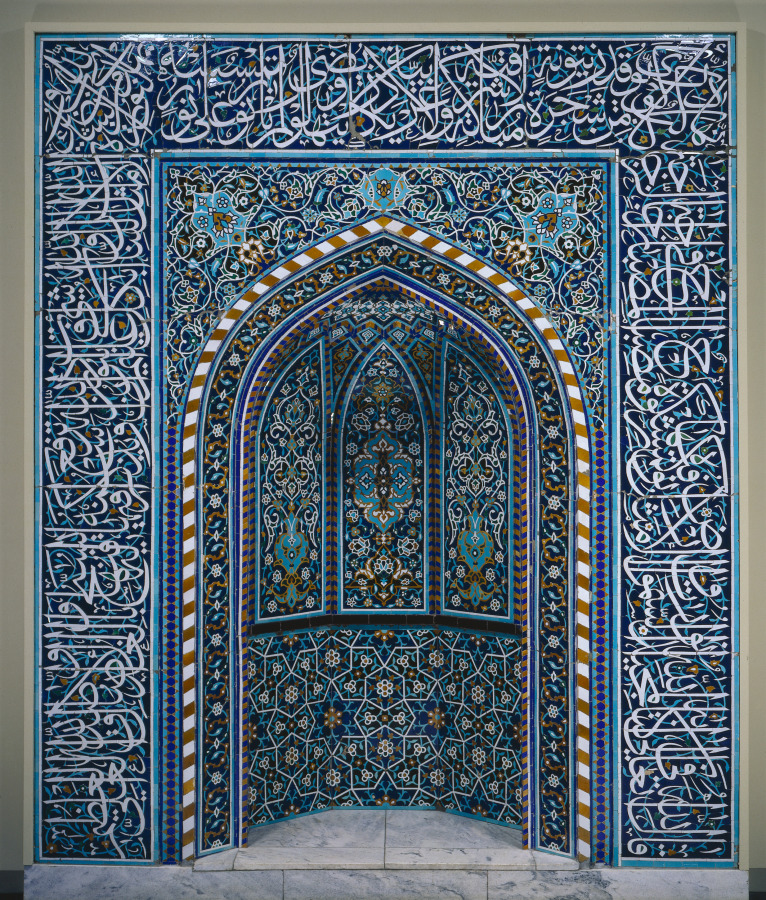
Representative photographs, not of any specific catalogued object. Sources on the credits page.