
What documented Mat and basket weaving (Hasir-bafi) looks like
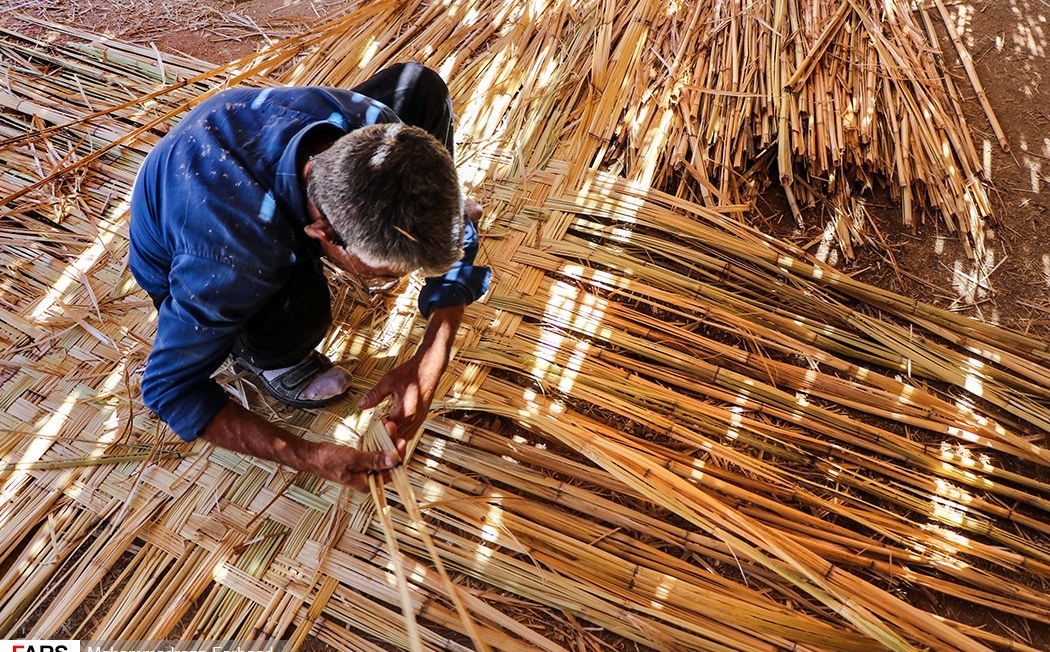
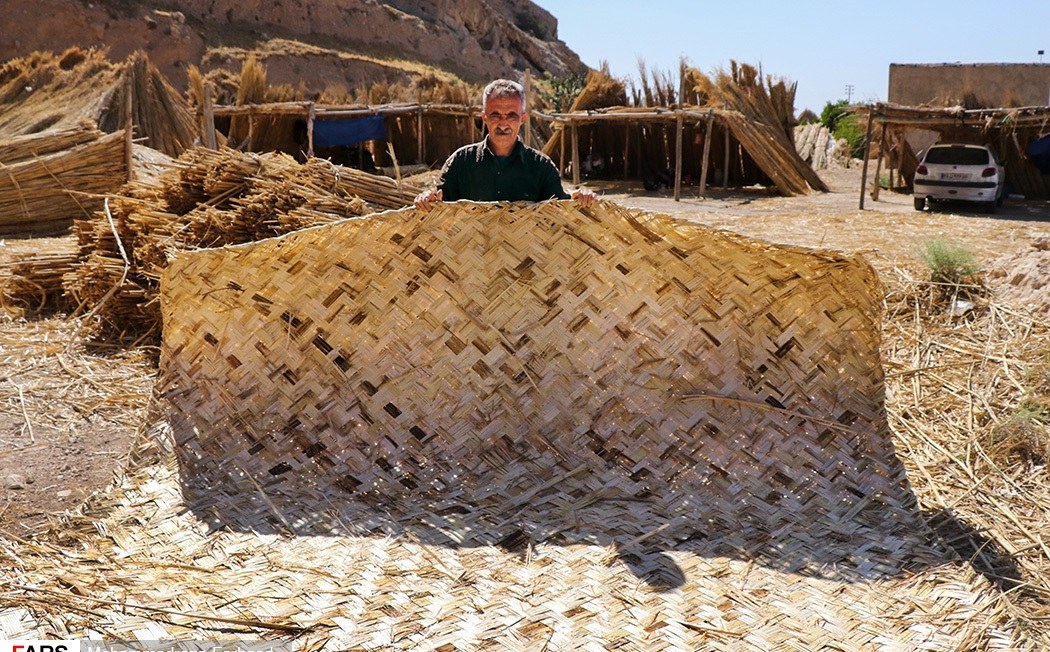
Reference photographs of documented Mat and basket weaving (Hasir-bafi) pieces, credited to their sources. Compare construction, surface and wear with any piece you are offered — a resemblance is not proof of origin.
Mat and basket weaving (Hasir-bafi) at a glance
| Persian name | حصیربافی |
| Category | Basketry · Palm-leaf and reed weaving |
| Main techniques | — |
| Typical materials | palm-leaf |
| Places of making | Not documented |
| Current vitality | At risk |
Understanding Mat and basket weaving (Hasir-bafi)
What Mat and basket weaving (Hasir-bafi) is and how it is made
History
Mat and basket weaving is one of the oldest household crafts on the Iranian plateau and the Persian Gulf coast. Palm-leaf work is usually linked to the south (for example Bushehr, Hormozgan and Khuzestan), while reed and rush work is associated with the Caspian provinces.
Technique
Leaves are dried, split into strips, sometimes dyed, and then plaited into long braids that are stitched together in coils, or woven over and under on a simple frame. Rush mats are often woven on a horizontal ground loom.
Collecting and identification
Look for tight, even plaits and a firm shape; loose work unravels at the rim. Many cheaper imports are machine-made from plastic strips — check the material closely.
This guidance is educational only and is not an authentication or valuation service.
General background on the craft, not a statement about any individual object; dates and attributions summarise common positions in the literature and remain under review. Read the full Mat and basket weaving (Hasir-bafi) entry.
Before you buy: what to inspect
- Hand-plaited palm-leaf or reed work shows slight variation in strip width and tension; machine-made mats are perfectly even.
- Check the rim and base, where plaited strips are turned and finished; loose or cut ends will unravel with use.
- Look for brittleness, splitting or insect holes, especially in older pieces stored in dry rooms.
Typical materials: palm-leaf.
Red flags: copies and 'Persian style' imports
- Plastic or paper-cord strips sold as palm leaf or reed.
- No place of making given for a piece described only as 'Persian style'.
A genuine Mat and basket weaving (Hasir-bafi) piece should come with a named place of making in Iran and a clear statement that it is handmade.
Questions to ask the seller
- Which plant fibre is it (date-palm leaf, reed, wheat straw)?
- Where and when was it made?
- Has it been dyed, and with what?
What affects the price
| Fineness of the plait |
| Size |
| Decoration or coloured strips |
| Age and condition |
Care and cleaning
- Dust with a soft brush; do not soak plant fibre.
- Keep away from radiators and direct sun, which dry and split the strips.
Storage
- Store in a ventilated place with moderate humidity; avoid sealed plastic, which traps moisture and mould.
Shipping
Light but easily crushed — pack in a rigid box with padding inside the form.
Disclaimer
This guide is educational. It cannot confirm that any particular object is genuine, old or valuable. For important purchases, ask an independent specialist. Read the full Mat and basket weaving (Hasir-bafi) entry.