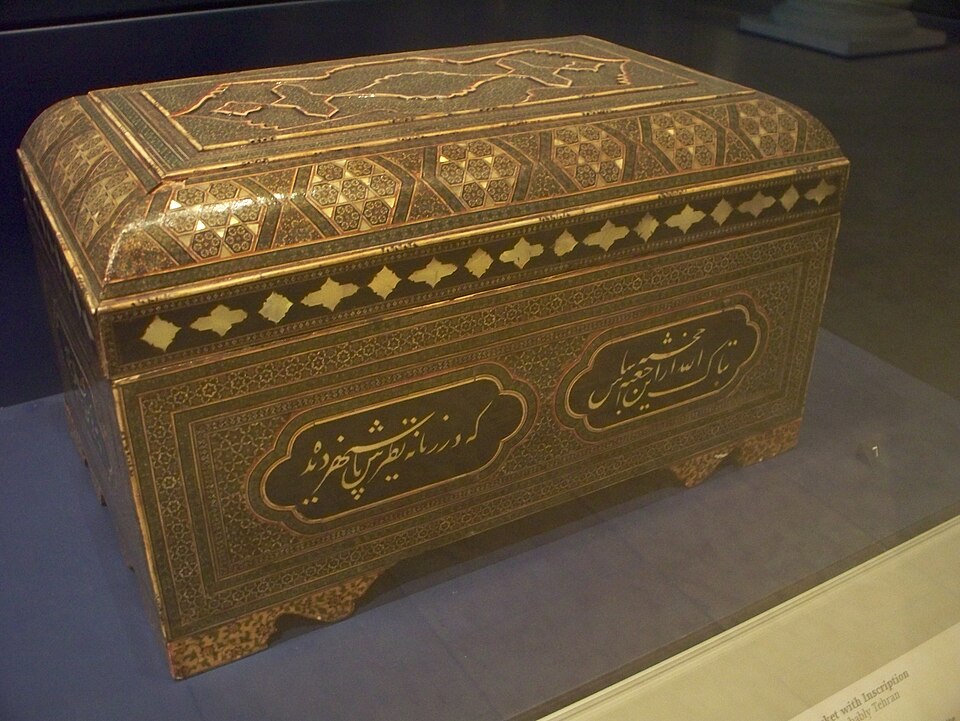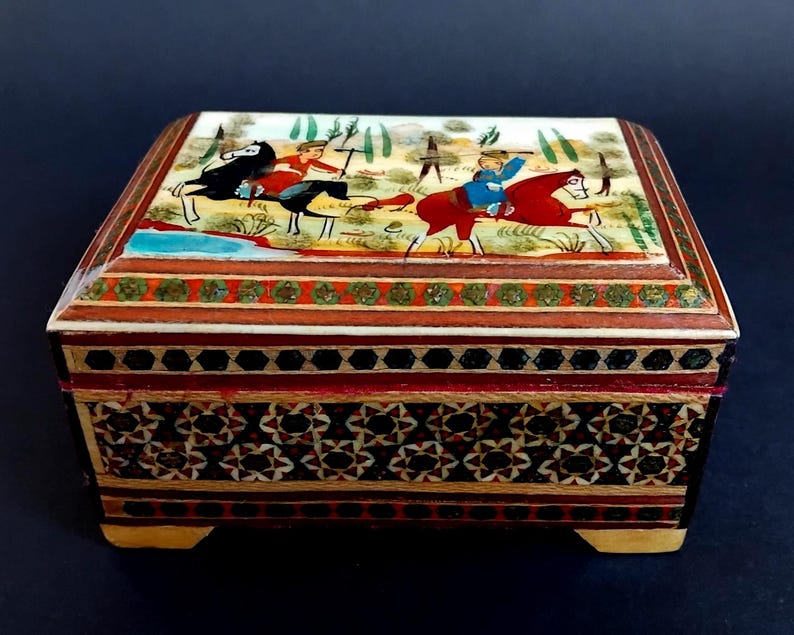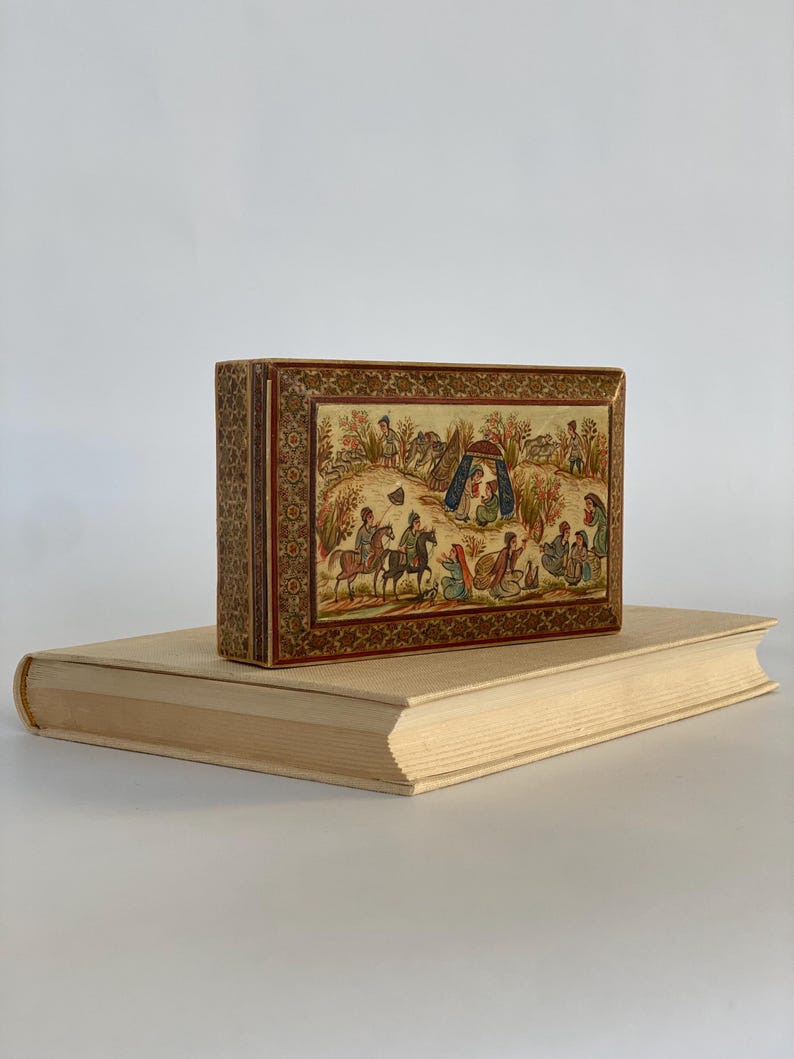
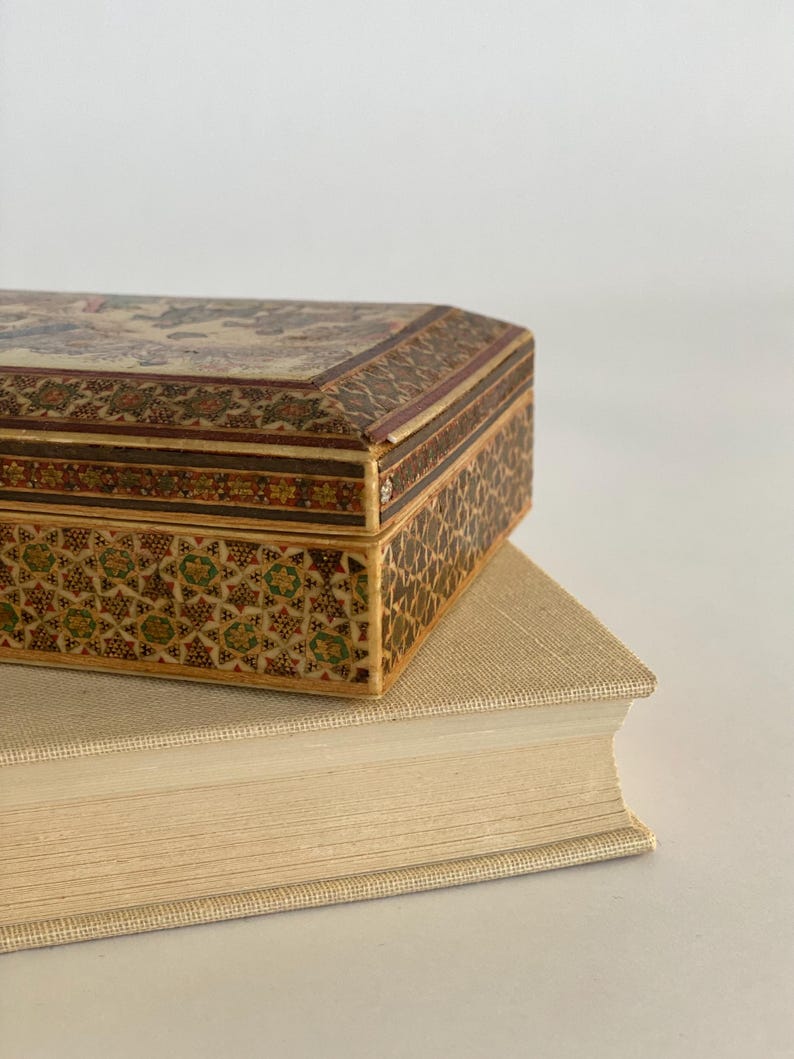
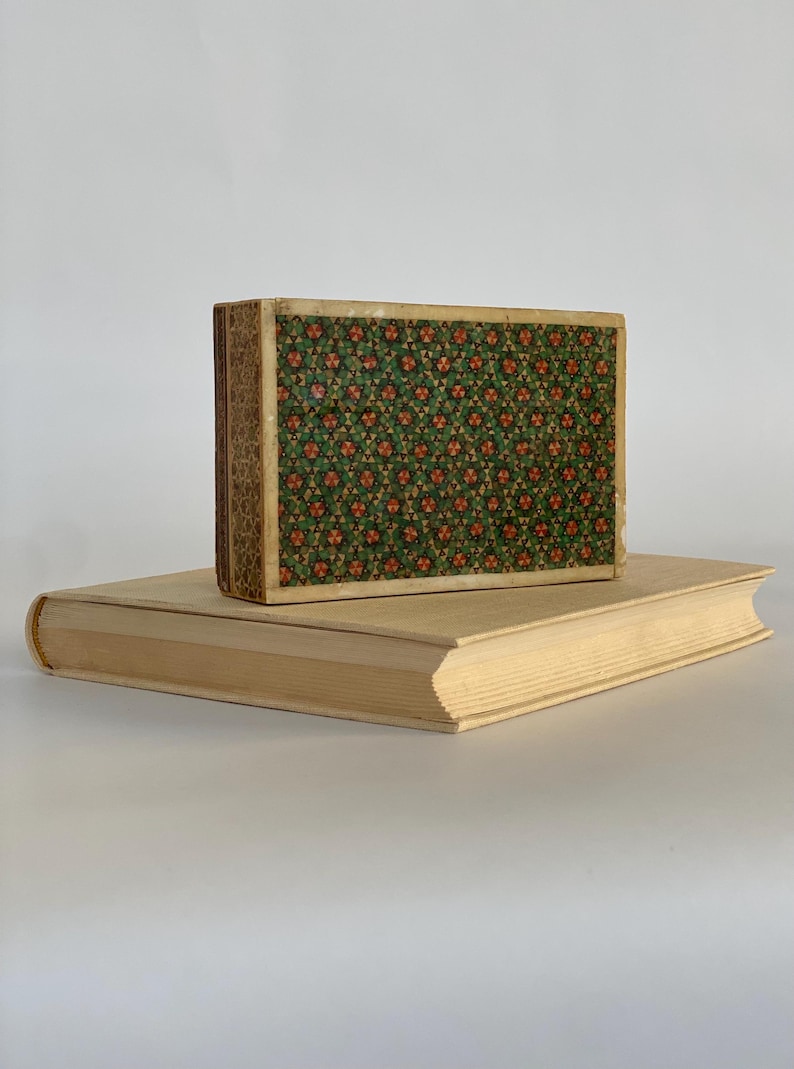
Photos and details come from a third-party Etsy listing, shown here as an illustrative example. CraftPersia has not inspected the object or verified the seller's claims, and the listing may have changed or ended since it was viewed.
Vintage box / Persian wooden box / Storage box with inlays / Wooden casket / Persian Khata
This vintage Persian Khatam casket is handcrafted with intricate inlays. It serves as a stylish storage solution for small treasures or as a unique gift.
- Craft
- Khatamkari
- Region
- Isfahan
- Artisan
- —
- Technique
- —
- Materials
- Wood
- Dimensions
- Width: 16 cm, Height: 4 cm, Depth: 10 cm
- Weight
- Not stated
- Date
- Listing viewed 24 Sep 2026
Condition
As described by the seller; not inspected by CraftPersia.
Provenance
Seller's own description on Etsy; origin and maker not verified.
Documentation
None reviewed.
This is illustrative sample documentation, not evidence for the pictured object. No seller or object claim has been independently verified. The archive does not certify authenticity.
Care
Follow the preservation guidance in the Khatamkari entry: light, humidity and physical support matter more than cleaning.
About Khatamkari
Definition
Khatamkari is the assembly of a decorative surface from bundled rods rather than from cut shapes. Rods of contrasting material are filed to a triangular section, bound into a six-pointed star unit, glued into larger blocks, and then sliced across the grain into sheets thin enough to bend around a curved carcase.
Because the pattern is built into the block before slicing, every sheet cut from one block repeats the same figure. Fineness is measured by how many elements fall within a given area: the most demanding work packs several hundred rods into a single star repeat.
History
Inlaid geometric woodwork is documented in Iran from the Safavid period, when Isfahan and Shiraz workshops produced doors, Quran stands, boxes and instrument bodies for court and religious patrons. Earlier related traditions of geometric woodwork existed, but the direct line of descent for the bundled-rod method is not firmly established in the published record.
Production shifted toward smaller export objects in the Qajar period, and again in the twentieth century toward boxes, frames and cases sold to visitors. Several twentieth-century workshops in Isfahan maintained the finer standards; others adopted printed or transferred imitations that reproduce the appearance without the construction.
Materials
The dark elements are usually ebony or stained hardwood, the mid-tones walnut and jujube, and the white elements bone. Thin brass or, in older work, silver wire supplies the metallic lines. The carcase beneath is typically walnut or another stable hardwood.
- Walnut and jujube for warm mid-tones
- Ebony or dyed hardwood for dark lines
- Camel bone for white elements
- Brass wire for metallic accents
- Animal or fish glue in traditional practice
General background on the craft, not a statement about any individual object. Read the full Khatamkari entry.
Checklist before buying Khatamkari
Inspect
- In true inlay the tiny pieces are set into the surface and can be felt as a flat, sealed layer; printed paper imitations lack depth.
- Look at the edges and corners for clean joins.
- Check that the varnish is even, without cloudiness or peeling.
Red flags
- Printed sticker or plastic imitation sold as inlay.
- Resin fillers in place of wood, bone or metal.
- Warping or split panels.
Ask the seller
- What materials are used in the inlay?
- Is the wood seasoned?
- Is the lid or hinge original?