
Collector guide · 11 min
Ferahan rugs: herati fields and green borders of the Arak plain
Editorial team · updated 2026-10-14
Where the name comes from
Ferahan (Farahan) is a plain and district north of Arak in Markazi province. The name covers rugs from many villages there, and is often linked with the older Sarouk market.
Designs
The classic Ferahan field is an all-over herati repeat: a small rosette inside a diamond with four curved leaves. Many older pieces have a light green border that has corroded more than the other colours, because some green dyes weakened the wool.
- All-over herati or mina-khani fields
- Navy or red grounds
- Green or ivory main borders
- Fine, even drawing
Construction
Most have cotton foundations, asymmetric knots and two wefts, with a short pile. Good pieces are thin and supple compared with later Sarouks.
Corroded colours
Low pile in one colour only, often green or dark brown, is common on old rugs. It is a dye effect, not ordinary wear, and buyers should check how far it has gone.
Buying checklist
- Ask the seller what the regional name is based on: town, village group or design only
- Turn the rug over and look at knot type, warp colour and weft count
- Check ends, sides and pile height for wear or re-weaving
- Ask whether dyes have run or been chemically washed
- Look closely at green and brown areas for corrosion down to the knots
- Get any claim about age, region or handmade origin in writing
Care
Thin, older pieces are fragile. Avoid heavy traffic, use a good underlay and have repairs done by a specialist.
A note on this guide
This is general information from the CraftPersia editorial team and has not been reviewed by a specialist. Regional names in the rug trade are market labels, and design alone is weak evidence of origin. This guide is not a valuation or authentication.
Related photographs and screened examples
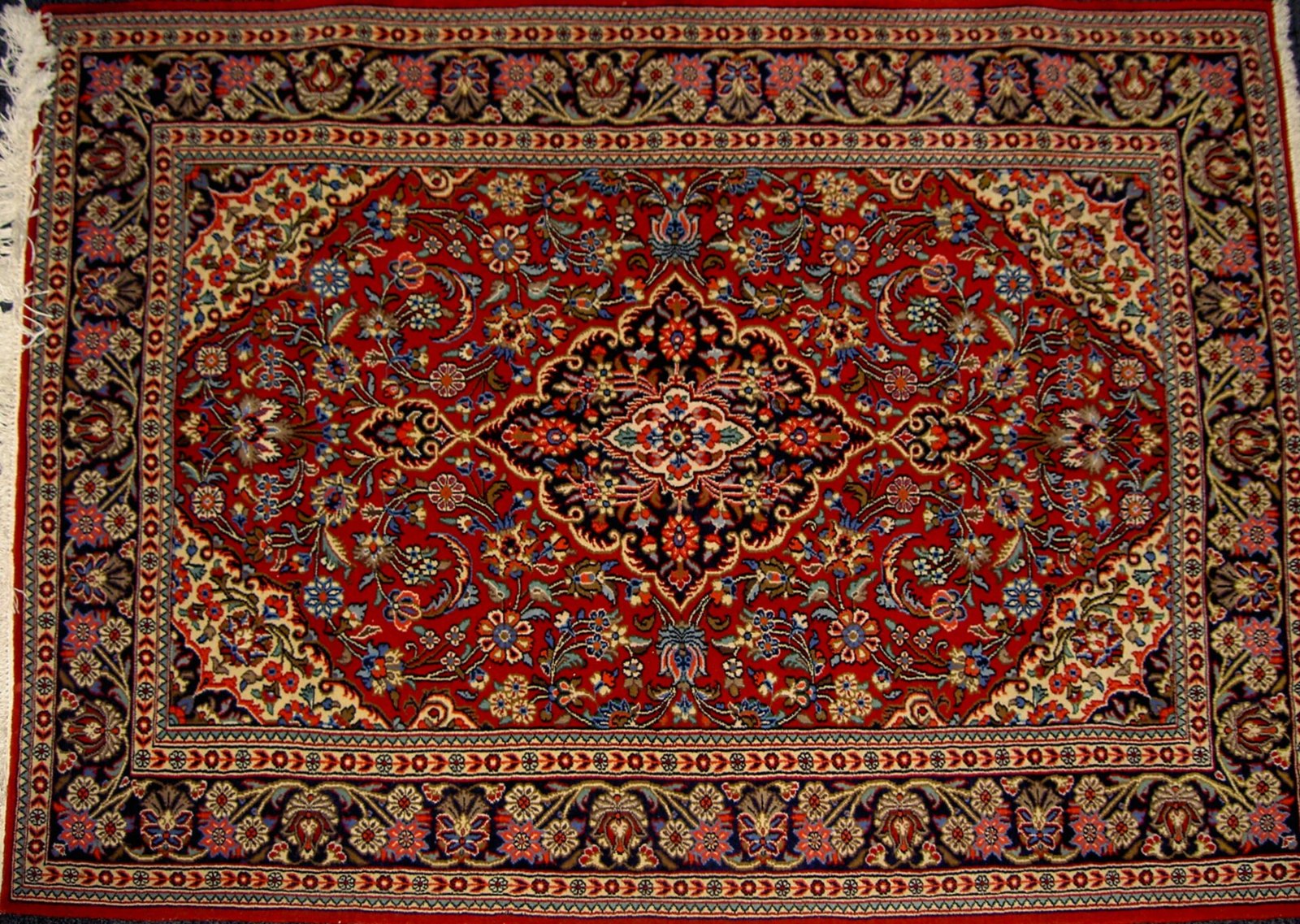
Representative photographs only. Marketplace examples rely on seller descriptions; CraftPersia has not independently authenticated their maker, origin, or rights status. Follow each source link for the listing context.