
Collector guide · 10 min
Bijar rugs: why they are called the iron rugs of Persia
Editorial team · updated 2026-10-12
Where Bijar rugs come from
Bijar is a town in Kurdistan province in western Iran. Rugs sold under the name come from the town and surrounding villages, so quality and design vary. The name describes a weaving tradition and a market area. It does not guarantee that a particular rug came from the town itself.
What makes them so dense
Bijar weavers have traditionally packed the wefts hard with a metal tool. Some use a wet-weaving method that compresses the wool further. The result is a rug that feels rigid, lies flat and resists wear. Because it is so stiff, folding a Bijar can crack its foundation, so it should be rolled.
- Very tightly beaten wefts
- Heavy weight for the size
- Stiff handle: it bends reluctantly
- Usually symmetric (Turkish) knots
Typical designs
Common Bijar designs include medallions on open or herati-filled fields, all-over herati patterns and garden or vase designs. Deep reds and dark blues are common, and ivory or camel grounds also appear. Similar designs are woven elsewhere, so design alone is weak evidence of origin.
Buying checklist
- Ask whether the seller says the rug is town or village work, and how they know
- Look at the back: the knots should be clear and even
- Press a corner: a Bijar should not feel floppy
- Check the ends and sides, which take wear on heavy rugs
- Get any claim about age or region in writing
Care
Never fold a Bijar; roll it with the pile facing outwards. Use a thin, firm underlay. Its weight means it rarely slips, but the underlay protects the back. Professional washing should allow plenty of time to dry because dense wool holds water.
A note on this guide
This is general information from the CraftPersia editorial team and has not been reviewed by a specialist. It is not a valuation, authentication or conservation treatment. For valuable or fragile pieces, consult a qualified conservator or appraiser.
Related photographs and screened examples
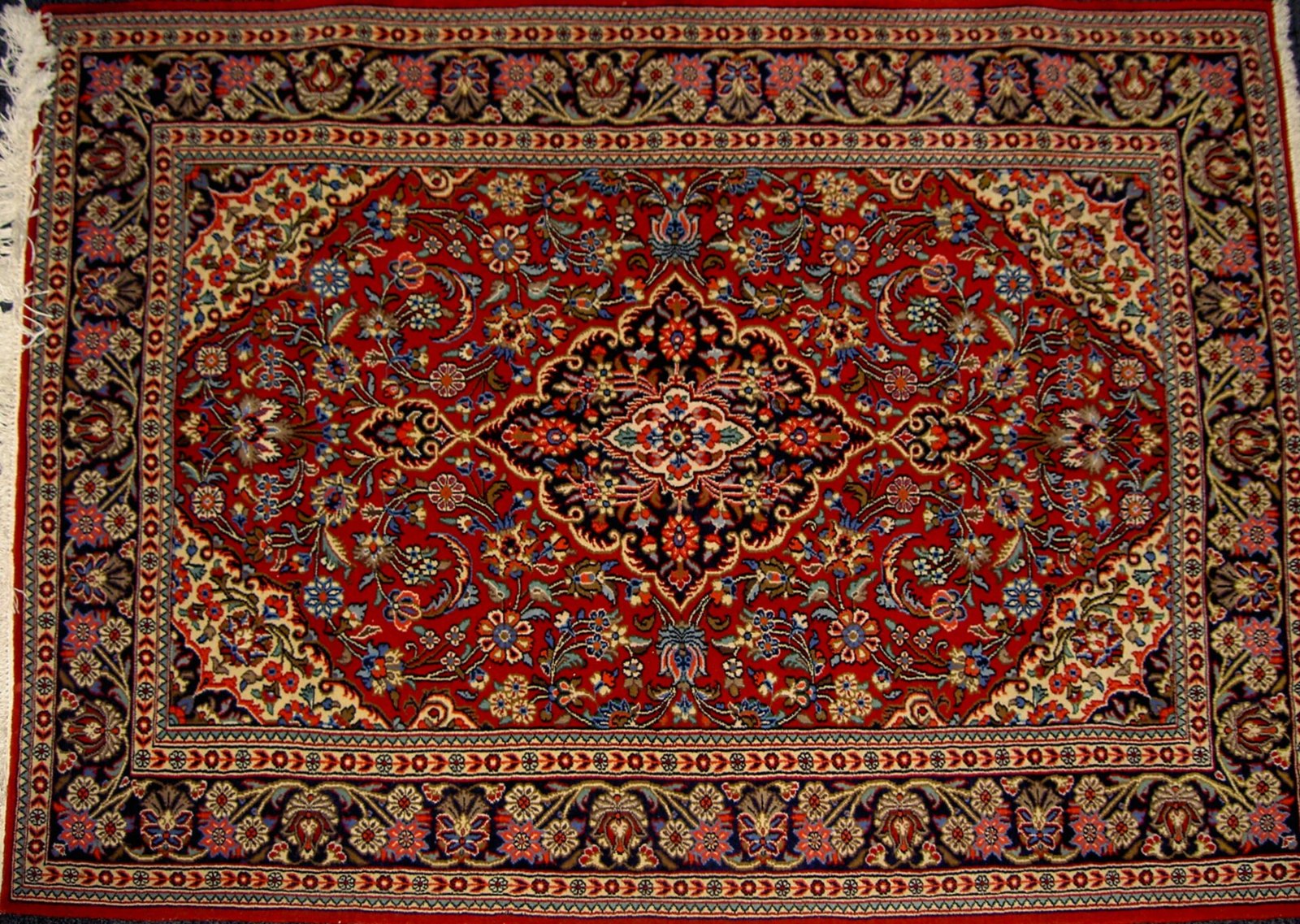
Representative photographs only. Marketplace examples rely on seller descriptions; CraftPersia has not independently authenticated their maker, origin, or rights status. Follow each source link for the listing context.