
Collector guide · 11 min
Ardabil rugs: Caucasian-style weaving of north-west Iran
Editorial team · updated 2026-10-14
Two meanings of 'Ardabil'
The 'Ardabil Carpet' in the Victoria and Albert Museum is a sixteenth-century Safavid court carpet. Modern rugs sold as Ardabil are a quite different village and workshop product from the Ardabil region.
Designs
Modern Ardabils often have rows of geometric medallions, hooked diamonds and small animal figures similar to Caucasian rugs across the border.
Construction
Usually symmetric knots on a cotton foundation, with a short to medium pile.
Caucasian or Persian?
Design alone cannot show which side of the border a rug was woven on. Ask for the seller's evidence.
Buying checklist
- Ask the seller what the regional name is based on: town, village group or design only
- Turn the rug over and look at knot type, warp colour and weft count
- Check ends, sides and pile height for wear or re-weaving
- Ask whether dyes have run or been chemically washed
- Do not accept a link to the museum carpet as evidence of age or quality
- Get any claim about age, region or handmade origin in writing
Care
Short pile shows dirt quickly but cleans well. Vacuum regularly and wash every few years.
A note on this guide
This is general information from the CraftPersia editorial team and has not been reviewed by a specialist. Regional names in the rug trade are market labels, and design alone is weak evidence of origin. This guide is not a valuation or authentication.
Related photographs and screened examples
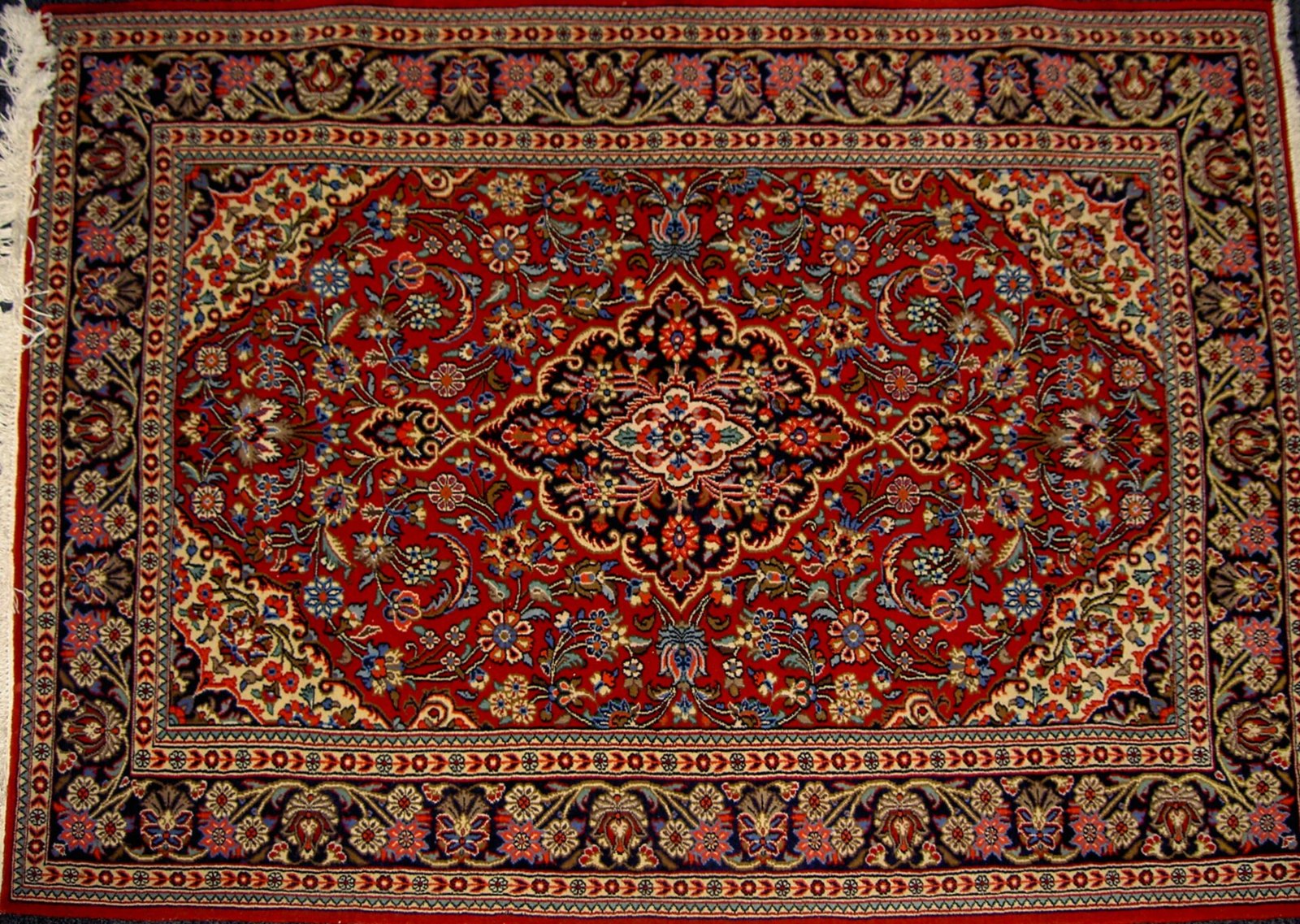
Representative photographs only. Marketplace examples rely on seller descriptions; CraftPersia has not independently authenticated their maker, origin, or rights status. Follow each source link for the listing context.